The right side gets the best moment of the trip, the climb-out over the Strip and Lake Mead, plus a southern-side cruise over Arizona's Mogollon Rim and the New Mexico mountains. The left side's strengths are the Grand Canyon in the distance and the Lake Pontchartrain landing, but its takeoff view is weaker.
Flown LAS to MSY? Did we get it right?
Flight Path
Las Vegas to New Orleans is 1,497 miles (2,409 km), a flight of about 3 hours 10 minutes.
Lake Mead and the Hoover Dam area just after departure, the western Grand Canyon and San Francisco Peaks near Flagstaff (north side), Arizona's Mogollon Rim and the New Mexico mountains, the Rio Grande valley near Socorro, the West Texas plains and Permian Basin oil fields, East Texas piney woods, then the Sabine River and Louisiana bayou country on descent.
Great circle distance and headings ›


Phase by phase
Takeoff from LAS
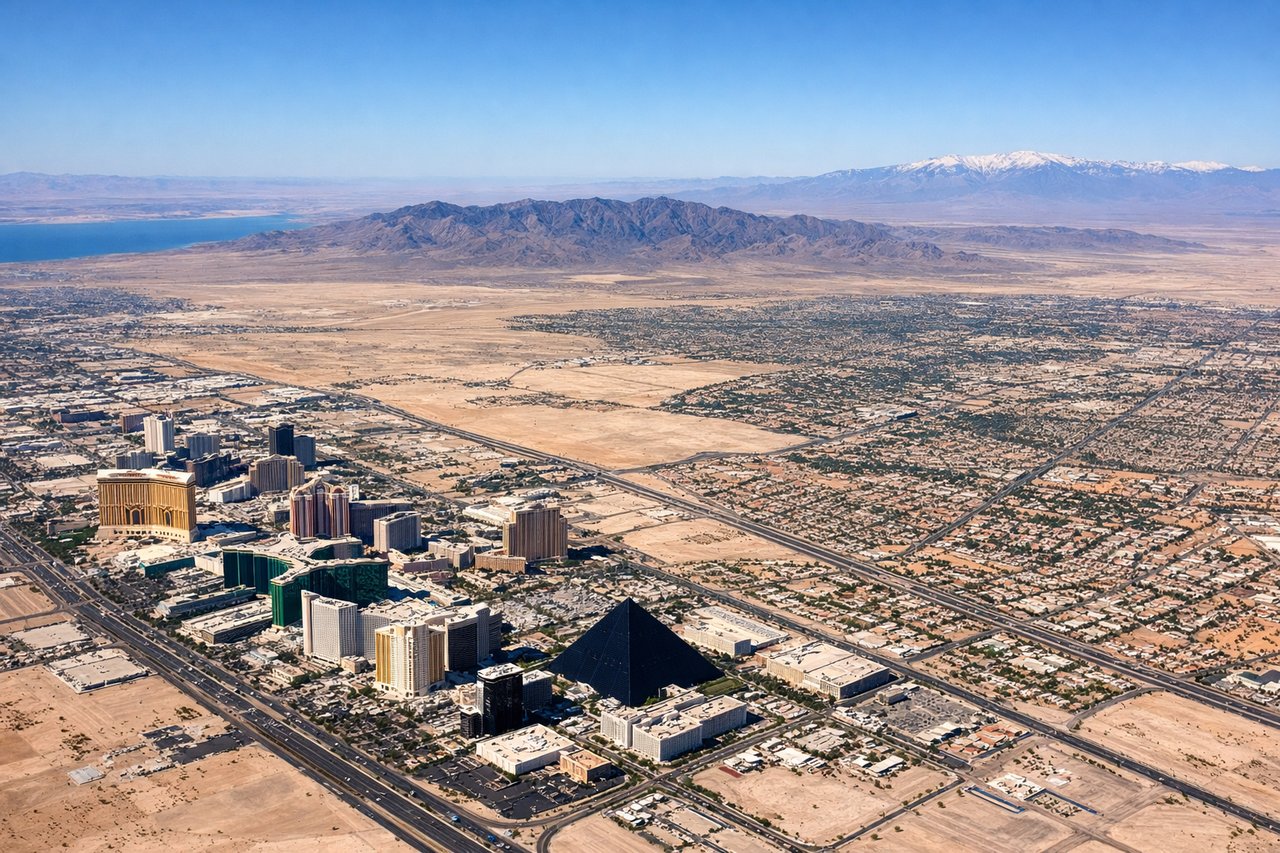
RIGHTDepartures on 01L/01R climb north-northeast and then turn right toward the east. That puts the right windows facing south over the whole Las Vegas valley, with the Strip, the downtown towers and Lake Mead's Boulder Basin laid out below. The left side mostly sees the northern valley and desert ridges.
Landing at MSY
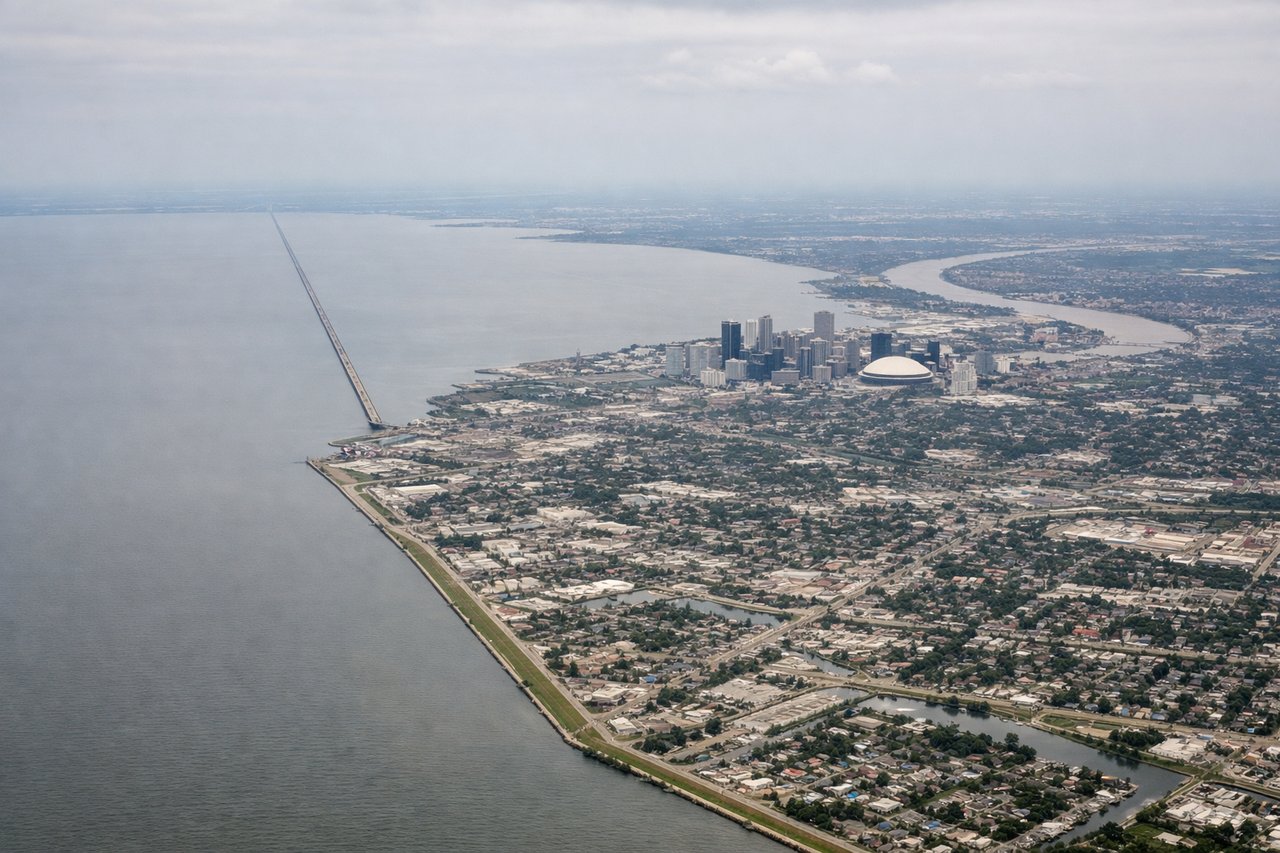
LEFTArrivals from the northwest usually line up for runway 11, which means a final approach heading east-southeast. The left windows face north-northeast toward the swampy western shore and the wide expanse of Lake Pontchartrain, with the Causeway bridge running out across it. The right side sees the Mississippi River and the suburbs, with the skyline well off in the distance.
Will your flight be in sunlight?
Pick a date and time in the Sun Map to watch the sun move across your whole flight.
About This Route
Which side of the plane should I sit on flying from Mc Carran International (LAS) to Louis Armstrong New Orleans International (MSY)?
Sit on the Right side of the plane for the best views on flights from Las Vegas to New Orleans. The right side gets the best moment of the trip, the climb-out over the Strip and Lake Mead, plus a southern-side cruise over Arizona's Mogollon Rim and the New Mexico mountains. The left side's strengths are the Grand Canyon in the distance and the Lake Pontchartrain landing, but its takeoff view is weaker.
What can I see during takeoff from Mc Carran International in Las Vegas?
During takeoff from Mc Carran International (LAS), sit on the Right side for the best views. Departures on 01L/01R climb north-northeast and then turn right toward the east. That puts the right windows facing south over the whole Las Vegas valley, with the Strip, the downtown towers and Lake Mead's Boulder Basin laid out below. The left side mostly sees the northern valley and desert ridges. Notable sights include: Las Vegas Strip and downtown high-rises, Frenchman Mountain, Lake Mead (Boulder Basin), McCullough Range.
What can I see when landing at Louis Armstrong New Orleans International in New Orleans?
When landing at Louis Armstrong New Orleans International (MSY), sit on the Left side for the best views. Arrivals from the northwest usually line up for runway 11, which means a final approach heading east-southeast. The left windows face north-northeast toward the swampy western shore and the wide expanse of Lake Pontchartrain, with the Causeway bridge running out across it. The right side sees the Mississippi River and the suburbs, with the skyline well off in the distance. Notable sights include: Lake Pontchartrain, Lake Pontchartrain Causeway, Bonnet Carré Spillway area, Kenner and Metairie suburbs.
How long is the flight from Las Vegas to New Orleans?
The flight from Mc Carran International (LAS) to Louis Armstrong New Orleans International (MSY) takes about 3 hours 10 minutes. The shortest flight path between them is 1,497 miles (2,409 km); winds and air traffic control usually add a few percent.
What does the Las Vegas to New Orleans flight path pass over?
Lake Mead and the Hoover Dam area just after departure, the western Grand Canyon and San Francisco Peaks near Flagstaff (north side), Arizona's Mogollon Rim and the New Mexico mountains, the Rio Grande valley near Socorro, the West Texas plains and Permian Basin oil fields, East Texas piney woods, then the Sabine River and Louisiana bayou country on descent.