While takeoff offers excellent delta views on the right, the landing approach provides the most dramatic and iconic scenery. Table Mountain and the Cape Peninsula are far more visually striking than the Okavango's subtle waterway patterns, making left-side seats the better overall choice for this route.
Flight Path
The flight path crosses the Kalahari savanna for most of the journey. Notable features include the Central Kalahari Game Reserve (sparse vegetation, wildlife dispersed across open plains), the Nata Sanctuary area (if slightly north of direct route), and the transition zone where the Kalahari gives way to the Cape Fold Mountains as you approach the Western Cape. The Drakensberg escarpment becomes visible on the eastern horizon during the latter portion of the flight. The landscape remains predominantly flat scrubland until the final 30 minutes, when the Cape Peninsula's mountains emerge on the horizon.
Great circle distance and headings ›


Phase by phase
Takeoff from MUB
RIGHTMaun typically departs to the east or northeast. Right-side seats offer views of the Okavango Delta's waterways and papyrus channels spreading across the floodplain immediately after takeoff, with the Kalahari scrubland extending eastward.
Landing at CPT
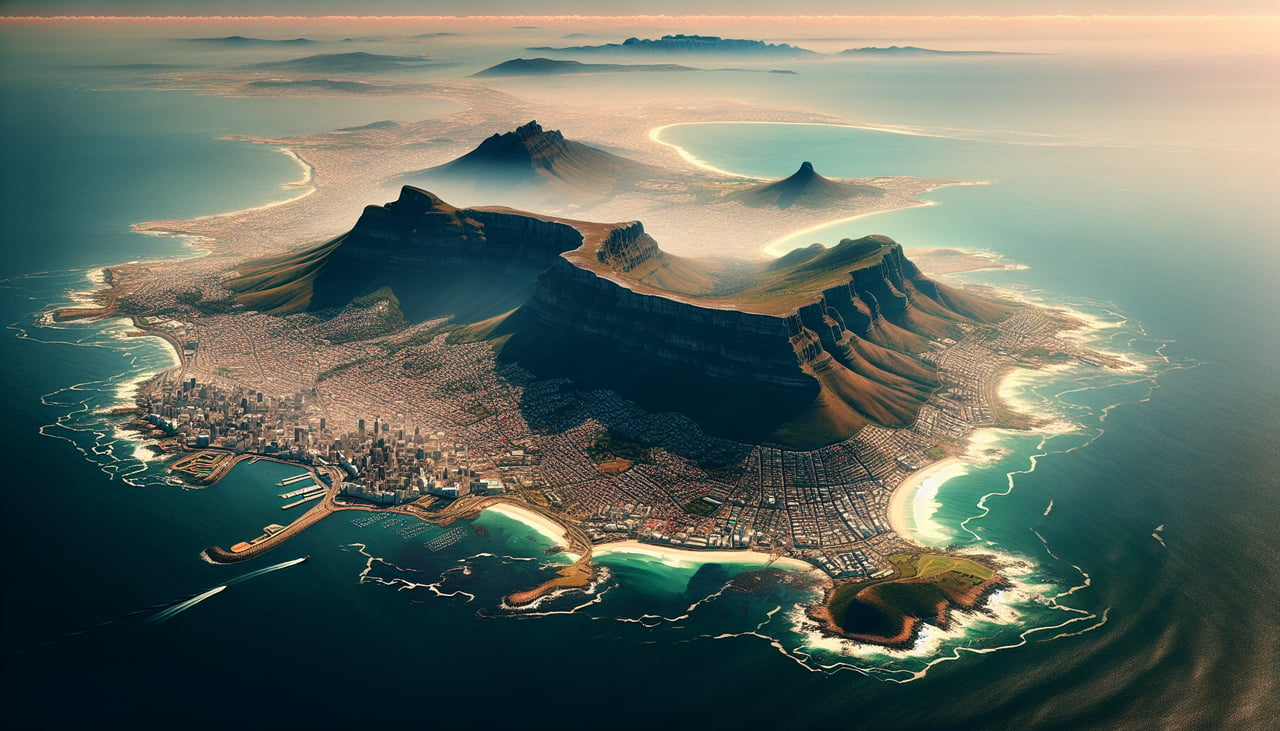
LEFTCape Town approaches typically use runways aligned north-south (09L/09R or 16L/16R depending on wind). Left-side seats during descent offer dramatic views of Table Mountain's flat-topped profile, the Twelve Apostles ridge line, and the Atlantic coastline with the city sprawling below.
Landmarks on this routeAll landmarks →
Will your flight be in sunlight?
See exactly which side of the plane gets sun and shade at your departure time.
About This Route
Which side of the plane should I sit on flying from Maun (MUB) to Cape Town International (CPT)?
Sit on the Left side of the plane for the best views on flights from Maun to Cape Town. While takeoff offers excellent delta views on the right, the landing approach provides the most dramatic and iconic scenery. Table Mountain and the Cape Peninsula are far more visually striking than the Okavango's subtle waterway patterns, making left-side seats the better overall choice for this route.
What can I see during takeoff from Maun in Maun?
During takeoff from Maun (MUB), sit on the Right side for the best views. Maun typically departs to the east or northeast. Right-side seats offer views of the Okavango Delta's waterways and papyrus channels spreading across the floodplain immediately after takeoff, with the Kalahari scrubland extending eastward. Notable sights include: Okavango Delta (braided channels and lagoons), Kalahari savanna, Maun airfield perimeter, scattered acacia woodland.
What can I see when landing at Cape Town International in Cape Town?
When landing at Cape Town International (CPT), sit on the Left side for the best views. Cape Town approaches typically use runways aligned north-south (09L/09R or 16L/16R depending on wind). Left-side seats during descent offer dramatic views of Table Mountain's flat-topped profile, the Twelve Apostles ridge line, and the Atlantic coastline with the city sprawling below. Notable sights include: Table Mountain (flat-topped massif), Twelve Apostles mountain range, Atlantic Ocean coastline, Cape Town city grid and harbor.
How long is the flight from Maun to Cape Town?
The flight from Maun (MUB) to Cape Town International (CPT) takes Approximately 2 hours 15 minutes.
What does the Maun to Cape Town flight path pass over?
The flight path crosses the Kalahari savanna for most of the journey. Notable features include the Central Kalahari Game Reserve (sparse vegetation, wildlife dispersed across open plains), the Nata Sanctuary area (if slightly north of direct route), and the transition zone where the Kalahari gives way to the Cape Fold Mountains as you approach the Western Cape. The Drakensberg escarpment becomes visible on the eastern horizon during the latter portion of the flight. The landscape remains predominantly flat scrubland until the final 30 minutes, when the Cape Peninsula's mountains emerge on the horizon.