Left side wins both ends of the flight. At takeoff you get the iconic Vesuvius-Bay of Naples view, and at landing you get the full Rocky Mountain Front Range panorama. Over the Atlantic and eastern US the views are comparable on both sides, but the bookend moments strongly favor the left.
Flight Path
Departing Italy the route crosses the Tyrrhenian Sea and Sardinia, then the western Mediterranean near the Balearic Islands or southern France, before crossing the Iberian Peninsula or northern Spain. Over the Atlantic the route typically follows a North Atlantic Track passing south of Ireland and the UK, then over the open North Atlantic. Landfall in North America is usually over Newfoundland or Nova Scotia, followed by the St. Lawrence River valley, the Great Lakes region, and the flat agricultural plains of the American Midwest before the terrain rises toward the Rockies.
Great circle distance and headings ›_-_75_(50558355441).jpg?width=600)


_Panoramica_del_centro_della_citt%C3%A0_dal_lago.jpg?width=600)
.jpg?width=600)

Phase by phase
Takeoff from NAP
LEFTCapodichino's primary departure runway 24 takes you northwest over the city, and the left side gives you a direct view back over the Bay of Naples, with Vesuvius rising clearly to the southeast. The left seat also captures the Campi Flegrei volcanic fields and the Pozzuoli coastline as you climb out over the Tyrrhenian Sea.
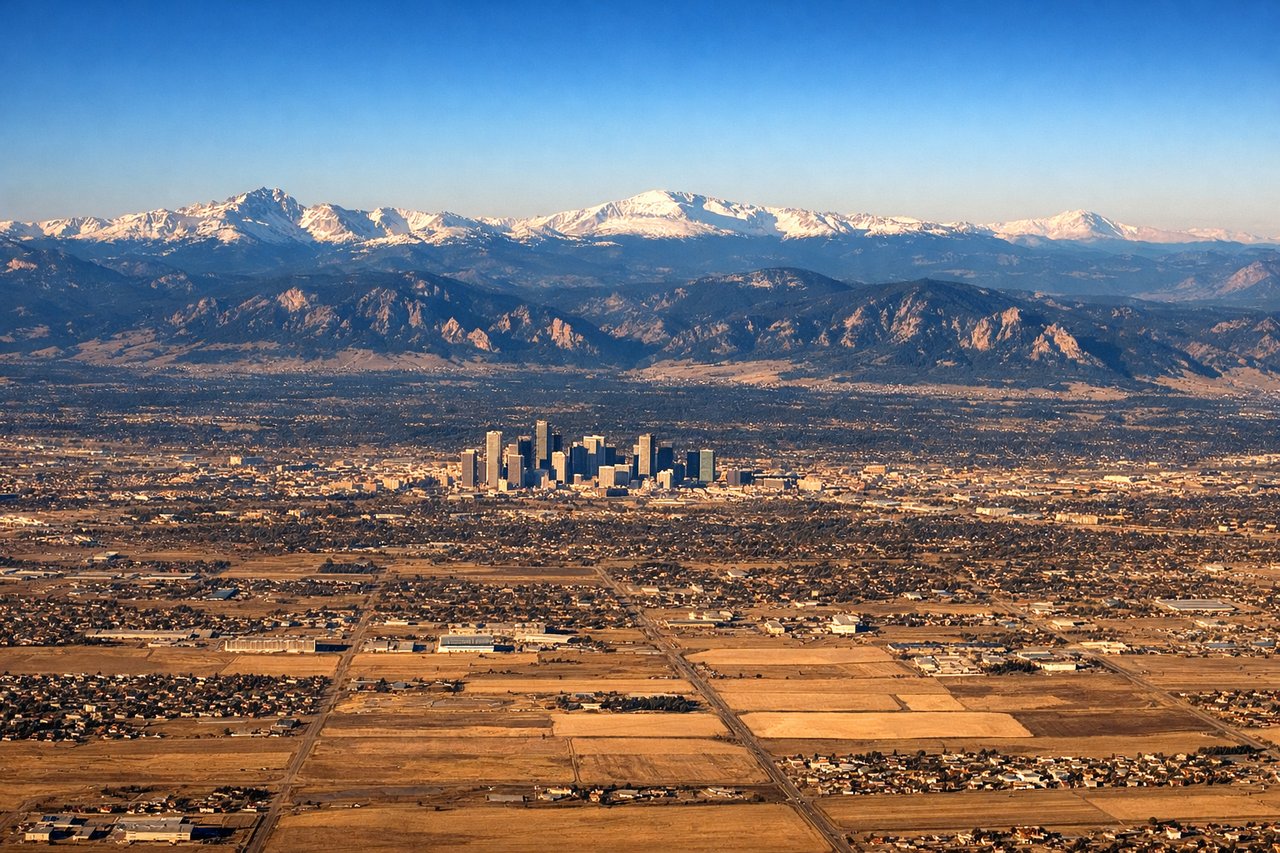
Landing at DEN
LEFTDenver International sits east of the city, and aircraft typically land from the east on runway 16L/34R or approach from the north. A left-side seat on westward approach gives you the full panorama of the Front Range — the Rocky Mountains stretching from Pikes Peak in the south to Longs Peak in the north — spread across the entire western horizon as you descend over the plains.
Landmarks on this routeAll landmarks →
Will your flight be in sunlight?
See exactly which side of the plane gets sun and shade at your departure time.
About This Route
Which side of the plane should I sit on flying from Capodichino (NAP) to Denver International (DEN)?
Sit on the Left side of the plane for the best views on flights from Naples to Denver. Left side wins both ends of the flight. At takeoff you get the iconic Vesuvius-Bay of Naples view, and at landing you get the full Rocky Mountain Front Range panorama. Over the Atlantic and eastern US the views are comparable on both sides, but the bookend moments strongly favor the left.
What can I see during takeoff from Capodichino in Naples?
During takeoff from Capodichino (NAP), sit on the Left side for the best views. Capodichino's primary departure runway 24 takes you northwest over the city, and the left side gives you a direct view back over the Bay of Naples, with Vesuvius rising clearly to the southeast. The left seat also captures the Campi Flegrei volcanic fields and the Pozzuoli coastline as you climb out over the Tyrrhenian Sea. Notable sights include: Mount Vesuvius, Bay of Naples, Campi Flegrei caldera, Sorrento Peninsula.
What can I see when landing at Denver International in Denver?
When landing at Denver International (DEN), sit on the Left side for the best views. Denver International sits east of the city, and aircraft typically land from the east on runway 16L/34R or approach from the north. A left-side seat on westward approach gives you the full panorama of the Front Range — the Rocky Mountains stretching from Pikes Peak in the south to Longs Peak in the north — spread across the entire western horizon as you descend over the plains. Notable sights include: Rocky Mountain Front Range, Longs Peak, Pikes Peak, Denver city skyline.
How long is the flight from Naples to Denver?
The flight from Capodichino (NAP) to Denver International (DEN) takes Approximately 11 to 12 hours with typical transatlantic routing, often via a northern Atlantic track over Ireland, Iceland vicinity, and eastern Canada.
What does the Naples to Denver flight path pass over?
Departing Italy the route crosses the Tyrrhenian Sea and Sardinia, then the western Mediterranean near the Balearic Islands or southern France, before crossing the Iberian Peninsula or northern Spain. Over the Atlantic the route typically follows a North Atlantic Track passing south of Ireland and the UK, then over the open North Atlantic. Landfall in North America is usually over Newfoundland or Nova Scotia, followed by the St. Lawrence River valley, the Great Lakes region, and the flat agricultural plains of the American Midwest before the terrain rises toward the Rockies.