Right-side seats win overall due to the superior takeoff experience with Mount Vesuvius and the Bay of Naples—two of the most visually striking features on this route. While left seats offer good landing views, the volcanic landscape at departure is more dramatic and memorable.
Flight Path
The flight path crosses the Tyrrhenian Sea northwest of Naples, then enters mainland Italy over Tuscany. Notable midpoint features include the Apennine Mountains (visible as a north-south ridge in central Italy, roughly 50-80 miles inland from the coast), the Arno River valley near Florence, and the transition into the Po Valley as the aircraft approaches the Alps. The Alps form the northern boundary of the route, with peaks visible on the horizon during the approach to Frankfurt. The Swiss-German border region and the Rhine valley become prominent in the final descent phase.
Great circle distance and headings ›_-_75_(50558355441).jpg?width=600)


Phase by phase
Takeoff from NAP
RIGHTRight-side seats offer immediate views of the Bay of Naples and Mount Vesuvius as the aircraft climbs northwestward. The volcano dominates the landscape southeast of the airport, and right-side windows capture it clearly during the initial climb-out phase.
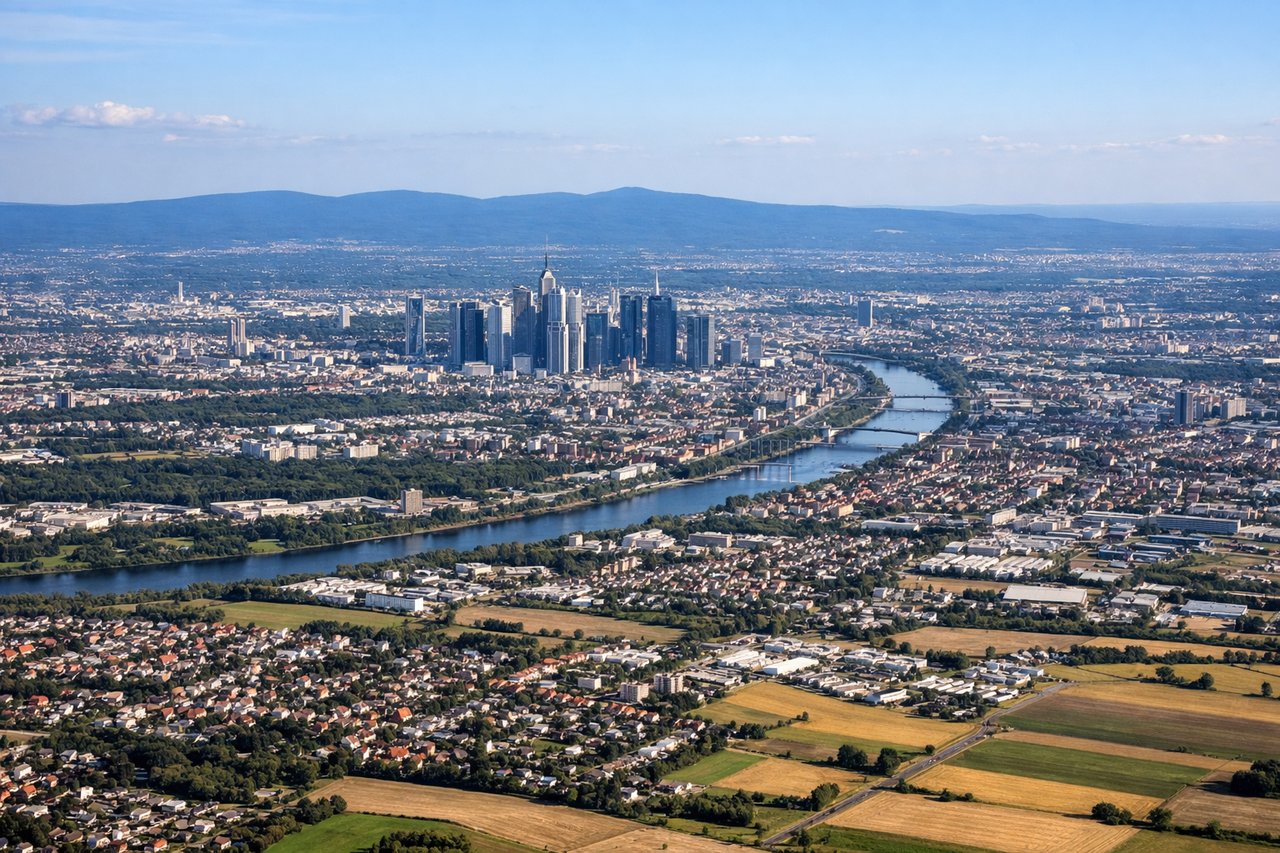
Landing at FRA
LEFTLeft-side seats provide excellent views during the descent approach to Frankfurt. The aircraft descends from the southeast, and left windows frame the Main River valley, the city of Frankfurt's skyline, and the surrounding Taunus hills to the north—all key visual references for the final approach.
Landmarks on this routeAll landmarks →
Will your flight be in sunlight?
See exactly which side of the plane gets sun and shade at your departure time.
About This Route
Which side of the plane should I sit on flying from Capodichino (NAP) to Frankfurt Main (FRA)?
Sit on the Right side of the plane for the best views on flights from Naples to Frankfurt. Right-side seats win overall due to the superior takeoff experience with Mount Vesuvius and the Bay of Naples—two of the most visually striking features on this route. While left seats offer good landing views, the volcanic landscape at departure is more dramatic and memorable.
What can I see during takeoff from Capodichino in Naples?
During takeoff from Capodichino (NAP), sit on the Right side for the best views. Right-side seats offer immediate views of the Bay of Naples and Mount Vesuvius as the aircraft climbs northwestward. The volcano dominates the landscape southeast of the airport, and right-side windows capture it clearly during the initial climb-out phase. Notable sights include: Mount Vesuvius (1,281 m, visible as a distinctive cone), Bay of Naples (Tyrrhenian Sea), Sorrento Peninsula (southern shore of the bay), Campanian Plain (flat terrain inland).
What can I see when landing at Frankfurt Main in Frankfurt?
When landing at Frankfurt Main (FRA), sit on the Left side for the best views. Left-side seats provide excellent views during the descent approach to Frankfurt. The aircraft descends from the southeast, and left windows frame the Main River valley, the city of Frankfurt's skyline, and the surrounding Taunus hills to the north—all key visual references for the final approach. Notable sights include: Main River (flowing west through Frankfurt), Frankfurt skyline (banking district towers visible from altitude), Taunus Mountains (northern horizon, low range), Rhine-Main region (flat terrain with scattered towns).
How long is the flight from Naples to Frankfurt?
The flight from Capodichino (NAP) to Frankfurt Main (FRA) takes Approximately 2 hours 15 minutes.
What does the Naples to Frankfurt flight path pass over?
The flight path crosses the Tyrrhenian Sea northwest of Naples, then enters mainland Italy over Tuscany. Notable midpoint features include the Apennine Mountains (visible as a north-south ridge in central Italy, roughly 50-80 miles inland from the coast), the Arno River valley near Florence, and the transition into the Po Valley as the aircraft approaches the Alps. The Alps form the northern boundary of the route, with peaks visible on the horizon during the approach to Frankfurt. The Swiss-German border region and the Rhine valley become prominent in the final descent phase.