Oita to Tokyo is 517 miles (831 km), a flight of about 1 hour 20 minutes.
The left side delivers the best views at both ends of the flight — Beppu Bay and the Kuju mountains on departure, and Tokyo Bay with the Kanto Plain on approach. During cruise the flight tracks northeast over Shikoku and the Seto Inland Sea briefly, then across Honshu's Pacific coast, where the left side also catches glimpses of the Kii Peninsula coastline and Suruga Bay.
Flight Path
The flight path crosses northeastern Kyushu, then the Bungo Channel separating Kyushu from Shikoku, briefly over the eastern tip of Shikoku, then northeast across the Kii Peninsula and the Pacific coastline of Honshu, passing south of Mount Fuji before descending into the Kanto Plain toward Narita
Great circle distance and headings ›

Phase by phase
Takeoff from OIT
LEFTOIT's primary runway (01/19) means northbound departures climb out over Beppu Bay to the west on the left side. The left window gives you Beppu Bay's distinctive arc and the steaming hot spring city of Beppu along the shoreline, with the Kuju mountain range rising inland.
Landing at NRT
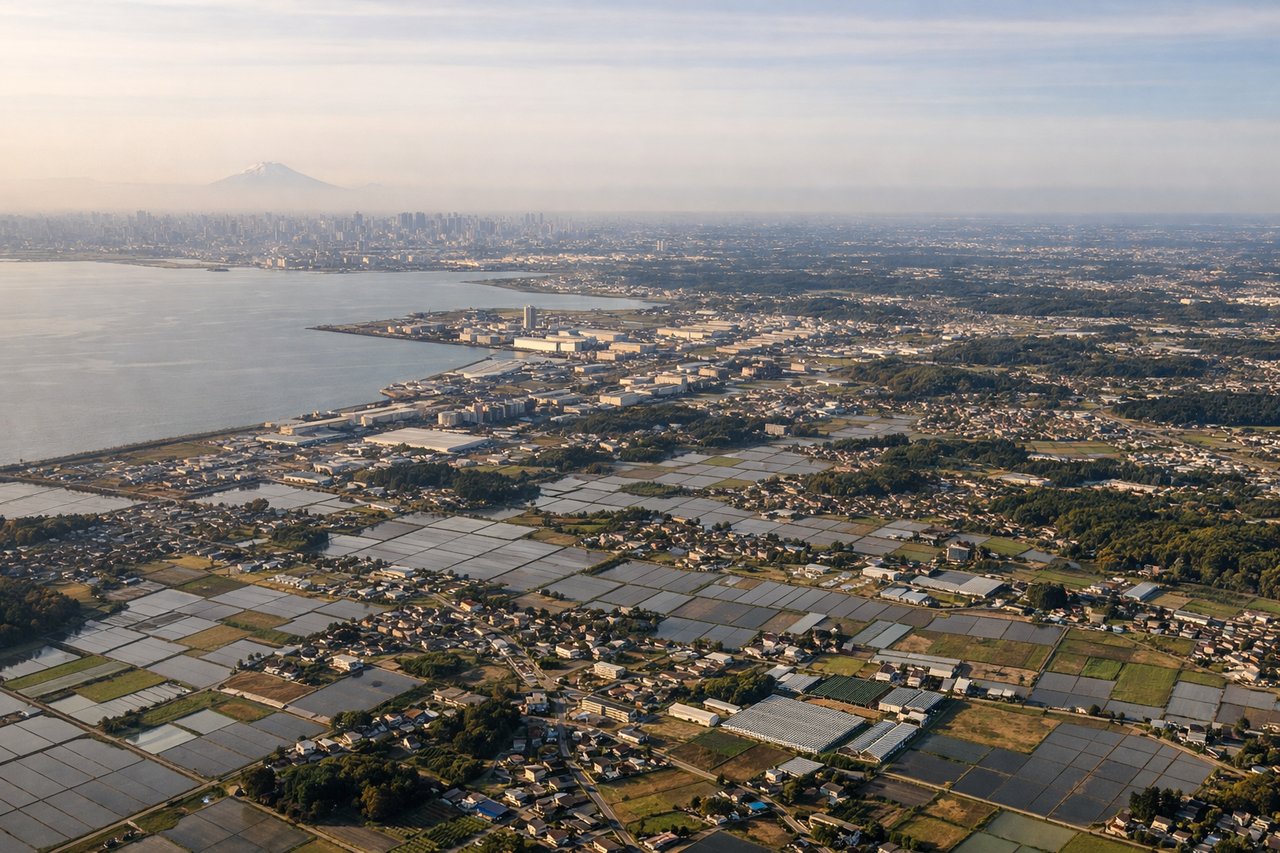
LEFTNRT typically uses runways 16L/16R for southerly landings, meaning the approach comes from the north over Chiba Prefecture. The left side faces west toward central Tokyo, giving a clear view of Tokyo Bay, the Tokyo skyline, and the bay's industrial waterfront at Chiba.
Landmarks on this routeAll landmarks →
Will your flight be in sunlight?
Pick a date and time in the Sun Map to watch the sun move across your whole flight.
About This Route
Which side of the plane should I sit on flying from Oita (OIT) to New Tokyo International (NRT)?
Sit on the Left side of the plane for the best views on flights from Oita to Tokyo. The left side delivers the best views at both ends of the flight — Beppu Bay and the Kuju mountains on departure, and Tokyo Bay with the Kanto Plain on approach. During cruise the flight tracks northeast over Shikoku and the Seto Inland Sea briefly, then across Honshu's Pacific coast, where the left side also catches glimpses of the Kii Peninsula coastline and Suruga Bay.
What can I see during takeoff from Oita in Oita?
During takeoff from Oita (OIT), sit on the Left side for the best views. OIT's primary runway (01/19) means northbound departures climb out over Beppu Bay to the west on the left side. The left window gives you Beppu Bay's distinctive arc and the steaming hot spring city of Beppu along the shoreline, with the Kuju mountain range rising inland. Notable sights include: Beppu Bay, Beppu city and its onsen steam plumes, Kuju volcanic mountains, Oita city waterfront.
What can I see when landing at New Tokyo International in Tokyo?
When landing at New Tokyo International (NRT), sit on the Left side for the best views. NRT typically uses runways 16L/16R for southerly landings, meaning the approach comes from the north over Chiba Prefecture. The left side faces west toward central Tokyo, giving a clear view of Tokyo Bay, the Tokyo skyline, and the bay's industrial waterfront at Chiba. Notable sights include: Tokyo Bay, Tokyo city skyline, Chiba industrial waterfront, Narita city and surrounding farmland.
How long is the flight from Oita to Tokyo?
The flight from Oita (OIT) to New Tokyo International (NRT) takes about 1 hour 20 minutes. The shortest flight path between them is 517 miles (831 km); winds and air traffic control usually add a few percent.
What does the Oita to Tokyo flight path pass over?
The flight path crosses northeastern Kyushu, then the Bungo Channel separating Kyushu from Shikoku, briefly over the eastern tip of Shikoku, then northeast across the Kii Peninsula and the Pacific coastline of Honshu, passing south of Mount Fuji before descending into the Kanto Plain toward Narita