Oita to Tokyo is 480 miles (772 km), a flight of about 1 hour 35 minutes.
The left side captures nearly the entire route's visual interest: the Seto Inland Sea and Shikoku's mountains at departure, then the Tokyo Bay skyline and possible Fuji sighting on arrival, while the right side is dominated by featureless Pacific Ocean for most of the flight.
Flight Path
Cruise passes near the Kii Channel and the Kii Peninsula's mountainous coastline before the route continues along Honshu's Pacific-facing shore toward Tokyo Bay.
Great circle distance and headings ›

Phase by phase
Takeoff from OIT
LEFTDeparting OIT to the south then turning northeast, the left side offers views back over the Seto Inland Sea's scattered islands and the mountainous spine of Shikoku as the aircraft climbs. The right side mostly shows open Bungo Channel water with little definition.
Landing at HND
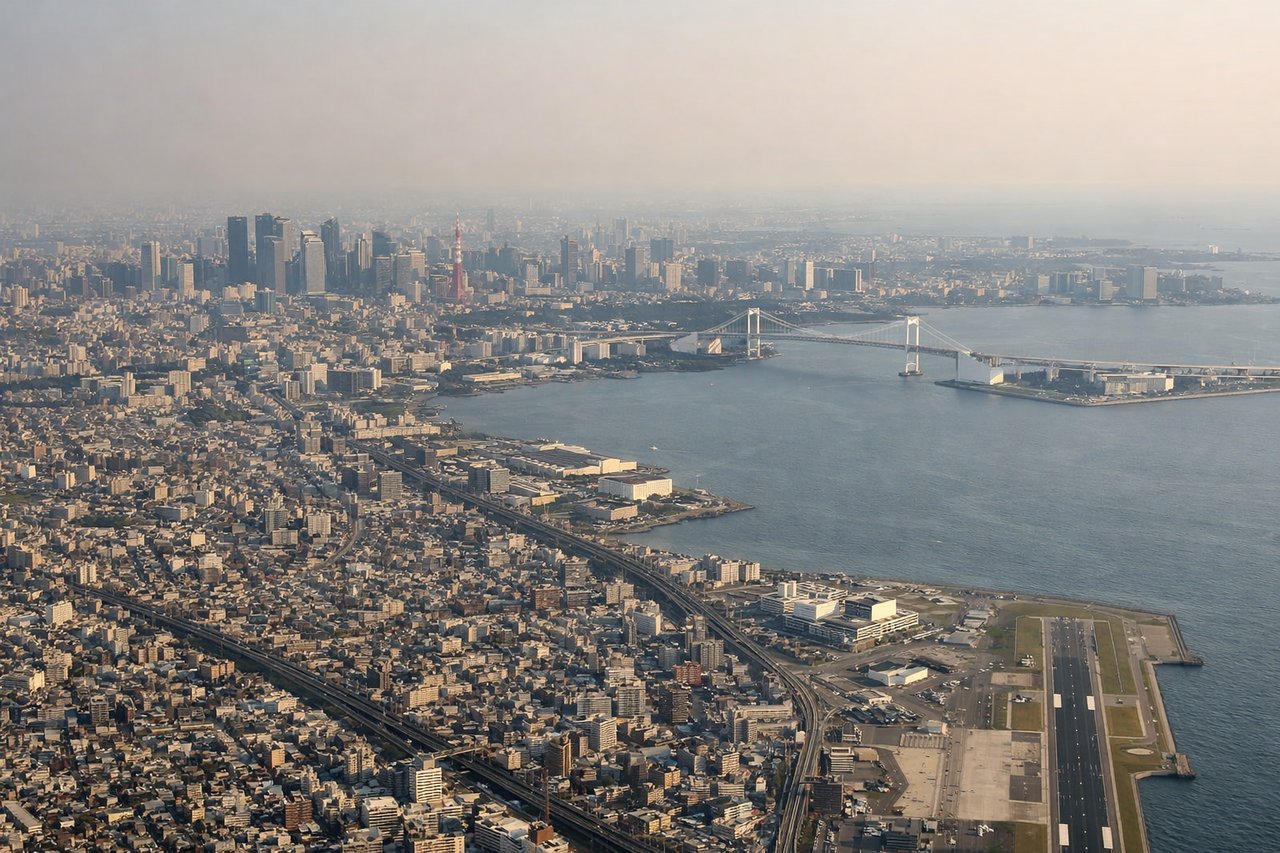
LEFTOn the typical south-wind approach into HND, aircraft cross Tokyo Bay from the south, giving left-side passengers a sweeping view of the Tokyo and Yokohama skyline along the bay's western shore, with Mount Fuji sometimes visible further inland on clear days. The right side faces the flatter, more industrial Chiba shoreline.
Landmarks on this routeAll landmarks →
Will your flight be in sunlight?
Pick a date and time in the Sun Map to watch the sun move across your whole flight.
About This Route
Which side of the plane should I sit on flying from Oita (OIT) to Tokyo International (HND)?
Sit on the Left side of the plane for the best views on flights from Oita to Tokyo. The left side captures nearly the entire route's visual interest: the Seto Inland Sea and Shikoku's mountains at departure, then the Tokyo Bay skyline and possible Fuji sighting on arrival, while the right side is dominated by featureless Pacific Ocean for most of the flight.
What can I see during takeoff from Oita in Oita?
During takeoff from Oita (OIT), sit on the Left side for the best views. Departing OIT to the south then turning northeast, the left side offers views back over the Seto Inland Sea's scattered islands and the mountainous spine of Shikoku as the aircraft climbs. The right side mostly shows open Bungo Channel water with little definition. Notable sights include: Seto Inland Sea islands, Shikoku mountain ridges, Beppu Bay coastline.
What can I see when landing at Tokyo International in Tokyo?
When landing at Tokyo International (HND), sit on the Left side for the best views. On the typical south-wind approach into HND, aircraft cross Tokyo Bay from the south, giving left-side passengers a sweeping view of the Tokyo and Yokohama skyline along the bay's western shore, with Mount Fuji sometimes visible further inland on clear days. The right side faces the flatter, more industrial Chiba shoreline. Notable sights include: Tokyo Bay, Tokyo/Yokohama skyline, Mount Fuji (distant, weather permitting), Haneda's runway complex jutting into the bay.
How long is the flight from Oita to Tokyo?
The flight from Oita (OIT) to Tokyo International (HND) takes about 1 hour 35 minutes. The shortest flight path between them is 480 miles (772 km); winds and air traffic control usually add a few percent.
What does the Oita to Tokyo flight path pass over?
Cruise passes near the Kii Channel and the Kii Peninsula's mountainous coastline before the route continues along Honshu's Pacific-facing shore toward Tokyo Bay.