Oki Island to Osaka is 153 miles (247 km), a flight of about 55 minutes.
While takeoff favors the right for Oki Island views, the landing approach into Itami is significantly more scenic from the left, offering views of Osaka Bay, the Kii Peninsula, and the Kansai urban region. The landing experience outweighs the takeoff advantage.
Flight Path
During the flight's middle section, the aircraft crosses the Honshu mainland. Notable features include the Chugoku Mountains (visible as a distant ridge to the south during cruise), the transition from the Sea of Japan coastal plains to inland terrain, and the approach to the Kansai region. The flight path typically takes a southeasterly route, passing inland of the Hyogo Prefecture coast before descending toward Osaka Bay.
Great circle distance and headings ›Phase by phase
Takeoff from OKI
RIGHTRight-side seats offer views of the Oki Islands' dramatic coastline and the transition from the Sea of Japan. As the aircraft climbs southeastward toward Osaka, right-side passengers see the archipelago's rocky shores and open water before the mainland comes into view.
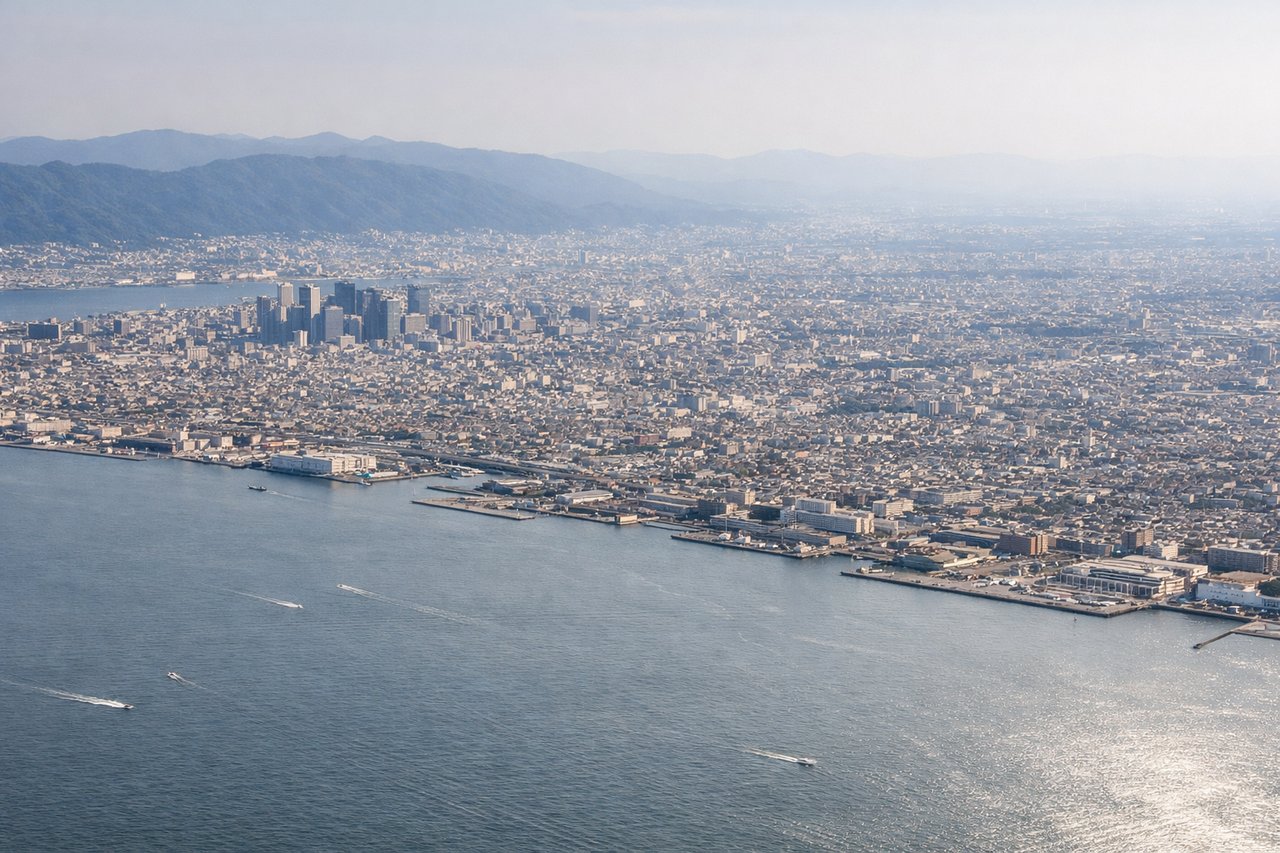
Landing at ITM
LEFTLeft-side seats provide excellent views during descent into Osaka. As the aircraft approaches from the northwest on a typical descent path, left-side passengers see the Kii Peninsula, Osaka Bay's distinctive shape, and the urban sprawl of the Kansai region before landing at Itami.
Will your flight be in sunlight?
Pick a date and time in the Sun Map to watch the sun move across your whole flight.
About This Route
Which side of the plane should I sit on flying from Oki (OKI) to Osaka International (ITM)?
Sit on the Left side of the plane for the best views on flights from Oki Island to Osaka. While takeoff favors the right for Oki Island views, the landing approach into Itami is significantly more scenic from the left, offering views of Osaka Bay, the Kii Peninsula, and the Kansai urban region. The landing experience outweighs the takeoff advantage.
What can I see during takeoff from Oki in Oki Island?
During takeoff from Oki (OKI), sit on the Right side for the best views. Right-side seats offer views of the Oki Islands' dramatic coastline and the transition from the Sea of Japan. As the aircraft climbs southeastward toward Osaka, right-side passengers see the archipelago's rocky shores and open water before the mainland comes into view. Notable sights include: Oki Islands coastline (northern shores), Sea of Japan, Shimane Peninsula (distant, southeastern horizon), Dogo Island (largest of the Oki group, visible below during initial climb).
What can I see when landing at Osaka International in Osaka?
When landing at Osaka International (ITM), sit on the Left side for the best views. Left-side seats provide excellent views during descent into Osaka. As the aircraft approaches from the northwest on a typical descent path, left-side passengers see the Kii Peninsula, Osaka Bay's distinctive shape, and the urban sprawl of the Kansai region before landing at Itami. Notable sights include: Osaka Bay (large, recognizable water body), Kii Peninsula (mountainous landmass to the south), Kobe and surrounding Hyogo Prefecture urban areas (to the west/northwest), Osaka city grid and industrial zones (to the east/southeast of the bay).
How long is the flight from Oki Island to Osaka?
The flight from Oki (OKI) to Osaka International (ITM) takes about 55 minutes. The shortest flight path between them is 153 miles (247 km); winds and air traffic control usually add a few percent.
What does the Oki Island to Osaka flight path pass over?
During the flight's middle section, the aircraft crosses the Honshu mainland. Notable features include the Chugoku Mountains (visible as a distant ridge to the south during cruise), the transition from the Sea of Japan coastal plains to inland terrain, and the approach to the Kansai region. The flight path typically takes a southeasterly route, passing inland of the Hyogo Prefecture coast before descending toward Osaka Bay.