Osaka to Oki Island is 153 miles (247 km), a flight of about 35 minutes.
The right side captures the most dramatic scenery during takeoff (Osaka Bay and the Kii Peninsula), while the landing views on the left are visually compelling but brief. The takeoff experience offers longer, more varied viewing of major geographic features.
Flight Path
The flight path crosses the Kii Peninsula's forested ridges, then traverses open water of the Sea of Japan. The Hyogo Prefecture coastline and small coastal towns are visible along the route. No major mountain ranges dominate the midpoint, but the transition from inland terrain to open sea is the primary geographic feature of the cruise segment.
Great circle distance and headings ›Phase by phase
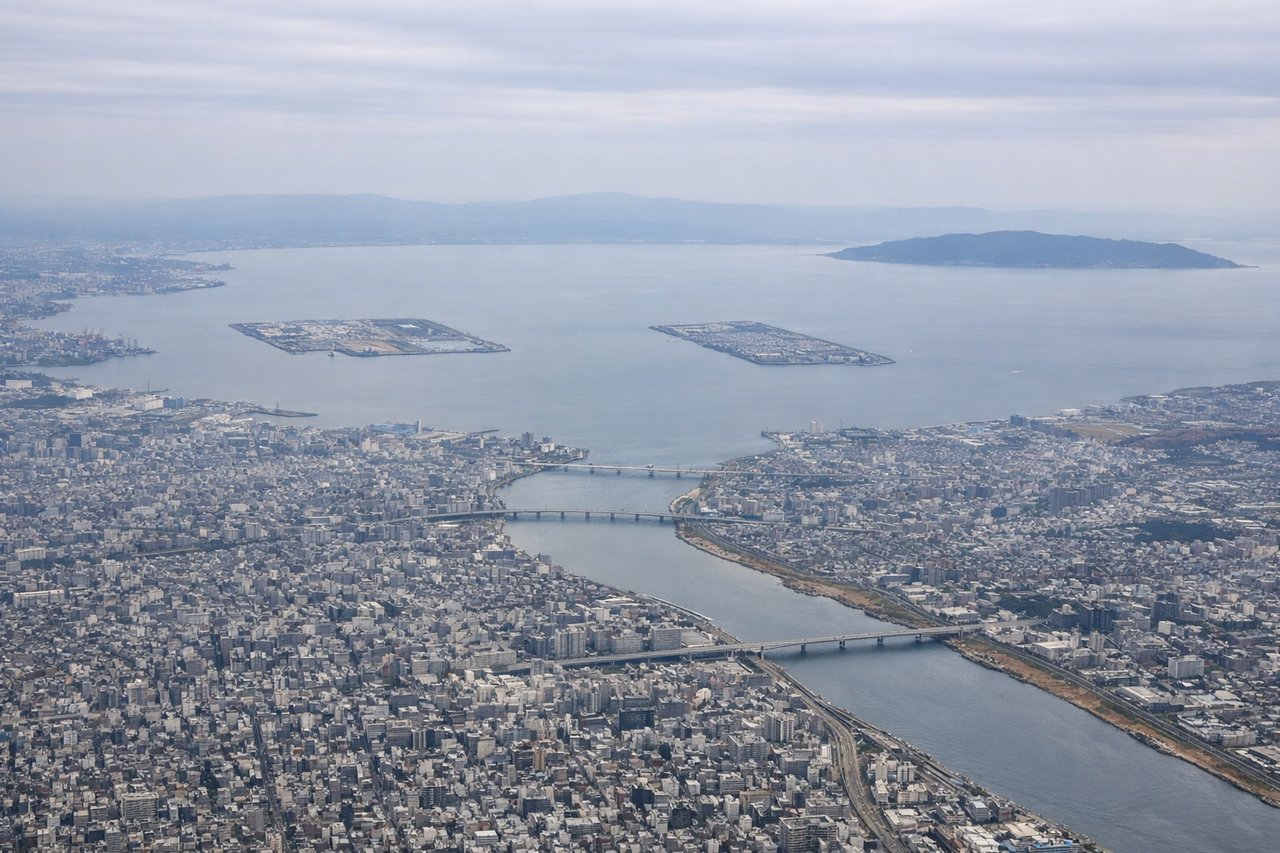
Takeoff from ITM
RIGHTRight-side seats capture the initial climb northwestward over Osaka Bay and the Kii Peninsula. You'll see the bay's distinctive shape and the mountainous terrain immediately inland, which are prominent during the first 10–15 minutes of flight.
Landing at OKI
LEFTLeft-side seats offer the best views during descent into Oki Airport. The approach from the southeast brings the Oki Islands into clear view on the left, with the Sea of Japan and the Shimane Peninsula visible as you descend toward the runway.
Will your flight be in sunlight?
Pick a date and time in the Sun Map to watch the sun move across your whole flight.
About This Route
Which side of the plane should I sit on flying from Osaka International (ITM) to Oki (OKI)?
Sit on the Right side of the plane for the best views on flights from Osaka to Oki Island. The right side captures the most dramatic scenery during takeoff (Osaka Bay and the Kii Peninsula), while the landing views on the left are visually compelling but brief. The takeoff experience offers longer, more varied viewing of major geographic features.
What can I see during takeoff from Osaka International in Osaka?
During takeoff from Osaka International (ITM), sit on the Right side for the best views. Right-side seats capture the initial climb northwestward over Osaka Bay and the Kii Peninsula. You'll see the bay's distinctive shape and the mountainous terrain immediately inland, which are prominent during the first 10–15 minutes of flight. Notable sights include: Osaka Bay (Osaka-wan), Kii Peninsula (Kii Hantō), Ikoma Mountains, Osaka urban sprawl.
What can I see when landing at Oki in Oki Island?
When landing at Oki (OKI), sit on the Left side for the best views. Left-side seats offer the best views during descent into Oki Airport. The approach from the southeast brings the Oki Islands into clear view on the left, with the Sea of Japan and the Shimane Peninsula visible as you descend toward the runway. Notable sights include: Oki Islands (Oki-shotō), Sea of Japan (Nihon-kai), Shimane Peninsula, Dogo Island.
How long is the flight from Osaka to Oki Island?
The flight from Osaka International (ITM) to Oki (OKI) takes about 35 minutes. The shortest flight path between them is 153 miles (247 km); winds and air traffic control usually add a few percent.
What does the Osaka to Oki Island flight path pass over?
The flight path crosses the Kii Peninsula's forested ridges, then traverses open water of the Sea of Japan. The Hyogo Prefecture coastline and small coastal towns are visible along the route. No major mountain ranges dominate the midpoint, but the transition from inland terrain to open sea is the primary geographic feature of the cruise segment.