Omaha to Denver is 471 miles (758 km), a flight of about 1 hour 15 minutes.
While the flight is short and mostly over the flat Great Plains during cruise, the left side wins because the Rocky Mountain approach into Denver is dramatic and unmistakable, outweighing the modest right-side advantage during takeoff.
Flight Path
Great Plains farmland of eastern Colorado and Nebraska, with the South Platte River valley becoming visible as the flight nears Denver
Great circle distance and headings ›Phase by phase
Takeoff from OMA
RIGHTDeparting OMA to the southwest, the right side offers views over the Missouri River valley and Omaha's downtown skyline before the plane turns onto its westward track. The left side mostly shows flat farmland.
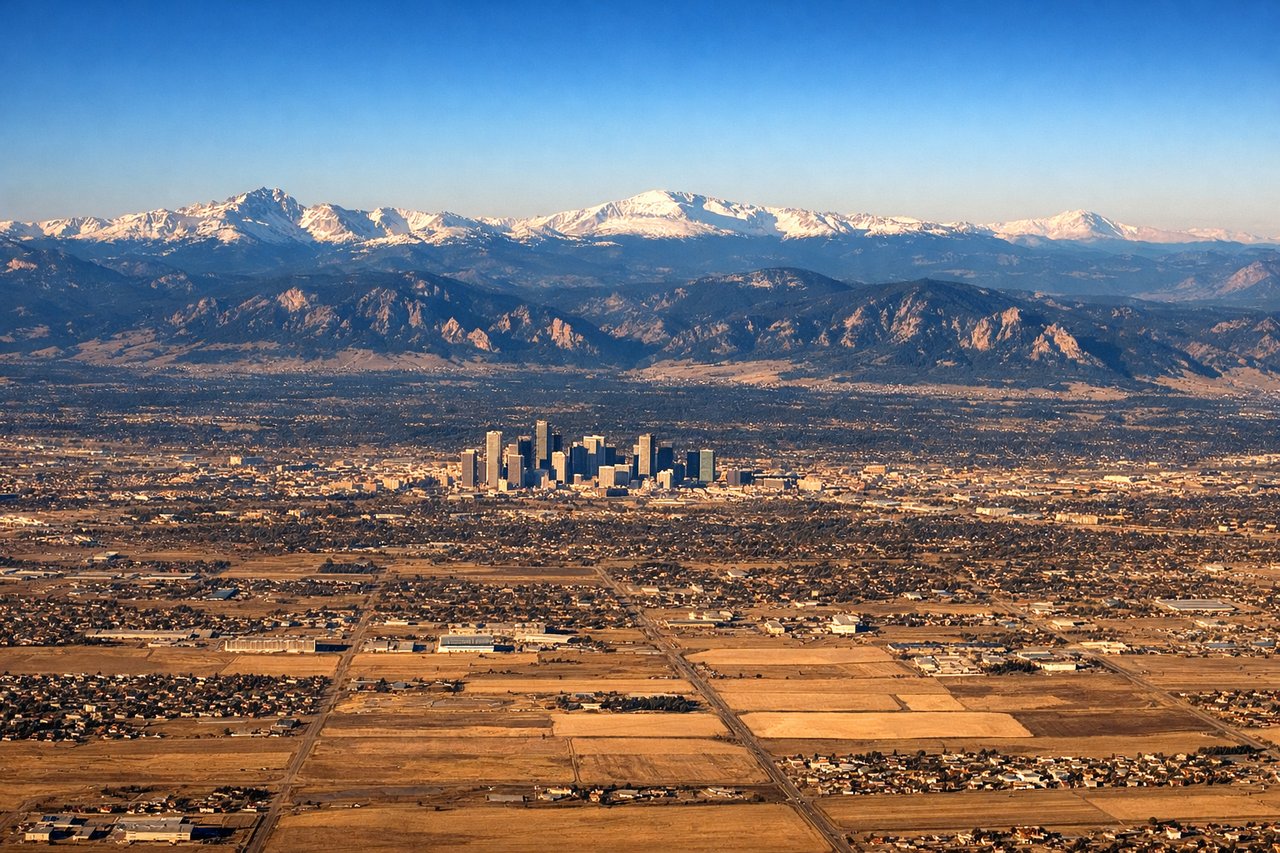
Landing at DEN
LEFTOn approach into Denver from the east, the left side faces south and west, giving passengers a clear view of the Front Range of the Rocky Mountains rising sharply from the plains as the plane descends. The right side faces north toward flatter, less distinctive terrain.
Will your flight be in sunlight?
Pick a date and time in the Sun Map to watch the sun move across your whole flight.
About This Route
Which side of the plane should I sit on flying from Eppley Afld (OMA) to Denver International (DEN)?
Sit on the Left side of the plane for the best views on flights from Omaha to Denver. While the flight is short and mostly over the flat Great Plains during cruise, the left side wins because the Rocky Mountain approach into Denver is dramatic and unmistakable, outweighing the modest right-side advantage during takeoff.
What can I see during takeoff from Eppley Afld in Omaha?
During takeoff from Eppley Afld (OMA), sit on the Right side for the best views. Departing OMA to the southwest, the right side offers views over the Missouri River valley and Omaha's downtown skyline before the plane turns onto its westward track. The left side mostly shows flat farmland. Notable sights include: Missouri River, Downtown Omaha skyline, Eppley Airfield grounds.
What can I see when landing at Denver International in Denver?
When landing at Denver International (DEN), sit on the Left side for the best views. On approach into Denver from the east, the left side faces south and west, giving passengers a clear view of the Front Range of the Rocky Mountains rising sharply from the plains as the plane descends. The right side faces north toward flatter, less distinctive terrain. Notable sights include: Front Range of the Rocky Mountains, Longs Peak, Denver metro sprawl, South Platte River valley.
How long is the flight from Omaha to Denver?
The flight from Eppley Afld (OMA) to Denver International (DEN) takes about 1 hour 15 minutes. The shortest flight path between them is 471 miles (758 km); winds and air traffic control usually add a few percent.
What does the Omaha to Denver flight path pass over?
Great Plains farmland of eastern Colorado and Nebraska, with the South Platte River valley becoming visible as the flight nears Denver