Omaha to London is 4,272 miles (6,876 km), a flight of about 9 hours.
Left side wins both ends of the flight. Over the Atlantic the views are similar on both sides, but the left seat delivers the Missouri River and Omaha on departure and the Thames corridor into London on arrival, making it the clear choice for the full journey.
Flight Path
The great circle route from Omaha to London tracks northeast over the Great Lakes region, crossing Lake Michigan or Lake Erie depending on exact routing, then over southern Ontario and Quebec. It exits North America near Newfoundland or Labrador, crosses the North Atlantic passing south of Greenland and Iceland, then enters European airspace over Ireland before tracking southeast across England. Mid-Atlantic you may see sea ice or icebergs near the Labrador Sea in winter months. The Irish coastline and patchwork green fields of County Clare or Connaught are often the first European landfall visible below.
Great circle distance and headings ›Phase by phase
Takeoff from OMA
LEFTOmaha's primary departure runway is 14R/32L. Departing northeast on 14R, the left side gives you a clear view back over downtown Omaha and the Missouri River as you climb out. The river's wide bend and the city grid are easily distinguishable from low altitude.
Landing at LHR
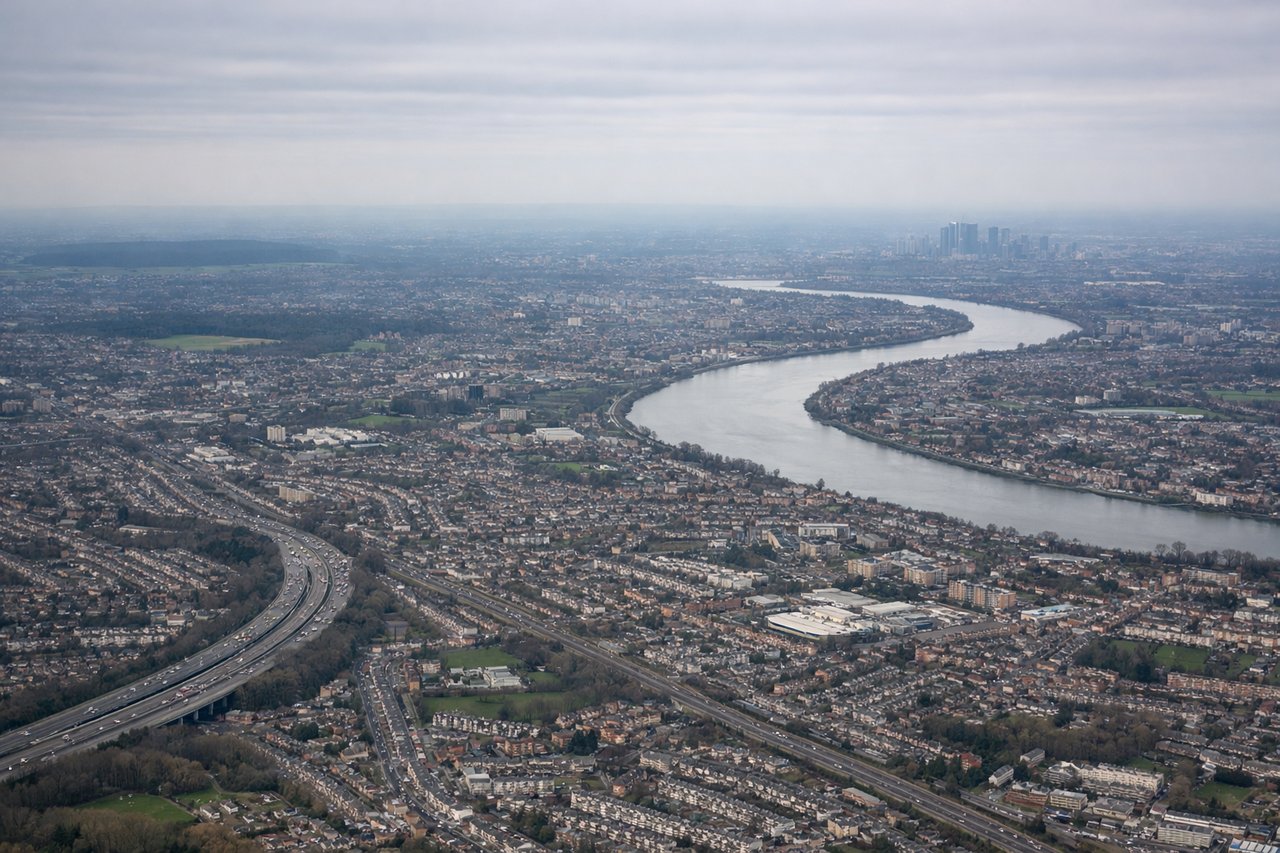
LEFTHeathrow primarily uses westerly runways (09L/27R and 09R/27L). Landing on 27L or 27R from the east, the left side tracks over central London giving you views of the Thames, the City, and recognizable landmarks as you descend through 3,000-5,000 feet on the ILS approach. The right side sees mostly suburban west London and Windsor.
Landmarks on this routeAll landmarks →
Will your flight be in sunlight?
Pick a date and time in the Sun Map to watch the sun move across your whole flight.
About This Route
Which side of the plane should I sit on flying from Eppley Afld (OMA) to Heathrow (LHR)?
Sit on the Left side of the plane for the best views on flights from Omaha to London. Left side wins both ends of the flight. Over the Atlantic the views are similar on both sides, but the left seat delivers the Missouri River and Omaha on departure and the Thames corridor into London on arrival, making it the clear choice for the full journey.
What can I see during takeoff from Eppley Afld in Omaha?
During takeoff from Eppley Afld (OMA), sit on the Left side for the best views. Omaha's primary departure runway is 14R/32L. Departing northeast on 14R, the left side gives you a clear view back over downtown Omaha and the Missouri River as you climb out. The river's wide bend and the city grid are easily distinguishable from low altitude. Notable sights include: Downtown Omaha skyline, Missouri River bend, Council Bluffs Iowa grid across the river, Eppley Airfield itself receding below.
What can I see when landing at Heathrow in London?
When landing at Heathrow (LHR), sit on the Left side for the best views. Heathrow primarily uses westerly runways (09L/27R and 09R/27L). Landing on 27L or 27R from the east, the left side tracks over central London giving you views of the Thames, the City, and recognizable landmarks as you descend through 3,000-5,000 feet on the ILS approach. The right side sees mostly suburban west London and Windsor. Notable sights include: River Thames and its bends through central London, Windsor Castle and Windsor Great Park to the south, Wembley Stadium arch visible to the north, the M25 motorway ring.
How long is the flight from Omaha to London?
The flight from Eppley Afld (OMA) to Heathrow (LHR) takes about 9 hours. The shortest flight path between them is 4,272 miles (6,876 km); winds and air traffic control usually add a few percent.
What does the Omaha to London flight path pass over?
The great circle route from Omaha to London tracks northeast over the Great Lakes region, crossing Lake Michigan or Lake Erie depending on exact routing, then over southern Ontario and Quebec. It exits North America near Newfoundland or Labrador, crosses the North Atlantic passing south of Greenland and Iceland, then enters European airspace over Ireland before tracking southeast across England. Mid-Atlantic you may see sea ice or icebergs near the Labrador Sea in winter months. The Irish coastline and patchwork green fields of County Clare or Connaught are often the first European landfall visible below.