Porto to Amsterdam is 991 miles (1,595 km), a flight of about 2 hours 20 minutes.
The right side wins overall because the Porto departure view of the Douro estuary and Atlantic coast is genuinely spectacular and hard to beat. During the cruise, the right side also tracks closer to the Spanish and French Atlantic coastline as the route heads north, with the Bay of Biscay visible to the right in the middle portion of the flight. The Amsterdam landing view on the left is good but the Dutch polder landscape is relatively flat and uniform.
Flight Path
The route tracks northeast over northern Portugal and crosses into Spain over Galicia, then follows the Atlantic coast northward over the Bay of Biscay. Over France the route passes inland over Brittany and Normandy. The Bay of Biscay is the most visually distinctive midpoint feature — a deep blue open ocean expanse visible to the right side at cruise altitude around 35,000 feet. The Loire Valley and its river system are faintly traceable below as the route crosses central-western France. The English Channel coastline of northern France and Belgium appears in the final descent phase.
Great circle distance and headings ›Phase by phase
Takeoff from OPO
RIGHTPorto airport's primary departure runway 35 sends aircraft northward over the coast. The right side gives you the Douro River mouth, the Atlantic coastline stretching south, and the city of Porto itself with its historic bridges. The left side faces inland toward unremarkable suburban sprawl.
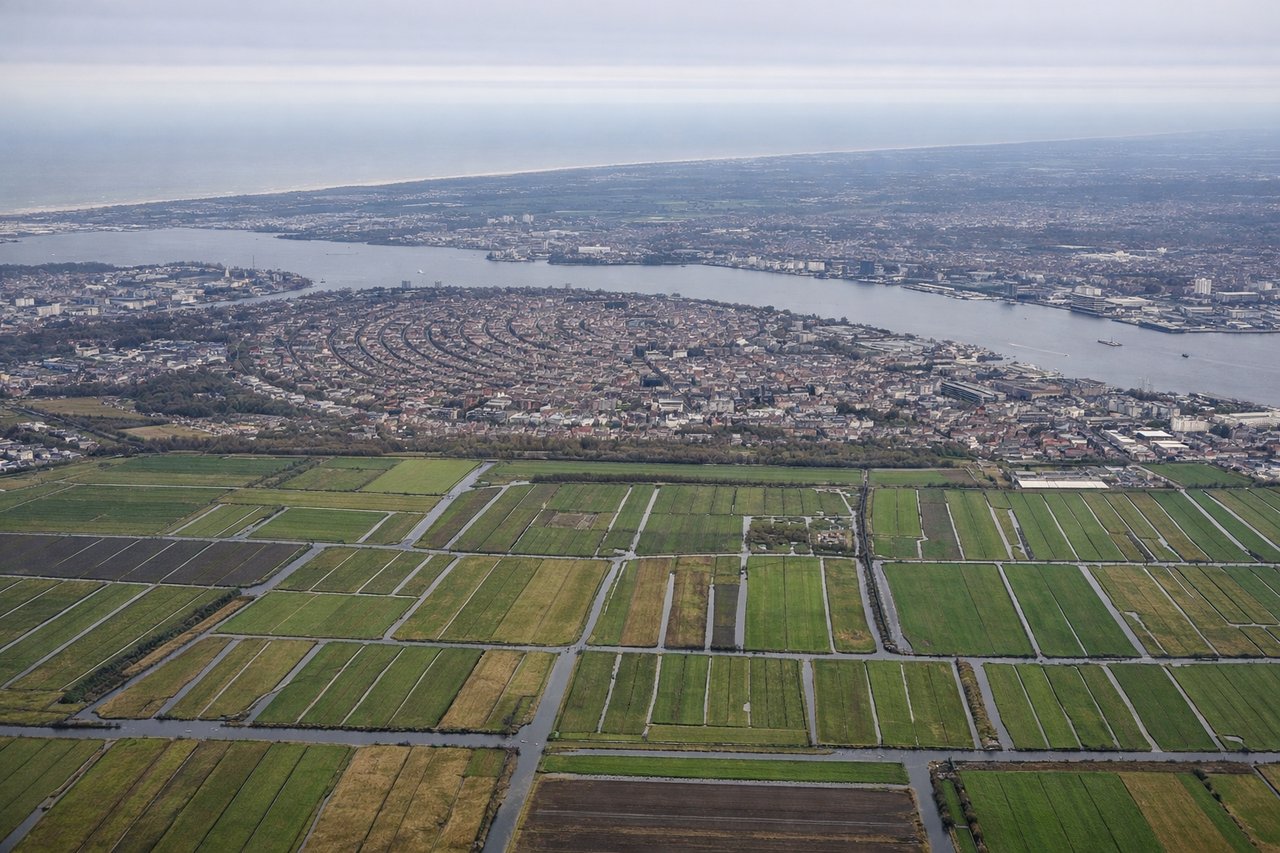
Landing at AMS
LEFTSchiphol primarily uses runways oriented northeast-southwest. On approach from the south, the left side gives you the best view of Amsterdam's canal ring, the IJ waterway, and the flat Dutch polder landscape with its characteristic windmills and drainage channels. The right side faces west toward open agricultural land and the North Sea coast.
Landmarks on this routeAll landmarks →
Will your flight be in sunlight?
Pick a date and time in the Sun Map to watch the sun move across your whole flight.
About This Route
Which side of the plane should I sit on flying from Porto (OPO) to Schiphol (AMS)?
Sit on the Right side of the plane for the best views on flights from Porto to Amsterdam. The right side wins overall because the Porto departure view of the Douro estuary and Atlantic coast is genuinely spectacular and hard to beat. During the cruise, the right side also tracks closer to the Spanish and French Atlantic coastline as the route heads north, with the Bay of Biscay visible to the right in the middle portion of the flight. The Amsterdam landing view on the left is good but the Dutch polder landscape is relatively flat and uniform.
What can I see during takeoff from Porto in Porto?
During takeoff from Porto (OPO), sit on the Right side for the best views. Porto airport's primary departure runway 35 sends aircraft northward over the coast. The right side gives you the Douro River mouth, the Atlantic coastline stretching south, and the city of Porto itself with its historic bridges. The left side faces inland toward unremarkable suburban sprawl. Notable sights include: Douro River mouth and estuary, Atlantic Ocean coastline, Porto city center and Dom Luís I Bridge area, Matosinhos harbor.
What can I see when landing at Schiphol in Amsterdam?
When landing at Schiphol (AMS), sit on the Left side for the best views. Schiphol primarily uses runways oriented northeast-southwest. On approach from the south, the left side gives you the best view of Amsterdam's canal ring, the IJ waterway, and the flat Dutch polder landscape with its characteristic windmills and drainage channels. The right side faces west toward open agricultural land and the North Sea coast. Notable sights include: Amsterdam canal ring and city center, IJ waterway and Amsterdam harbor, Dutch polder farmland with drainage ditches, Haarlem city to the west visible on right.
How long is the flight from Porto to Amsterdam?
The flight from Porto (OPO) to Schiphol (AMS) takes about 2 hours 20 minutes. The shortest flight path between them is 991 miles (1,595 km); winds and air traffic control usually add a few percent.
What does the Porto to Amsterdam flight path pass over?
The route tracks northeast over northern Portugal and crosses into Spain over Galicia, then follows the Atlantic coast northward over the Bay of Biscay. Over France the route passes inland over Brittany and Normandy. The Bay of Biscay is the most visually distinctive midpoint feature — a deep blue open ocean expanse visible to the right side at cruise altitude around 35,000 feet. The Loire Valley and its river system are faintly traceable below as the route crosses central-western France. The English Channel coastline of northern France and Belgium appears in the final descent phase.