Amsterdam to Porto is 991 miles (1,595 km), a flight of about 2 hours 30 minutes.
While the left seat wins at takeoff for Amsterdam views, the right seat delivers the more dramatic payoff at landing with the Douro estuary and Porto's historic waterfront. During the cruise south, the right side also picks up the Spanish meseta and the approach to the Iberian coast, making it the better overall choice for the full journey.
Flight Path
The flight tracks southwest over Belgium and northern France, crossing the Loire Valley in central France, then over the Bay of Biscay coastline near Bordeaux or Biarritz, crossing the Pyrenees or skirting the Bay of Biscay coast into Spain, then tracking over the Spanish meseta (Castile plateau) before descending toward the Atlantic coast of Portugal and the Douro valley.
Great circle distance and headings ›Phase by phase
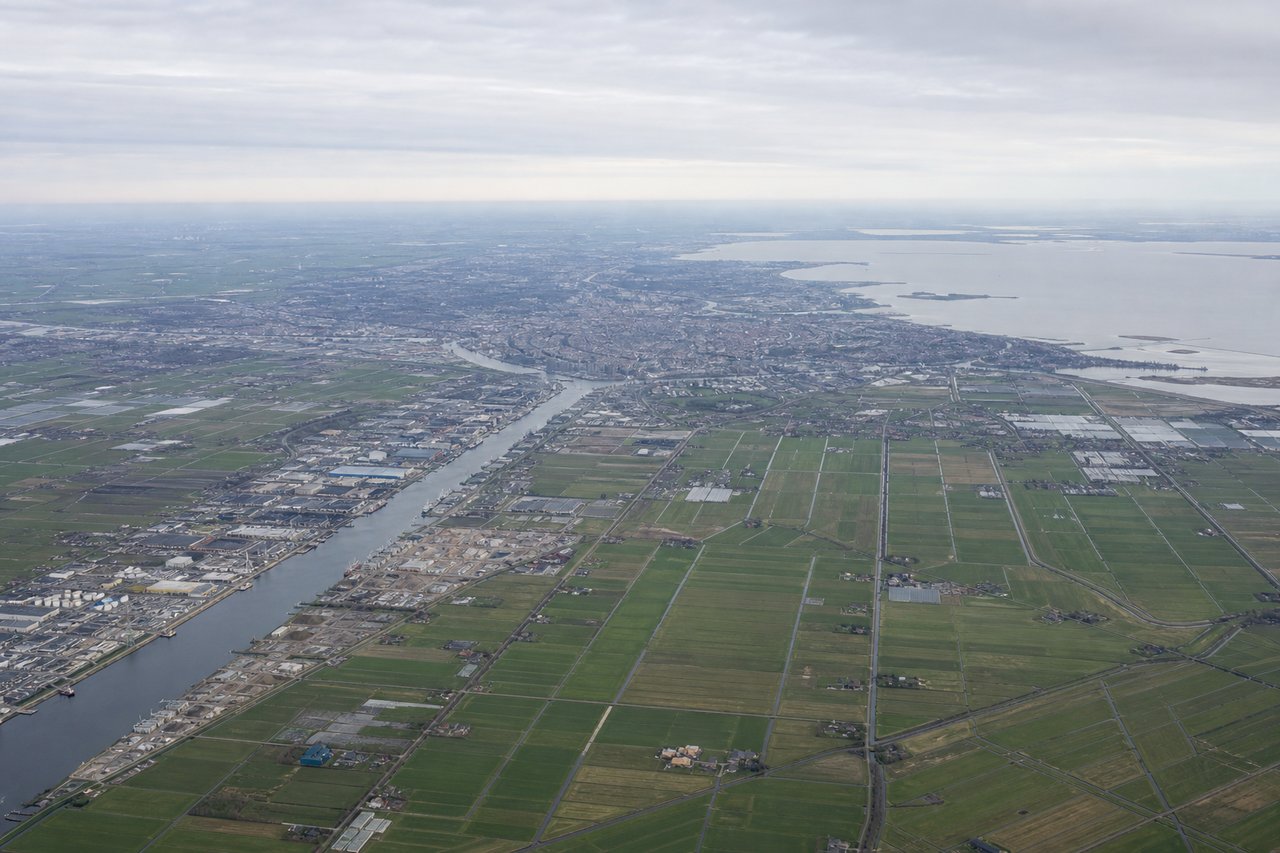
Takeoff from AMS
LEFTSchiphol typically departs southbound on runway 18R or 18C, meaning a left-side seat faces east over Amsterdam city center and the IJ waterway. You get a clear view of the canal ring, the port of Amsterdam, and the distinctive urban grid before climbing out over the Dutch polders.
Landing at OPO
RIGHTPorto's runway 35 approach comes in from the south over the Atlantic coast, meaning a right-side seat faces east toward the Douro River estuary, the historic Ribeira district, and the Dom Luís I Bridge. The left side faces open ocean with little to see.
Landmarks on this routeAll landmarks →
Will your flight be in sunlight?
Pick a date and time in the Sun Map to watch the sun move across your whole flight.
About This Route
Which side of the plane should I sit on flying from Schiphol (AMS) to Porto (OPO)?
Sit on the Right side of the plane for the best views on flights from Amsterdam to Porto. While the left seat wins at takeoff for Amsterdam views, the right seat delivers the more dramatic payoff at landing with the Douro estuary and Porto's historic waterfront. During the cruise south, the right side also picks up the Spanish meseta and the approach to the Iberian coast, making it the better overall choice for the full journey.
What can I see during takeoff from Schiphol in Amsterdam?
During takeoff from Schiphol (AMS), sit on the Left side for the best views. Schiphol typically departs southbound on runway 18R or 18C, meaning a left-side seat faces east over Amsterdam city center and the IJ waterway. You get a clear view of the canal ring, the port of Amsterdam, and the distinctive urban grid before climbing out over the Dutch polders. Notable sights include: Amsterdam canal ring, IJ waterway and port, Amstel River, Dutch polder landscape with windmills and dykes.
What can I see when landing at Porto in Porto?
When landing at Porto (OPO), sit on the Right side for the best views. Porto's runway 35 approach comes in from the south over the Atlantic coast, meaning a right-side seat faces east toward the Douro River estuary, the historic Ribeira district, and the Dom Luís I Bridge. The left side faces open ocean with little to see. Notable sights include: Douro River estuary, Ribeira waterfront district, Atlantic coastline north of Porto, Vila Nova de Gaia across the river.
How long is the flight from Amsterdam to Porto?
The flight from Schiphol (AMS) to Porto (OPO) takes about 2 hours 30 minutes. The shortest flight path between them is 991 miles (1,595 km); winds and air traffic control usually add a few percent.
What does the Amsterdam to Porto flight path pass over?
The flight tracks southwest over Belgium and northern France, crossing the Loire Valley in central France, then over the Bay of Biscay coastline near Bordeaux or Biarritz, crossing the Pyrenees or skirting the Bay of Biscay coast into Spain, then tracking over the Spanish meseta (Castile plateau) before descending toward the Atlantic coast of Portugal and the Douro valley.