Porto to Edinburgh is 1,044 miles (1,680 km), a flight of about 2 hours 50 minutes.
The left side offers the Porto coastline and river views on departure, likely stretches of Atlantic and Bay of Biscay coastline during cruise, and a scenic Firth of Forth approach into Edinburgh — while the right side mostly faces inland Iberian and English farmland with little variation.
Flight Path
Bay of Biscay, Brittany coastline near Ushant, and the English Channel are crossed during the mid-portion of the route before the aircraft continues north over England toward Scotland.
Great circle distance and headings ›Phase by phase
Takeoff from OPO
LEFTDeparting OPO on runway 17, the aircraft climbs south along the Douro estuary before turning north, giving left-side passengers a clear view of Porto's riverside skyline, the Douro river mouth, and the Atlantic coastline as the plane banks toward the ocean side of Portugal.
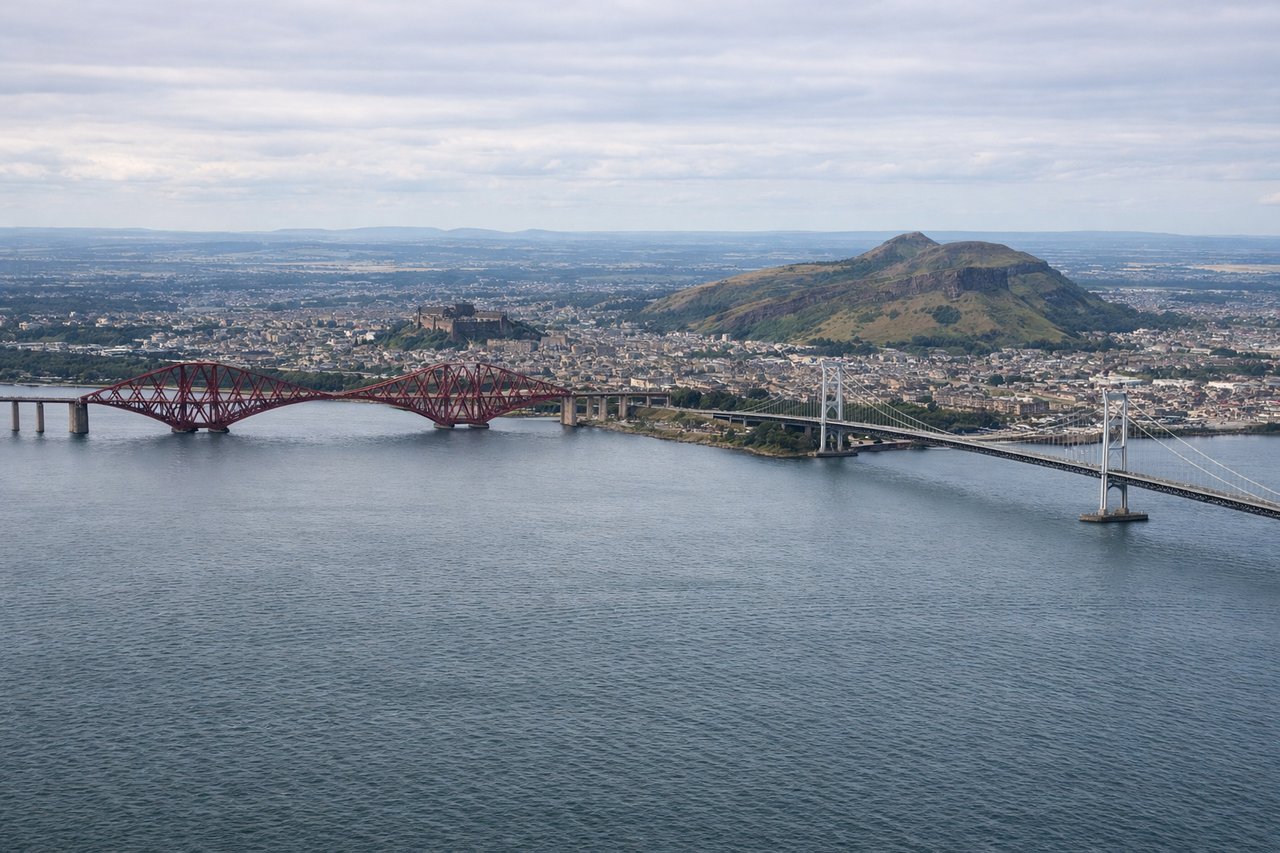
Landing at EDI
LEFTOn approach to EDI runway 24, aircraft typically track southwest over the Firth of Forth before turning onto final, giving left-side passengers views of the Forth Bridges, the estuary, and Edinburgh's skyline including the castle silhouette before touchdown.
Landmarks on this routeAll landmarks →
Will your flight be in sunlight?
Pick a date and time in the Sun Map to watch the sun move across your whole flight.
About This Route
Which side of the plane should I sit on flying from Porto (OPO) to Edinburgh (EDI)?
Sit on the Left side of the plane for the best views on flights from Porto to Edinburgh. The left side offers the Porto coastline and river views on departure, likely stretches of Atlantic and Bay of Biscay coastline during cruise, and a scenic Firth of Forth approach into Edinburgh — while the right side mostly faces inland Iberian and English farmland with little variation.
What can I see during takeoff from Porto in Porto?
During takeoff from Porto (OPO), sit on the Left side for the best views. Departing OPO on runway 17, the aircraft climbs south along the Douro estuary before turning north, giving left-side passengers a clear view of Porto's riverside skyline, the Douro river mouth, and the Atlantic coastline as the plane banks toward the ocean side of Portugal. Notable sights include: Douro River estuary, Porto city and harbor, Atlantic coastline, Matosinhos port.
What can I see when landing at Edinburgh in Edinburgh?
When landing at Edinburgh (EDI), sit on the Left side for the best views. On approach to EDI runway 24, aircraft typically track southwest over the Firth of Forth before turning onto final, giving left-side passengers views of the Forth Bridges, the estuary, and Edinburgh's skyline including the castle silhouette before touchdown. Notable sights include: Firth of Forth, Forth Bridges (rail and road), Edinburgh city skyline, Edinburgh Castle silhouette.
How long is the flight from Porto to Edinburgh?
The flight from Porto (OPO) to Edinburgh (EDI) takes about 2 hours 50 minutes. The shortest flight path between them is 1,044 miles (1,680 km); winds and air traffic control usually add a few percent.
What does the Porto to Edinburgh flight path pass over?
Bay of Biscay, Brittany coastline near Ushant, and the English Channel are crossed during the mid-portion of the route before the aircraft continues north over England toward Scotland.