Right side wins overall because takeoff scenery from Cork Harbour is more visually distinctive than the landing approach. The harbour's complex geography provides better detail, while the landing approach, though interesting, involves more open water and distant features.
Flown ORK to VCE? Did we get it right?
Flight Path
Cork to Venice is 1,042 miles (1,677 km), a flight of about 3 hours 15 minutes.
The flight path crosses the Celtic Sea and Bay of Biscay heading southeast. Notable features include the Cornish coast (visible from altitude if flying near the UK), the Brittany peninsula (northwest France), and the Loire Valley region. As you approach the Alps, the Rhône Valley becomes visible, with the Alps themselves appearing on the horizon as you descend into northern Italy. The Po River valley and Venetian plain are visible in the final descent phase.
Great circle distance and headings ›


Phase by phase
Takeoff from ORK
RIGHTRight side captures Cork Harbour and the southern Irish coastline as you climb out over the Celtic Sea. You'll see the distinctive inlet and surrounding green landscape before heading southeast across open water.
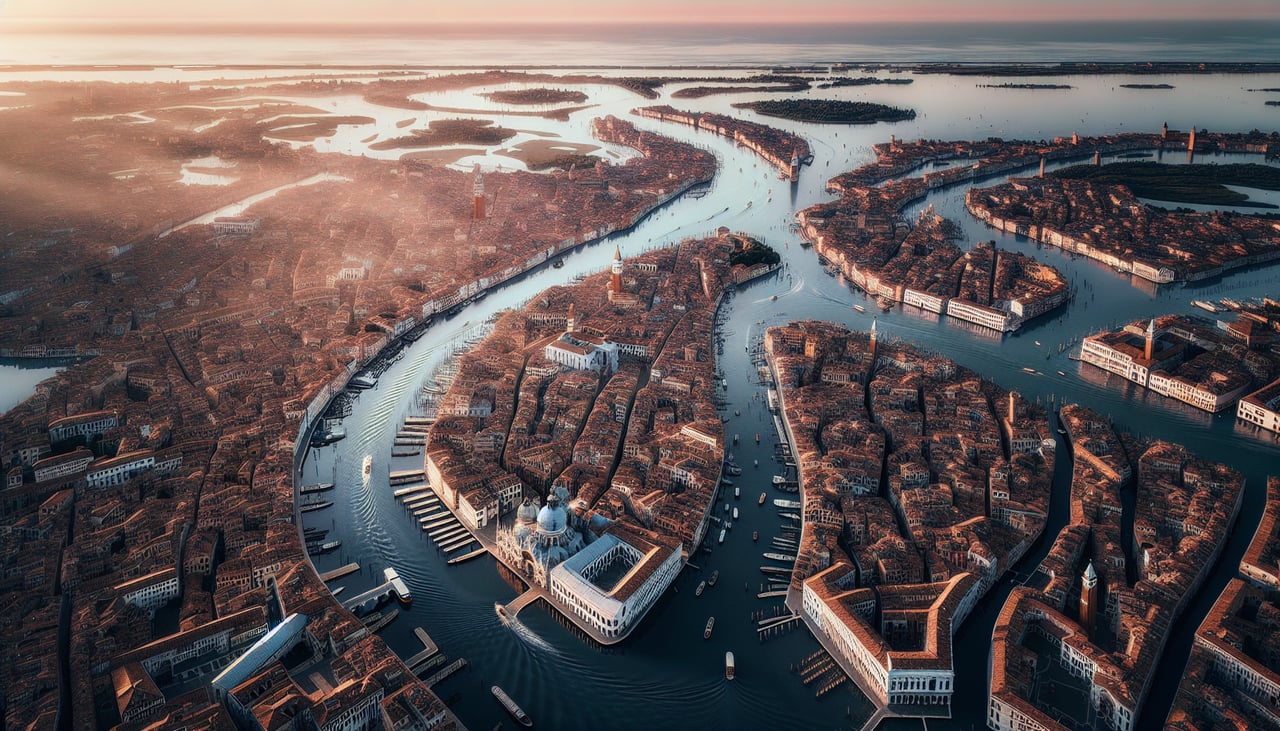
Landing at VCE
LEFTLeft side provides the best approach views into Venice. You'll see the Venetian Lagoon's distinctive shallow waters, the barrier islands (Lido), and the city's position on the mainland-lagoon interface as you descend toward Tessera.
Will your flight be in sunlight?
Pick a date and time in the Sun Map to watch the sun move across your whole flight.
About This Route
Which side of the plane should I sit on flying from Cork (ORK) to Venezia Tessera (VCE)?
Sit on the Right side of the plane for the best views on flights from Cork to Venice. Right side wins overall because takeoff scenery from Cork Harbour is more visually distinctive than the landing approach. The harbour's complex geography provides better detail, while the landing approach, though interesting, involves more open water and distant features.
What can I see during takeoff from Cork in Cork?
During takeoff from Cork (ORK), sit on the Right side for the best views. Right side captures Cork Harbour and the southern Irish coastline as you climb out over the Celtic Sea. You'll see the distinctive inlet and surrounding green landscape before heading southeast across open water. Notable sights include: Cork Harbour (immediate), Kinsale Head (southeast), Fastnet Rock area (distant southwest), Irish coastline cliffs.
What can I see when landing at Venezia Tessera in Venice?
When landing at Venezia Tessera (VCE), sit on the Left side for the best views. Left side provides the best approach views into Venice. You'll see the Venetian Lagoon's distinctive shallow waters, the barrier islands (Lido), and the city's position on the mainland-lagoon interface as you descend toward Tessera. Notable sights include: Venetian Lagoon (shallow turquoise waters), Lido barrier island, Mainland Venice and Rialto area, Dolomite foothills (distant north).
How long is the flight from Cork to Venice?
The flight from Cork (ORK) to Venezia Tessera (VCE) takes about 3 hours 15 minutes. The shortest flight path between them is 1,042 miles (1,677 km); winds and air traffic control usually add a few percent.
What does the Cork to Venice flight path pass over?
The flight path crosses the Celtic Sea and Bay of Biscay heading southeast. Notable features include the Cornish coast (visible from altitude if flying near the UK), the Brittany peninsula (northwest France), and the Loire Valley region. As you approach the Alps, the Rhône Valley becomes visible, with the Alps themselves appearing on the horizon as you descend into northern Italy. The Po River valley and Venetian plain are visible in the final descent phase.