Panama City to Miami is 437 miles (704 km), a flight of about 1 hour 20 minutes.
The right side misses the best of the Tyndall departure but delivers the spectacular Miami approach over Biscayne Bay and the downtown skyline, which is the visual highlight of the flight. During the cruise portion over the Florida peninsula, the right side also faces south toward the Everglades as you descend, offering broad views of the sawgrass marshes and water conservation areas.
Flight Path
The flight tracks southeast across the Florida Panhandle, crossing the Big Bend coast where the Gulf shoreline curves south near Apalachee Bay. Over central Florida you pass west of Gainesville and Ocala over flat pine and agricultural land. Descending toward Miami, the right side picks up the northern Everglades water conservation areas — large rectangular impoundments visible as flat reflective rectangles — before Biscayne Bay comes into view on final.
Great circle distance and headings ›Phase by phase
Takeoff from PAM
LEFTTyndall typically departs east or southeast toward the Gulf. A left/north-facing seat gives you views back over St. Andrews Bay, the Panama City Beach barrier island strip, and the emerald Gulf waters. The right side faces inland toward pine flatwoods with little of interest.
Landing at MIA
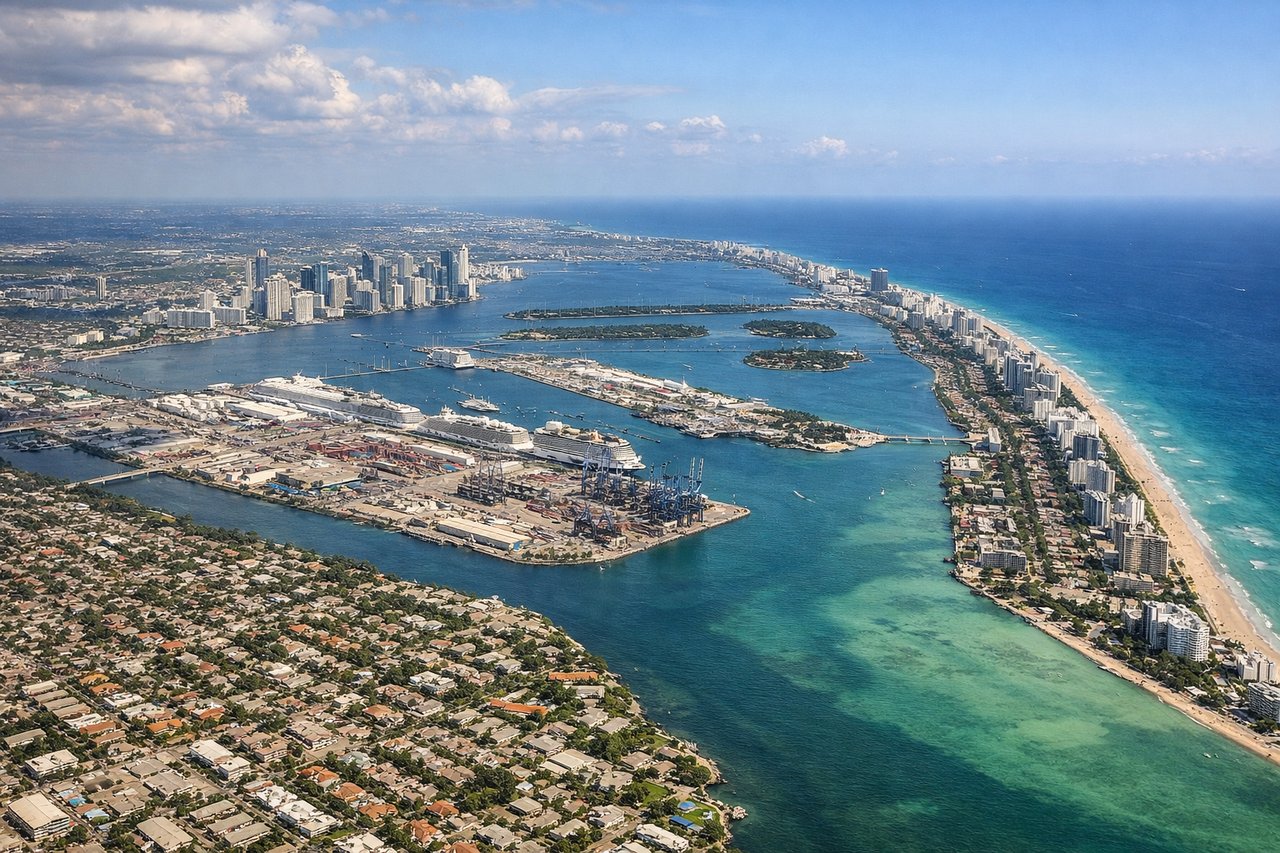
RIGHTMIA typically lands from the east on runway 08/09, meaning the approach comes in from over Biscayne Bay and the Miami Beach barrier island. A right/south seat gives you the best view of downtown Miami's skyline, Biscayne Bay, and the Port of Miami on final approach. The left side faces north toward suburban sprawl.
Landmarks on this routeAll landmarks →
Will your flight be in sunlight?
Pick a date and time in the Sun Map to watch the sun move across your whole flight.
About This Route
Which side of the plane should I sit on flying from Tyndall Afb (PAM) to Miami International (MIA)?
Sit on the Right side of the plane for the best views on flights from Panama City to Miami. The right side misses the best of the Tyndall departure but delivers the spectacular Miami approach over Biscayne Bay and the downtown skyline, which is the visual highlight of the flight. During the cruise portion over the Florida peninsula, the right side also faces south toward the Everglades as you descend, offering broad views of the sawgrass marshes and water conservation areas.
What can I see during takeoff from Tyndall Afb in Panama City?
During takeoff from Tyndall Afb (PAM), sit on the Left side for the best views. Tyndall typically departs east or southeast toward the Gulf. A left/north-facing seat gives you views back over St. Andrews Bay, the Panama City Beach barrier island strip, and the emerald Gulf waters. The right side faces inland toward pine flatwoods with little of interest. Notable sights include: St. Andrews Bay, Panama City Beach barrier island, Gulf of Mexico emerald shallows, St. Andrews State Park peninsula.
What can I see when landing at Miami International in Miami?
When landing at Miami International (MIA), sit on the Right side for the best views. MIA typically lands from the east on runway 08/09, meaning the approach comes in from over Biscayne Bay and the Miami Beach barrier island. A right/south seat gives you the best view of downtown Miami's skyline, Biscayne Bay, and the Port of Miami on final approach. The left side faces north toward suburban sprawl. Notable sights include: Biscayne Bay, downtown Miami skyline, Port of Miami, Miami Beach barrier island.
How long is the flight from Panama City to Miami?
The flight from Tyndall Afb (PAM) to Miami International (MIA) takes about 1 hour 20 minutes. The shortest flight path between them is 437 miles (704 km); winds and air traffic control usually add a few percent.
What does the Panama City to Miami flight path pass over?
The flight tracks southeast across the Florida Panhandle, crossing the Big Bend coast where the Gulf shoreline curves south near Apalachee Bay. Over central Florida you pass west of Gainesville and Ocala over flat pine and agricultural land. Descending toward Miami, the right side picks up the northern Everglades water conservation areas — large rectangular impoundments visible as flat reflective rectangles — before Biscayne Bay comes into view on final.