The right side offers the Cascade volcanoes on departure, glimpses of the Rocky Mountain front range and Great Salt Lake basin during cruise, and a clear downtown Dallas skyline view on arrival, while the left side mostly shows flat Willamette farmland and featureless Great Plains terrain.
Flown PDX to DAL? Did we get it right?
Flight Path
Portland to Dallas is 1,624 miles (2,614 km), a flight of about 3 hours 55 minutes.
Route crosses the high desert of central Oregon, the Snake River Plain of Idaho, the Great Salt Lake basin and Wasatch Range of Utah, the southern Rocky Mountain front in Colorado, and the flat plains of the Texas Panhandle before descending into North Texas.
Great circle distance and headings ›

Phase by phase

Takeoff from PDX
RIGHTPDX departures heading southeast toward Dallas climb out over the Willamette Valley with the Cascade volcanoes visible to the south. Mt. Hood and often Mt. Jefferson appear prominently off the right side as the aircraft turns onto its southeast course.
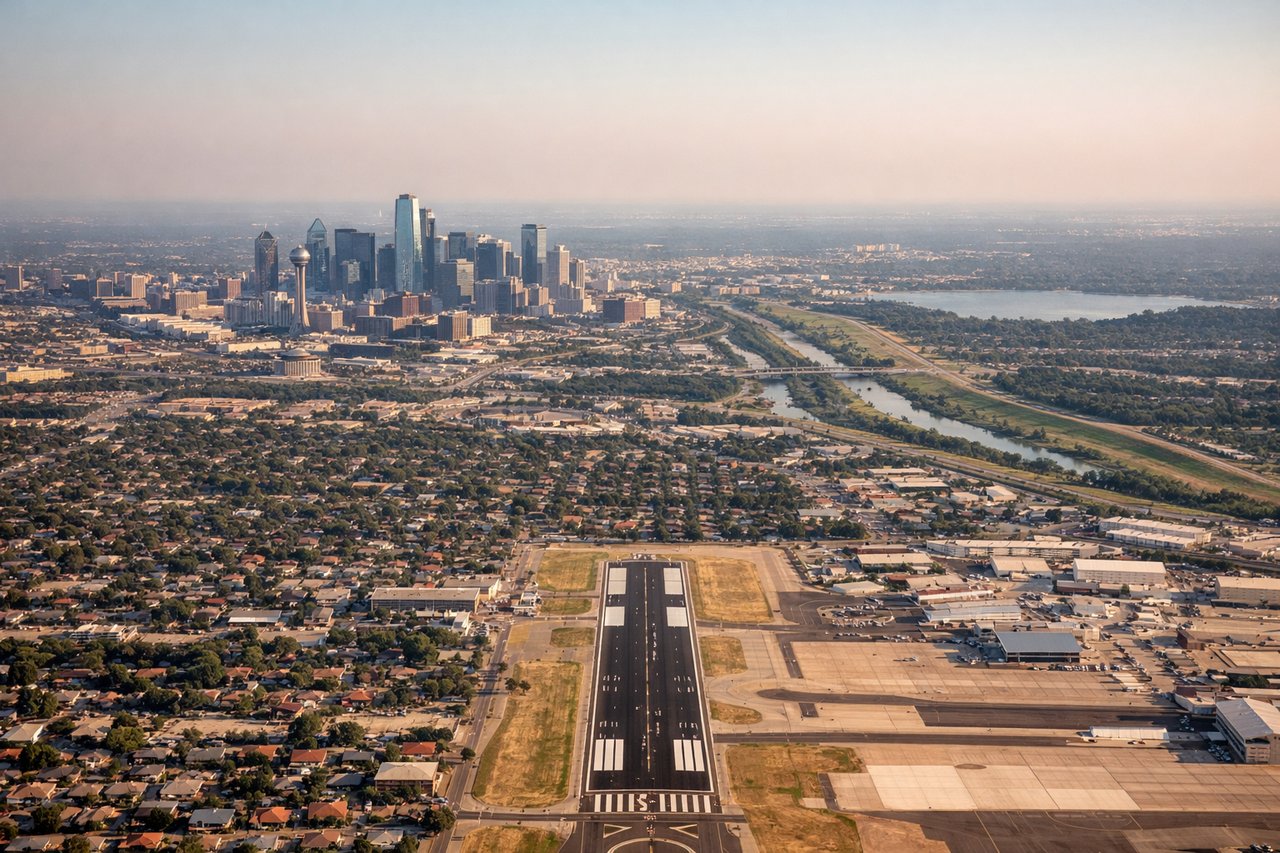
Landing at DAL
RIGHTArrivals into Love Field on runway 13 approach from the northwest and swing south over the city before landing, giving right-side passengers a clear view of downtown Dallas's skyline and the Trinity River as the plane descends.
Will your flight be in sunlight?
Pick a date and time in the Sun Map to watch the sun move across your whole flight.
About This Route
Which side of the plane should I sit on flying from Portland International (PDX) to Dallas Love Fld (DAL)?
Sit on the Right side of the plane for the best views on flights from Portland to Dallas. The right side offers the Cascade volcanoes on departure, glimpses of the Rocky Mountain front range and Great Salt Lake basin during cruise, and a clear downtown Dallas skyline view on arrival, while the left side mostly shows flat Willamette farmland and featureless Great Plains terrain.
What can I see during takeoff from Portland International in Portland?
During takeoff from Portland International (PDX), sit on the Right side for the best views. PDX departures heading southeast toward Dallas climb out over the Willamette Valley with the Cascade volcanoes visible to the south. Mt. Hood and often Mt. Jefferson appear prominently off the right side as the aircraft turns onto its southeast course. Notable sights include: Mt. Hood, Mt. Jefferson, Cascade Range foothills, Willamette Valley farmland.
What can I see when landing at Dallas Love Fld in Dallas?
When landing at Dallas Love Fld (DAL), sit on the Right side for the best views. Arrivals into Love Field on runway 13 approach from the northwest and swing south over the city before landing, giving right-side passengers a clear view of downtown Dallas's skyline and the Trinity River as the plane descends. Notable sights include: Downtown Dallas skyline, Reunion Tower, Trinity River, North Texas plains.
How long is the flight from Portland to Dallas?
The flight from Portland International (PDX) to Dallas Love Fld (DAL) takes about 3 hours 55 minutes. The shortest flight path between them is 1,624 miles (2,614 km); winds and air traffic control usually add a few percent.
What does the Portland to Dallas flight path pass over?
Route crosses the high desert of central Oregon, the Snake River Plain of Idaho, the Great Salt Lake basin and Wasatch Range of Utah, the southern Rocky Mountain front in Colorado, and the flat plains of the Texas Panhandle before descending into North Texas.