Right-side seats capture the most dramatic scenery on both segments: the Taihang Mountains during Beijing departure and the approach over Busan's coastal features. The takeoff views are particularly striking, making right the superior choice for this route.
Flown PEK to PUS? Did we get it right?
Flight Path
Beijing to Kimhae is 754 miles (1,214 km), a flight of about 2 hours 15 minutes.
The flight crosses the Yellow Sea at cruising altitude. At midpoint, the aircraft passes over open water with no significant landmarks visible. The route follows a direct southeast trajectory from Beijing toward the Korean Peninsula, crossing approximately 350 miles of sea. Coastal features of South Korea's western coast (Jeolla provinces) may be visible 30-40 minutes before landing, including the irregular coastline and scattered islands of the Korean west coast, but these are typically at the edge of visibility during cruise.
Great circle distance and headings ›Phase by phase
Takeoff from PEK
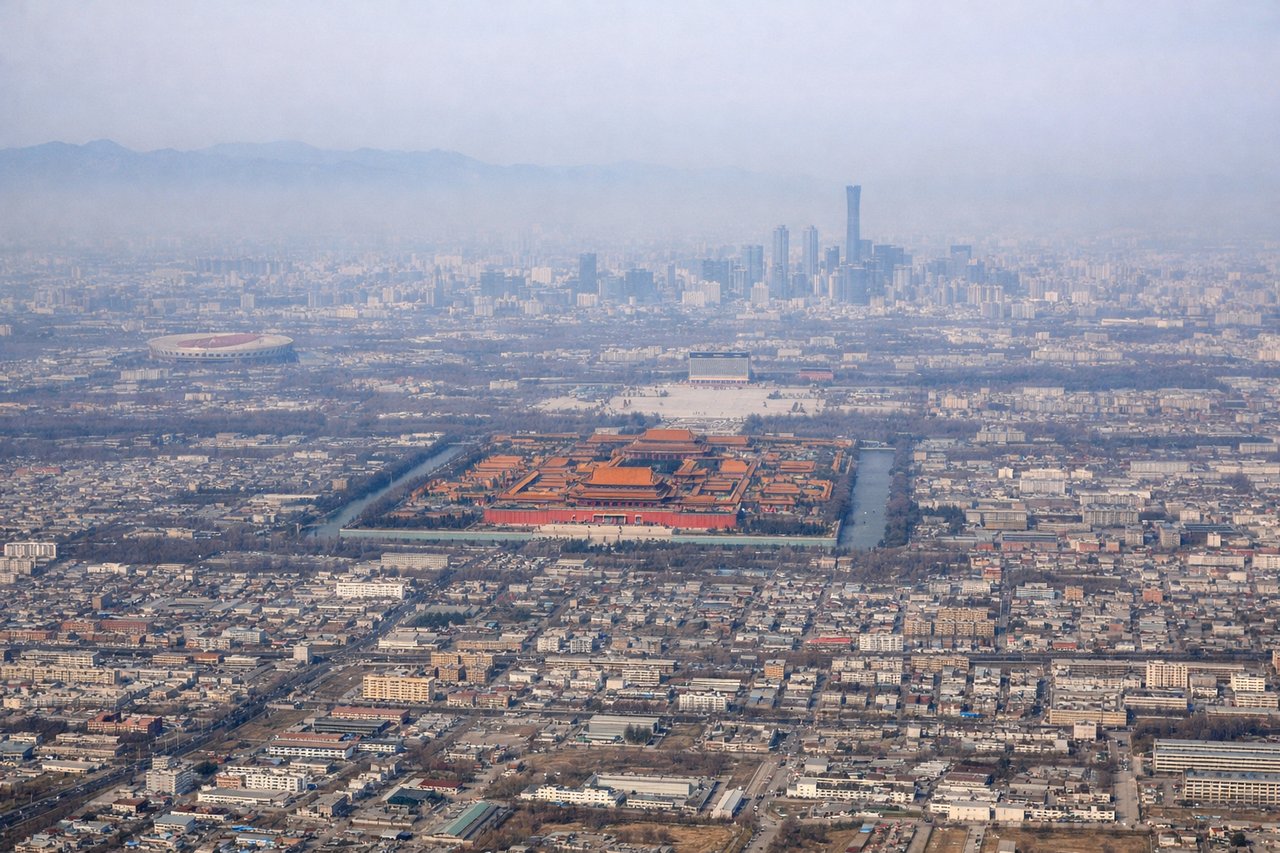
RIGHTRight-side seats offer views of the Ming Tombs and Yanqing District mountains as the aircraft climbs northwest from Beijing Capital. The terrain rises progressively toward the Taihang Mountains, creating a dramatic backdrop during the initial climb phase.
Landing at PUS
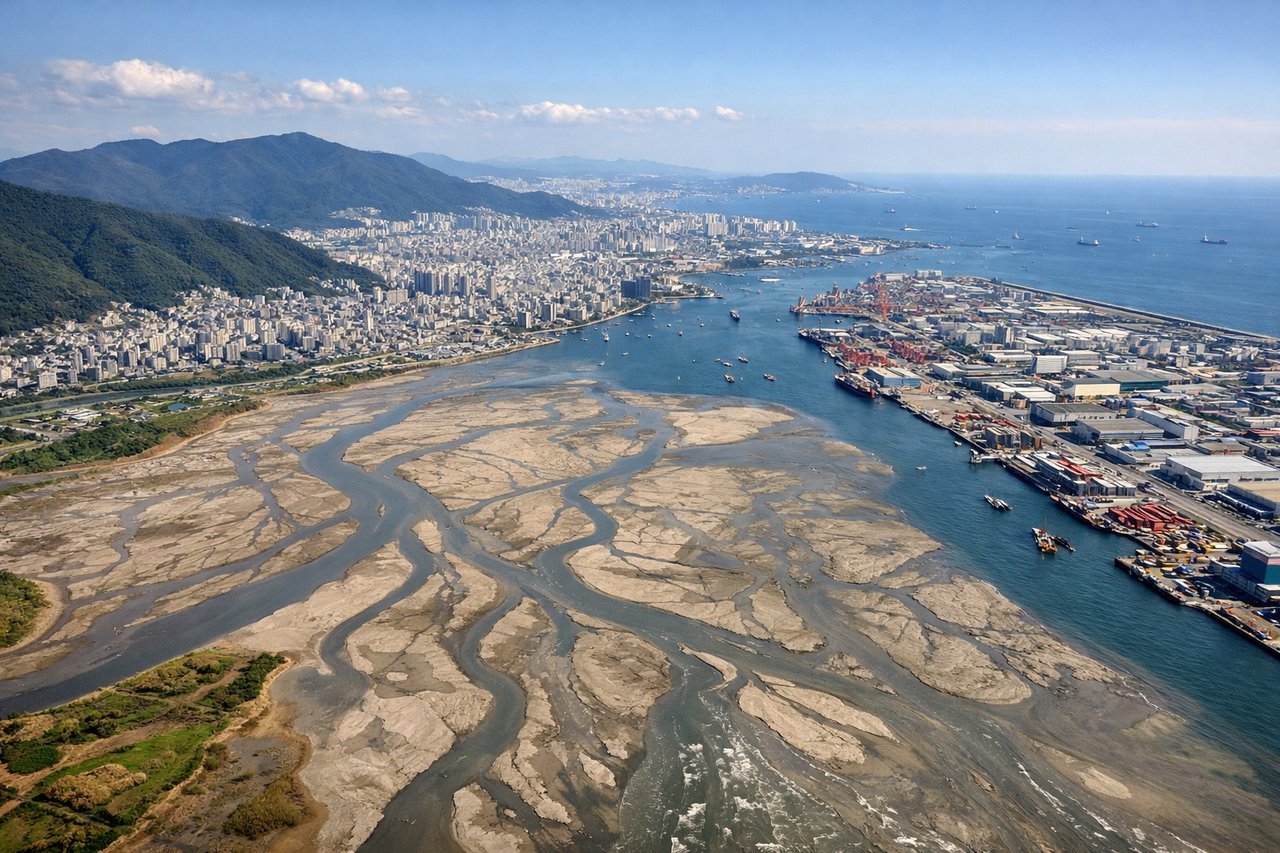
LEFTLeft-side seats provide excellent views during descent into Gimhae. The approach path over the Nakdong River estuary and Busan's coastal geography is best seen from the left. You'll see the river delta, Busan harbor, and the surrounding hills of the Geumjeong Mountains as you descend toward the runway.
Will your flight be in sunlight?
Pick a date and time in the Sun Map to watch the sun move across your whole flight.
About This Route
Which side of the plane should I sit on flying from Capital (PEK) to Gimhae International (PUS)?
Sit on the Right side of the plane for the best views on flights from Beijing to Kimhae. Right-side seats capture the most dramatic scenery on both segments: the Taihang Mountains during Beijing departure and the approach over Busan's coastal features. The takeoff views are particularly striking, making right the superior choice for this route.
What can I see during takeoff from Capital in Beijing?
During takeoff from Capital (PEK), sit on the Right side for the best views. Right-side seats offer views of the Ming Tombs and Yanqing District mountains as the aircraft climbs northwest from Beijing Capital. The terrain rises progressively toward the Taihang Mountains, creating a dramatic backdrop during the initial climb phase. Notable sights include: Ming Tombs (north of Beijing), Yanqing District foothills, Taihang Mountains (western horizon), urban sprawl of northwestern Beijing.
What can I see when landing at Gimhae International in Kimhae?
When landing at Gimhae International (PUS), sit on the Left side for the best views. Left-side seats provide excellent views during descent into Gimhae. The approach path over the Nakdong River estuary and Busan's coastal geography is best seen from the left. You'll see the river delta, Busan harbor, and the surrounding hills of the Geumjeong Mountains as you descend toward the runway. Notable sights include: Nakdong River estuary and delta, Busan harbor and port facilities, Geumjeong Mountains (east of Busan), Gadeok Island and surrounding coastal islands.
How long is the flight from Beijing to Kimhae?
The flight from Capital (PEK) to Gimhae International (PUS) takes about 2 hours 15 minutes. The shortest flight path between them is 754 miles (1,214 km); winds and air traffic control usually add a few percent.
What does the Beijing to Kimhae flight path pass over?
The flight crosses the Yellow Sea at cruising altitude. At midpoint, the aircraft passes over open water with no significant landmarks visible. The route follows a direct southeast trajectory from Beijing toward the Korean Peninsula, crossing approximately 350 miles of sea. Coastal features of South Korea's western coast (Jeolla provinces) may be visible 30-40 minutes before landing, including the irregular coastline and scattered islands of the Korean west coast, but these are typically at the edge of visibility during cruise.