Perth to Karratha is 777 miles (1,251 km), a flight of about 2 hours 15 minutes.
Right-side seats deliver superior viewing for both segments: Swan River and Perth's western geography on takeoff, then transition to views of the Pilbara's red earth and coastal features during the cruise and descent phases. The left side offers good landing views but misses the compelling takeoff scenery.
Flight Path
The flight path follows the Western Australian coast northward. Notable features include the Abrolhos Islands (visible from altitude as small rocky outcrops in the Indian Ocean, roughly 80 km west of the flight path), the Shark Bay region's shallow turquoise waters (visible to the west around the 45-minute mark), and the transition from coastal vegetation to inland Pilbara red earth and sparse scrubland as you approach Karratha. The landscape becomes progressively more arid and industrial, with scattered mining operations visible as small geometric disturbances in the red earth during the final descent phase.
Great circle distance and headings ›Phase by phase
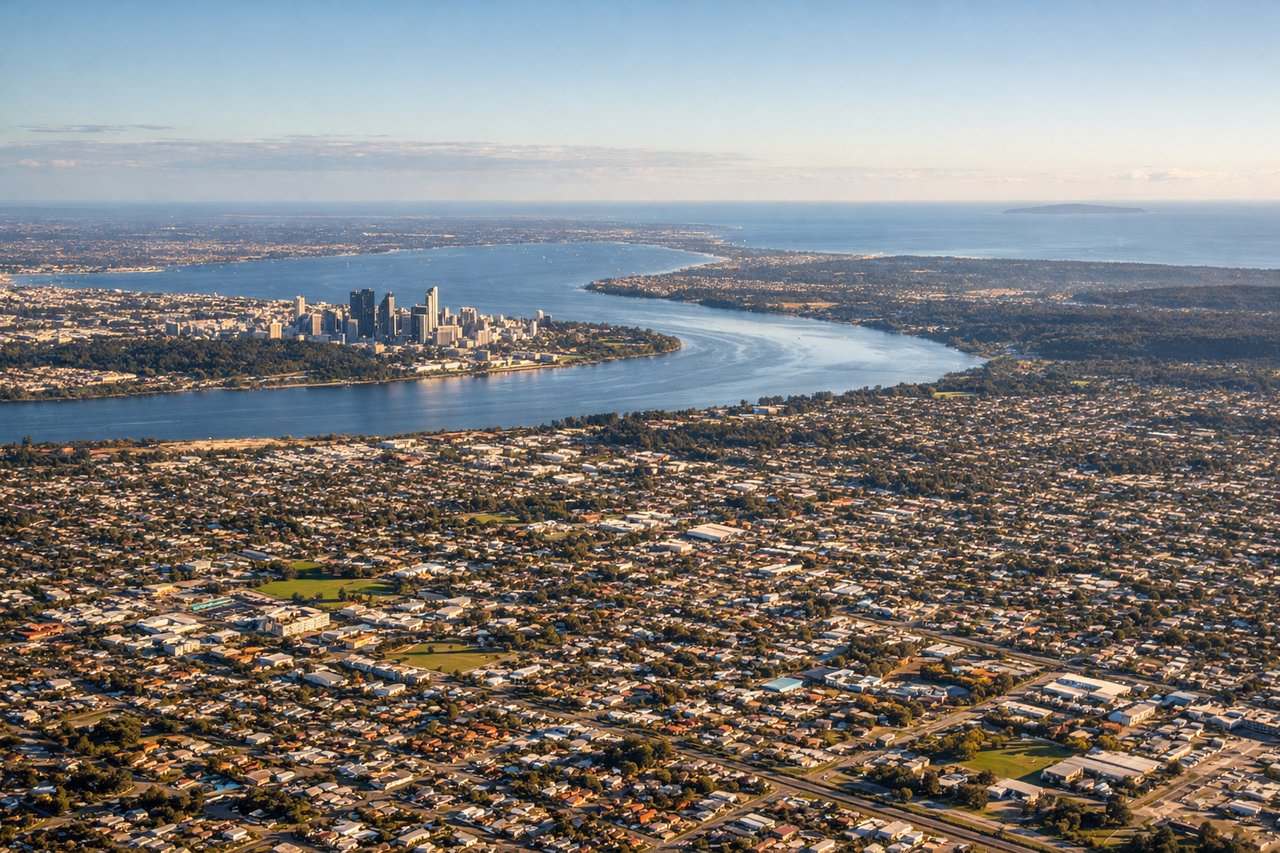
Takeoff from PER
RIGHTRight-side seats capture the Swan River estuary and Perth's western suburbs during northbound climb-out. The river's distinctive meanders and the contrast between urban development and water are clearly visible within the first 10 minutes of flight.
Landing at KTA
LEFTLeft-side seats offer views of Karratha's coastal geography and the Pilbara industrial landscape during descent. The town sits on a peninsula with visible port infrastructure, and the red earth of the Pilbara becomes increasingly apparent as you descend toward the runway.
Will your flight be in sunlight?
Pick a date and time in the Sun Map to watch the sun move across your whole flight.
About This Route
Which side of the plane should I sit on flying from Perth International (PER) to Karratha (KTA)?
Sit on the Right side of the plane for the best views on flights from Perth to Karratha. Right-side seats deliver superior viewing for both segments: Swan River and Perth's western geography on takeoff, then transition to views of the Pilbara's red earth and coastal features during the cruise and descent phases. The left side offers good landing views but misses the compelling takeoff scenery.
What can I see during takeoff from Perth International in Perth?
During takeoff from Perth International (PER), sit on the Right side for the best views. Right-side seats capture the Swan River estuary and Perth's western suburbs during northbound climb-out. The river's distinctive meanders and the contrast between urban development and water are clearly visible within the first 10 minutes of flight. Notable sights include: Swan River estuary, Perth city grid, Darling Range escarpment (distant eastern horizon), Indian Ocean coastline.
What can I see when landing at Karratha in Karratha?
When landing at Karratha (KTA), sit on the Left side for the best views. Left-side seats offer views of Karratha's coastal geography and the Pilbara industrial landscape during descent. The town sits on a peninsula with visible port infrastructure, and the red earth of the Pilbara becomes increasingly apparent as you descend toward the runway. Notable sights include: Karratha town and port facilities, Dampier Archipelago (islands offshore), Pilbara red earth and sparse vegetation, King Bay.
How long is the flight from Perth to Karratha?
The flight from Perth International (PER) to Karratha (KTA) takes about 2 hours 15 minutes. The shortest flight path between them is 777 miles (1,251 km); winds and air traffic control usually add a few percent.
What does the Perth to Karratha flight path pass over?
The flight path follows the Western Australian coast northward. Notable features include the Abrolhos Islands (visible from altitude as small rocky outcrops in the Indian Ocean, roughly 80 km west of the flight path), the Shark Bay region's shallow turquoise waters (visible to the west around the 45-minute mark), and the transition from coastal vegetation to inland Pilbara red earth and sparse scrubland as you approach Karratha. The landscape becomes progressively more arid and industrial, with scattered mining operations visible as small geometric disturbances in the red earth during the final descent phase.