While takeoff offers interesting urban and coastal plain views on the right, the landing approach on the left provides more dramatic and sustained scenery—the Wasatch Range is one of the most visually striking mountain ranges in the western US, and the Great Salt Lake's unique geography is far more distinctive than the relatively flat terrain around Philadelphia.
Flown PHL to SLC? Did we get it right?
Flight Path
Philadelphia to Salt Lake City is 1,922 miles (3,093 km), a flight of about 5 hours.
The flight path crosses the Appalachian Mountains (visible during the first 90 minutes), then transitions over the Ohio River valley and the Great Plains. Around the midpoint near the Indiana-Illinois border, the terrain flattens significantly. As you progress westward over Iowa, Missouri, and Kansas, you'll see vast agricultural plains with geometric field patterns. The Rocky Mountains begin to appear on the horizon around 3.5 hours into the flight, with the Front Range near Denver becoming prominent. The final approach into SLC brings the Wasatch Range into sharp relief as you descend over Utah's high desert terrain.
Great circle distance and headings ›


Phase by phase
Takeoff from PHL
RIGHTPHL typically departs eastbound (Runways 09L/09R) or westbound (27L/27R). Right-side seats on westbound departures offer views of the Delaware River and Philadelphia's downtown skyline as you climb out. On eastbound departures, right seats show the New Jersey Pine Barrens and Atlantic coastal plains receding behind.
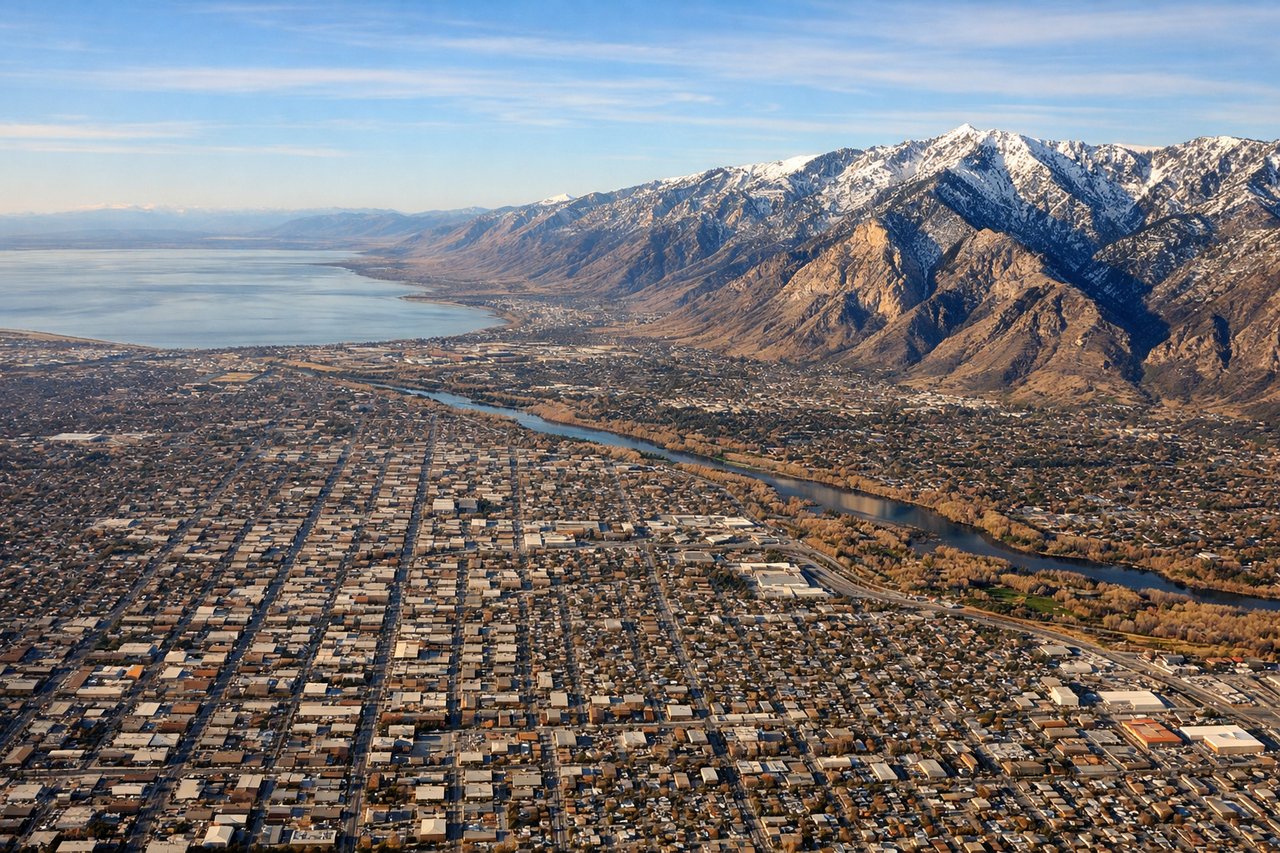
Landing at SLC
LEFTSLC approaches typically use Runways 16L/16R (northbound) or 34L/34R (southbound). Left-side seats on northbound approaches descend over the Wasatch Range's eastern slopes and the Jordan River valley, providing dramatic views of the mountains and the Great Salt Lake's southern arm. Southbound approaches also favor left seats for views of the Oquirrh Mountains and the lake.
Will your flight be in sunlight?
Pick a date and time in the Sun Map to watch the sun move across your whole flight.
About This Route
Which side of the plane should I sit on flying from Philadelphia International (PHL) to Salt Lake City International (SLC)?
Sit on the Left side of the plane for the best views on flights from Philadelphia to Salt Lake City. While takeoff offers interesting urban and coastal plain views on the right, the landing approach on the left provides more dramatic and sustained scenery—the Wasatch Range is one of the most visually striking mountain ranges in the western US, and the Great Salt Lake's unique geography is far more distinctive than the relatively flat terrain around Philadelphia.
What can I see during takeoff from Philadelphia International in Philadelphia?
During takeoff from Philadelphia International (PHL), sit on the Right side for the best views. PHL typically departs eastbound (Runways 09L/09R) or westbound (27L/27R). Right-side seats on westbound departures offer views of the Delaware River and Philadelphia's downtown skyline as you climb out. On eastbound departures, right seats show the New Jersey Pine Barrens and Atlantic coastal plains receding behind. Notable sights include: Delaware River, Philadelphia downtown skyline, Ben Franklin Bridge, New Jersey Pine Barrens.
What can I see when landing at Salt Lake City International in Salt Lake City?
When landing at Salt Lake City International (SLC), sit on the Left side for the best views. SLC approaches typically use Runways 16L/16R (northbound) or 34L/34R (southbound). Left-side seats on northbound approaches descend over the Wasatch Range's eastern slopes and the Jordan River valley, providing dramatic views of the mountains and the Great Salt Lake's southern arm. Southbound approaches also favor left seats for views of the Oquirrh Mountains and the lake. Notable sights include: Wasatch Range, Great Salt Lake, Jordan River valley, Oquirrh Mountains.
How long is the flight from Philadelphia to Salt Lake City?
The flight from Philadelphia International (PHL) to Salt Lake City International (SLC) takes about 5 hours. The shortest flight path between them is 1,922 miles (3,093 km); winds and air traffic control usually add a few percent.
What does the Philadelphia to Salt Lake City flight path pass over?
The flight path crosses the Appalachian Mountains (visible during the first 90 minutes), then transitions over the Ohio River valley and the Great Plains. Around the midpoint near the Indiana-Illinois border, the terrain flattens significantly. As you progress westward over Iowa, Missouri, and Kansas, you'll see vast agricultural plains with geometric field patterns. The Rocky Mountains begin to appear on the horizon around 3.5 hours into the flight, with the Front Range near Denver becoming prominent. The final approach into SLC brings the Wasatch Range into sharp relief as you descend over Utah's high desert terrain.