Palermo to Istanbul is 857 miles (1,379 km), a flight of about 2 hours 20 minutes.
The right side benefits from Mount Etna's silhouette shortly after departure, a cruise track that skirts the Aegean islands and Turkey's scenic western coast, and a Bosphorus/Marmara view on arrival into Istanbul — more varied and dramatic than the mostly open-water Ionian crossing seen from the left.
Flight Path
Ionian Sea, southern Peloponnese coastline, Cyclades and Dodecanese islands in the Aegean, western Turkish coastline near Izmir
Great circle distance and headings ›
_in_Istanbul.jpg?width=600)
Phase by phase
Takeoff from PMO
LEFTDeparting PMO on runway 07, the climb-out tracks along Sicily's rugged north coast, giving left-side passengers a good look at the Tyrrhenian coastline and the volcanic Aeolian Islands (Stromboli, Vulcano) poking out of the sea to the northeast before the aircraft turns onto its easterly routing.
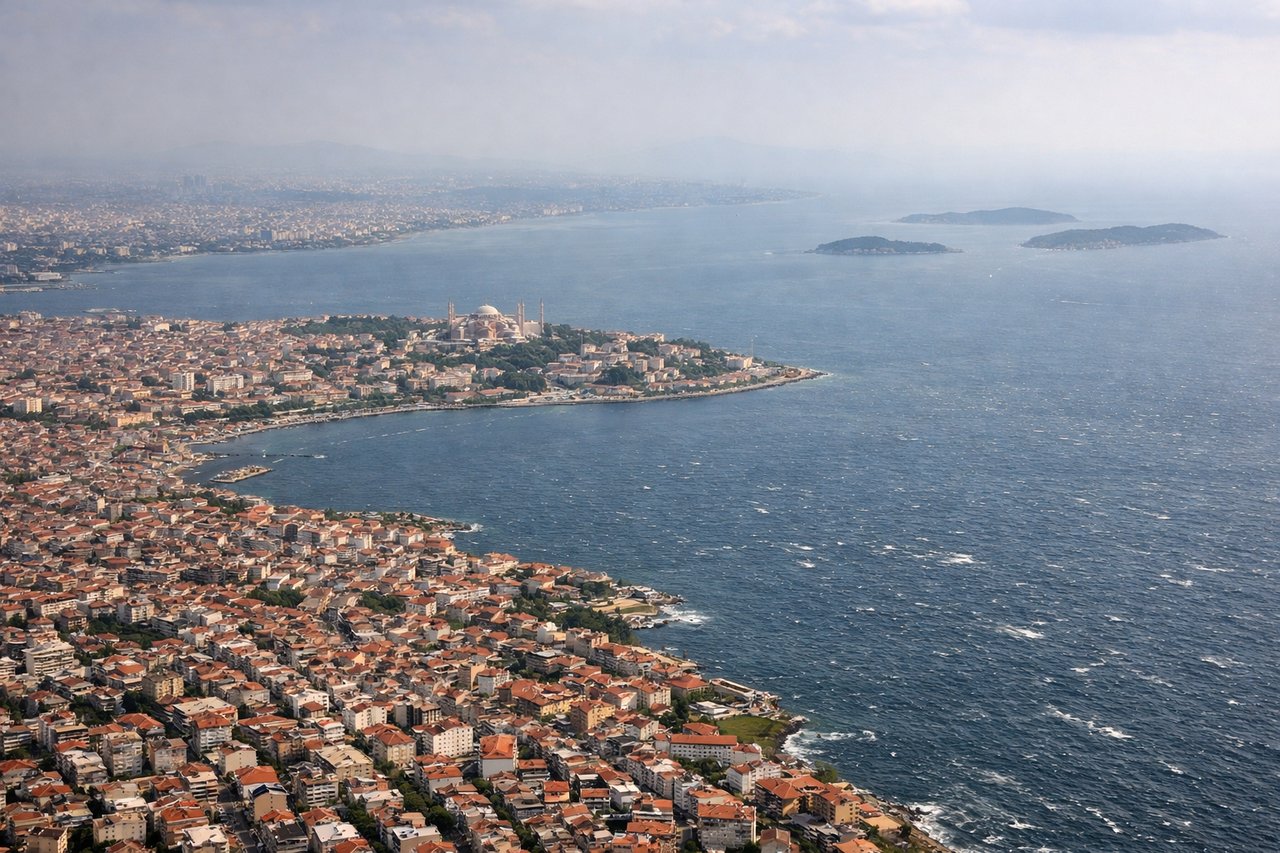
Landing at IST
RIGHTOn approach into IST, arrivals from the west/southwest commonly track up over the Sea of Marmara before turning onto one of the north-south runways, putting the Bosphorus strait, the Sea of Marmara's edge, and Istanbul's dense skyline on the right side of the aircraft during the descent.
Landmarks on this routeAll landmarks →
Will your flight be in sunlight?
Pick a date and time in the Sun Map to watch the sun move across your whole flight.
About This Route
Which side of the plane should I sit on flying from Falcone–Borsellino Airport (PMO) to İstanbul Airport (IST)?
Sit on the Right side of the plane for the best views on flights from Palermo to Istanbul. The right side benefits from Mount Etna's silhouette shortly after departure, a cruise track that skirts the Aegean islands and Turkey's scenic western coast, and a Bosphorus/Marmara view on arrival into Istanbul — more varied and dramatic than the mostly open-water Ionian crossing seen from the left.
What can I see during takeoff from Falcone–Borsellino Airport in Palermo?
During takeoff from Falcone–Borsellino Airport (PMO), sit on the Left side for the best views. Departing PMO on runway 07, the climb-out tracks along Sicily's rugged north coast, giving left-side passengers a good look at the Tyrrhenian coastline and the volcanic Aeolian Islands (Stromboli, Vulcano) poking out of the sea to the northeast before the aircraft turns onto its easterly routing. Notable sights include: Sicily's north coast, Aeolian Islands, Stromboli volcano, Tyrrhenian Sea.
What can I see when landing at İstanbul Airport in Istanbul?
When landing at İstanbul Airport (IST), sit on the Right side for the best views. On approach into IST, arrivals from the west/southwest commonly track up over the Sea of Marmara before turning onto one of the north-south runways, putting the Bosphorus strait, the Sea of Marmara's edge, and Istanbul's dense skyline on the right side of the aircraft during the descent. Notable sights include: Sea of Marmara, Bosphorus strait, Istanbul skyline, Black Sea coastline.
How long is the flight from Palermo to Istanbul?
The flight from Falcone–Borsellino Airport (PMO) to İstanbul Airport (IST) takes about 2 hours 20 minutes. The shortest flight path between them is 857 miles (1,379 km); winds and air traffic control usually add a few percent.
What does the Palermo to Istanbul flight path pass over?
Ionian Sea, southern Peloponnese coastline, Cyclades and Dodecanese islands in the Aegean, western Turkish coastline near Izmir