Palermo to Paris is 914 miles (1,470 km), a flight of about 2 hours 45 minutes.
While takeoff offers brief coastal scenery, the landing approach into CDG provides more sustained and dramatic views of the Seine River system and the Île-de-France landscape. Left-side seats capture the most visually interesting portion of the flight path during descent.
Flight Path
The flight path crosses the Mediterranean toward the Italian coast, then tracks north-northwest over the Apennines (visible as a distant ridge on clear days), continues over the Ligurian Sea, then inland across southeastern France. Notable features include the Alps on the eastern horizon (visible on very clear days), the Rhône Valley corridor, and the transition into the Île-de-France basin. The Massif Central remains to the left (east) during the northern portion of the flight but typically too distant for clear detail.
Great circle distance and headings ›


.jpg?width=600)
Phase by phase
Takeoff from PMO
RIGHTRight-side seats offer immediate views of the Tyrrhenian Sea and the Palermo coastline as the aircraft climbs northwestward. You'll see the curved shoreline and nearby islands clearly during the initial climb-out.
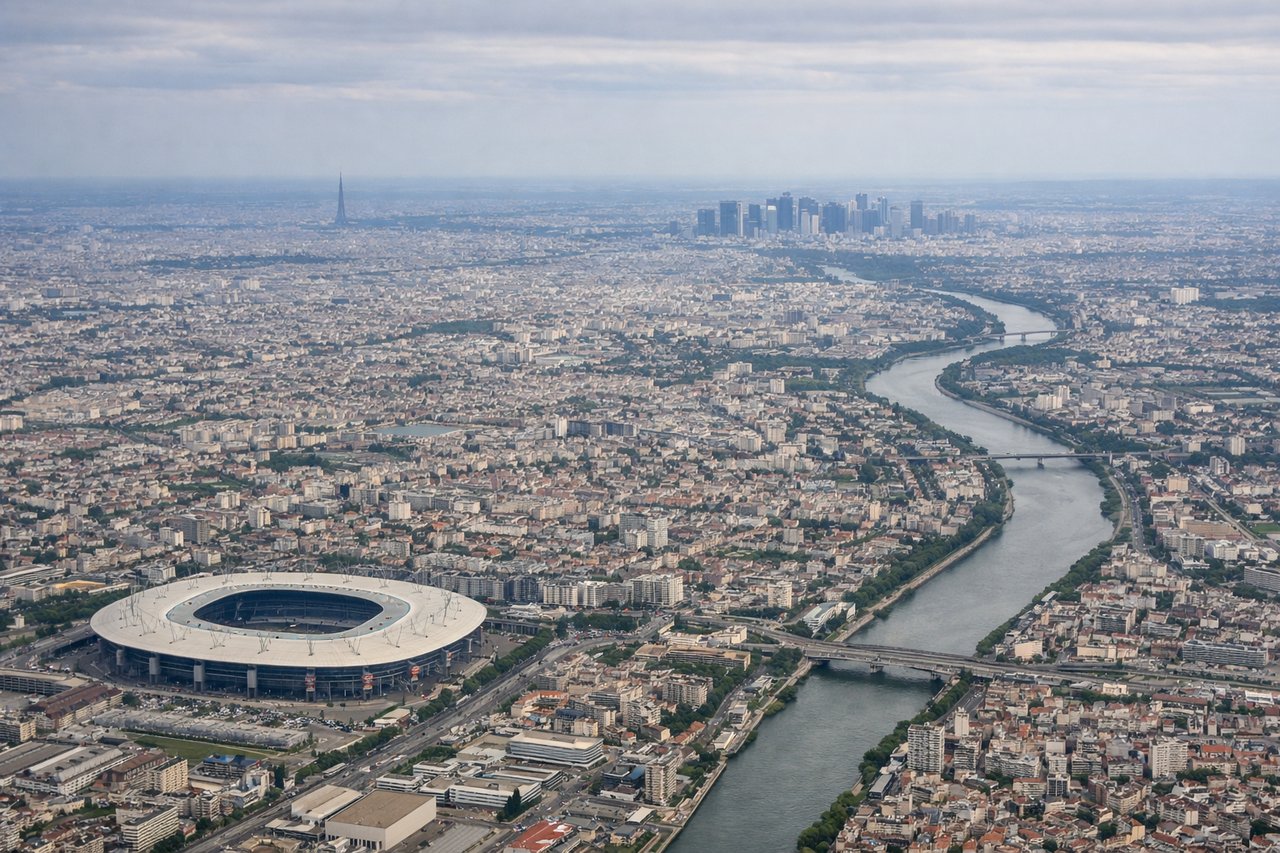
Landing at CDG
LEFTLeft-side seats provide excellent views during the descent approach into CDG. You'll see the Seine River winding through the Île-de-France region, the suburban sprawl of northern Paris, and the distinctive geometry of the airport's parallel runways as you descend from the northeast.
Landmarks on this routeAll landmarks →
Will your flight be in sunlight?
Pick a date and time in the Sun Map to watch the sun move across your whole flight.
About This Route
Which side of the plane should I sit on flying from Falcone–Borsellino Airport (PMO) to Charles De Gaulle (CDG)?
Sit on the Left side of the plane for the best views on flights from Palermo to Paris. While takeoff offers brief coastal scenery, the landing approach into CDG provides more sustained and dramatic views of the Seine River system and the Île-de-France landscape. Left-side seats capture the most visually interesting portion of the flight path during descent.
What can I see during takeoff from Falcone–Borsellino Airport in Palermo?
During takeoff from Falcone–Borsellino Airport (PMO), sit on the Right side for the best views. Right-side seats offer immediate views of the Tyrrhenian Sea and the Palermo coastline as the aircraft climbs northwestward. You'll see the curved shoreline and nearby islands clearly during the initial climb-out. Notable sights include: Tyrrhenian Sea, Palermo coastal plain, Mondello Beach, Ustica Island (small, visible offshore to the northwest).
What can I see when landing at Charles De Gaulle in Paris?
When landing at Charles De Gaulle (CDG), sit on the Left side for the best views. Left-side seats provide excellent views during the descent approach into CDG. You'll see the Seine River winding through the Île-de-France region, the suburban sprawl of northern Paris, and the distinctive geometry of the airport's parallel runways as you descend from the northeast. Notable sights include: Seine River (multiple meanders), Île-de-France agricultural patchwork, Paris metropolitan area, Charles De Gaulle Airport runways.
How long is the flight from Palermo to Paris?
The flight from Falcone–Borsellino Airport (PMO) to Charles De Gaulle (CDG) takes about 2 hours 45 minutes. The shortest flight path between them is 914 miles (1,470 km); winds and air traffic control usually add a few percent.
What does the Palermo to Paris flight path pass over?
The flight path crosses the Mediterranean toward the Italian coast, then tracks north-northwest over the Apennines (visible as a distant ridge on clear days), continues over the Ligurian Sea, then inland across southeastern France. Notable features include the Alps on the eastern horizon (visible on very clear days), the Rhône Valley corridor, and the transition into the Île-de-France basin. The Massif Central remains to the left (east) during the northern portion of the flight but typically too distant for clear detail.