While takeoff offers dramatic coastal views, the landing approach into Montreal provides more sustained and visually compelling scenery—the St. Lawrence River, the city itself, and the Laurentian landscape are all clearly visible and photogenic. Left-side seats capture this better during descent.
Flown POP to YUL? Did we get it right?
Flight Path
Puerto Plata to Montreal is 1,786 miles (2,874 km), a flight of about 4 hours 15 minutes.
The flight path crosses the Atlantic Ocean northeastward, passing over open water for most of the journey. Notable midpoint geography includes the Bahamas (visible as low islands and shallow turquoise banks if the flight path passes nearby), then the eastern seaboard of the United States. Depending on the exact routing, passengers may see the New England coastline, the Hudson River valley, or the Appalachian foothills as the aircraft approaches Canadian airspace. The transition from ocean to land occurs roughly 2 hours into the flight.
Great circle distance and headings ›Phase by phase
Takeoff from POP
RIGHTRight-side seats offer views of the northern Dominican coast and the Atlantic Ocean immediately after departure. The aircraft climbs northward from Puerto Plata, giving right-side passengers clear sightlines to the Caribbean coastline and the Cordillera Septentrional mountain range to the south.
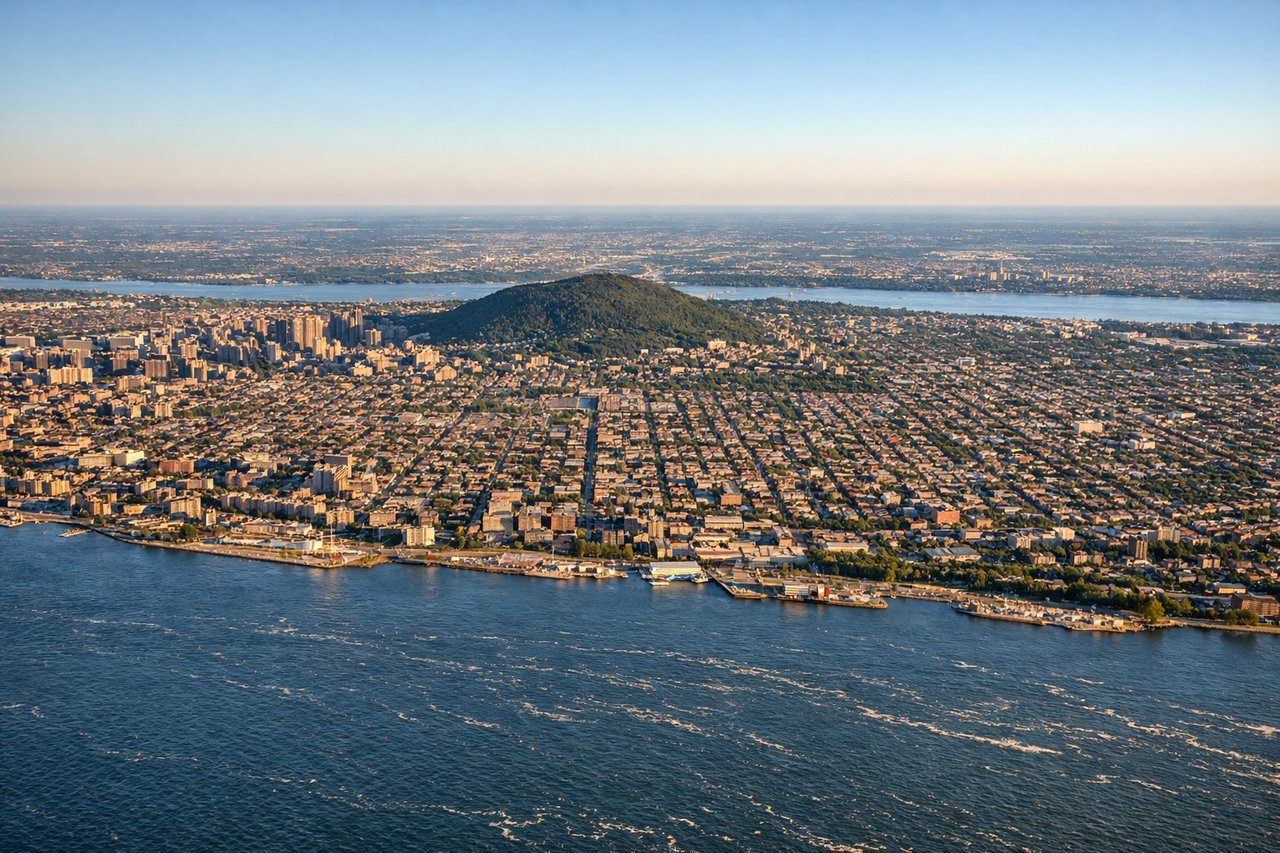
Landing at YUL
LEFTLeft-side seats provide excellent views during the descent into Montreal. The aircraft approaches from the southeast, and left-side passengers see the St. Lawrence River, the city of Montreal, and the surrounding Laurentian landscape. The river is particularly striking as it winds through the urban area.
Will your flight be in sunlight?
Pick a date and time in the Sun Map to watch the sun move across your whole flight.
About This Route
Which side of the plane should I sit on flying from Gregorio Luperon International (POP) to Montreal International Dorval (YUL)?
Sit on the Left side of the plane for the best views on flights from Puerto Plata to Montreal. While takeoff offers dramatic coastal views, the landing approach into Montreal provides more sustained and visually compelling scenery—the St. Lawrence River, the city itself, and the Laurentian landscape are all clearly visible and photogenic. Left-side seats capture this better during descent.
What can I see during takeoff from Gregorio Luperon International in Puerto Plata?
During takeoff from Gregorio Luperon International (POP), sit on the Right side for the best views. Right-side seats offer views of the northern Dominican coast and the Atlantic Ocean immediately after departure. The aircraft climbs northward from Puerto Plata, giving right-side passengers clear sightlines to the Caribbean coastline and the Cordillera Septentrional mountain range to the south. Notable sights include: Atlantic Ocean (north), Cordillera Septentrional (south/inland), Puerto Plata coastal plain (below), Bahía de Puerto Plata (east).
What can I see when landing at Montreal International Dorval in Montreal?
When landing at Montreal International Dorval (YUL), sit on the Left side for the best views. Left-side seats provide excellent views during the descent into Montreal. The aircraft approaches from the southeast, and left-side passengers see the St. Lawrence River, the city of Montreal, and the surrounding Laurentian landscape. The river is particularly striking as it winds through the urban area. Notable sights include: St. Lawrence River (dominant feature), Montreal city grid (center), Laurentian Shield terrain (north/west), Lake Saint-Louis (west).
How long is the flight from Puerto Plata to Montreal?
The flight from Gregorio Luperon International (POP) to Montreal International Dorval (YUL) takes about 4 hours 15 minutes. The shortest flight path between them is 1,786 miles (2,874 km); winds and air traffic control usually add a few percent.
What does the Puerto Plata to Montreal flight path pass over?
The flight path crosses the Atlantic Ocean northeastward, passing over open water for most of the journey. Notable midpoint geography includes the Bahamas (visible as low islands and shallow turquoise banks if the flight path passes nearby), then the eastern seaboard of the United States. Depending on the exact routing, passengers may see the New England coastline, the Hudson River valley, or the Appalachian foothills as the aircraft approaches Canadian airspace. The transition from ocean to land occurs roughly 2 hours into the flight.