While the Tahitian departure offers dramatic volcanic scenery and lagoon beauty, the New York arrival provides iconic urban landmarks (Manhattan skyline, East River, Jamaica Bay) and coastal complexity that outweigh the cruise phase's monotonous 5+ hours of open Pacific. The right side captures two genuinely scenic sequences (departure over reef and arrival over NYC harbor) versus left's single strong moment followed by featureless ocean.
Flown PPT to JFK? Did we get it right?
Flight Path
Papeete to New York is 6,295 miles (10,130 km), a flight of about 12 hours 10 minutes.
North American continent crossing: Rocky Mountains (visible on westbound descent into Denver/Salt Lake City airspace if routed that way), Great Plains, Appalachian Mountains on approach to East Coast. Actual routing typically follows great-circle path over Canada and northern US, crossing Canadian Rockies, prairies, and Great Lakes region before descending into New York airspace. Most of cruise phase is over open Atlantic or sparsely populated terrain with minimal visible landmarks.
Great circle distance and headings ›


Phase by phase
Takeoff from PPT
LEFTRunway 04 (prevailing winds) departs northeast over Tahiti's lagoon and reef system, offering immediate views of turquoise water, coral formations, and the volcanic peaks of Tahiti Nui rising inland. Right side departs over open ocean with no nearby landmarks.
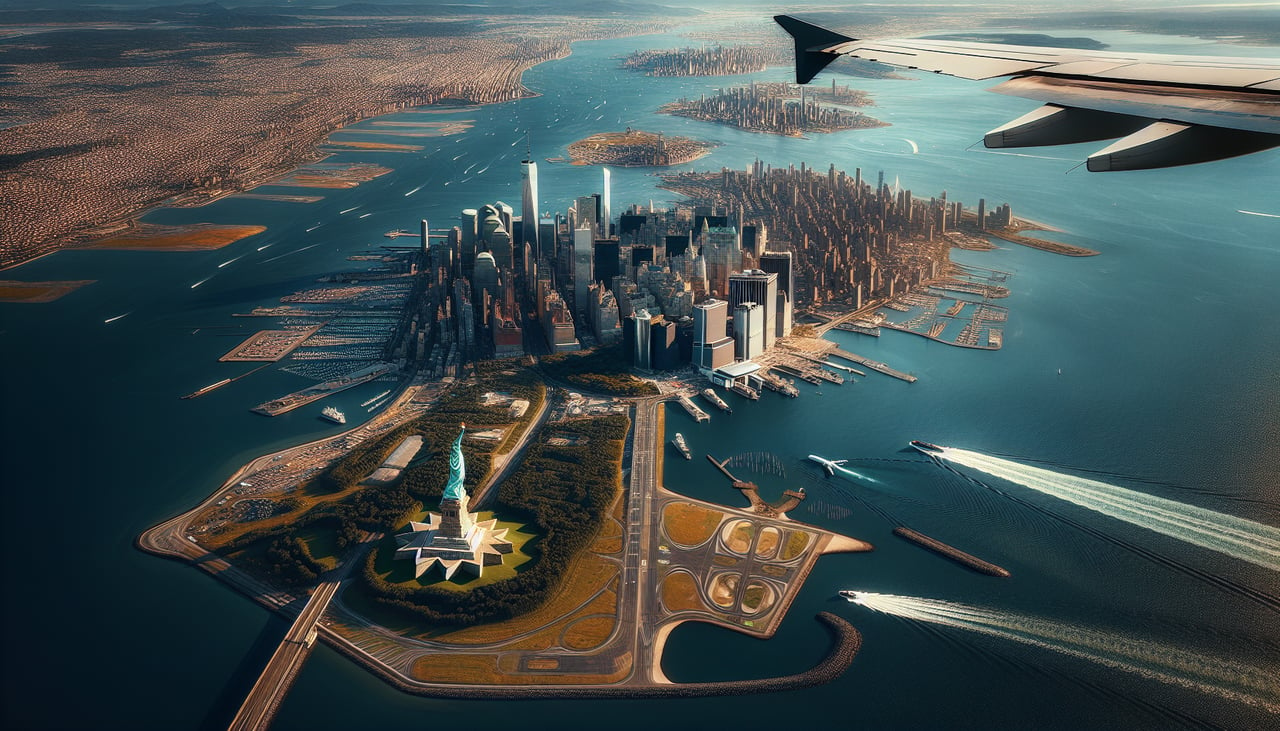
Landing at JFK
RIGHTTypical northeast arrivals to JFK (runways 22L/22R) descend over Long Island Sound and approach from the northeast, offering views of Connecticut coastline, Long Island's North Shore, and the Manhattan skyline with East River and harbor. Left side approaches over New Jersey industrial areas and Newark airspace with less dramatic scenery.
Will your flight be in sunlight?
Pick a date and time in the Sun Map to watch the sun move across your whole flight.
About This Route
Which side of the plane should I sit on flying from Fa'a'ā International Airport (PPT) to John F Kennedy International (JFK)?
Sit on the Right side of the plane for the best views on flights from Papeete to New York. While the Tahitian departure offers dramatic volcanic scenery and lagoon beauty, the New York arrival provides iconic urban landmarks (Manhattan skyline, East River, Jamaica Bay) and coastal complexity that outweigh the cruise phase's monotonous 5+ hours of open Pacific. The right side captures two genuinely scenic sequences (departure over reef and arrival over NYC harbor) versus left's single strong moment followed by featureless ocean.
What can I see during takeoff from Fa'a'ā International Airport in Papeete?
During takeoff from Fa'a'ā International Airport (PPT), sit on the Left side for the best views. Runway 04 (prevailing winds) departs northeast over Tahiti's lagoon and reef system, offering immediate views of turquoise water, coral formations, and the volcanic peaks of Tahiti Nui rising inland. Right side departs over open ocean with no nearby landmarks. Notable sights include: Tahiti lagoon and barrier reef, Tahiti Nui volcanic ridge, Moorea island (visible ~20 nm northwest during climb), Arue and Pirae coastal settlements.
What can I see when landing at John F Kennedy International in New York?
When landing at John F Kennedy International (JFK), sit on the Right side for the best views. Typical northeast arrivals to JFK (runways 22L/22R) descend over Long Island Sound and approach from the northeast, offering views of Connecticut coastline, Long Island's North Shore, and the Manhattan skyline with East River and harbor. Left side approaches over New Jersey industrial areas and Newark airspace with less dramatic scenery. Notable sights include: Long Island Sound and Connecticut coastline, Manhattan skyline with East River, Jamaica Bay and Gateway National Recreation Area, Rockaway Peninsula barrier island.
How long is the flight from Papeete to New York?
The flight from Fa'a'ā International Airport (PPT) to John F Kennedy International (JFK) takes about 12 hours 10 minutes. The shortest flight path between them is 6,295 miles (10,130 km); winds and air traffic control usually add a few percent.
What does the Papeete to New York flight path pass over?
North American continent crossing: Rocky Mountains (visible on westbound descent into Denver/Salt Lake City airspace if routed that way), Great Plains, Appalachian Mountains on approach to East Coast. Actual routing typically follows great-circle path over Canada and northern US, crossing Canadian Rockies, prairies, and Great Lakes region before descending into New York airspace. Most of cruise phase is over open Atlantic or sparsely populated terrain with minimal visible landmarks.