While the right side wins at takeoff for the Yangtze estuary views, the left side delivers the more dramatic payoff: over the East China Sea you track the Korean Peninsula coastline in the distance, and on arrival into NRT the left side gives you Tokyo Bay, the city, and the chance to spot Mount Fuji — the single most visually striking landmark on this entire route.
Flown PVG to NRT? Did we get it right?
Flight Path
Shanghai to Tokyo is 1,116 miles (1,796 km), a flight of about 2 hours 55 minutes.
The flight crosses the East China Sea, passing south of the Korean Peninsula and over the Korea Strait. The Jeju Island volcanic cone may be visible to the north on the left side. The route then crosses the southern tip of the Japanese island of Kyushu or tracks over open water before reaching Honshu. The Japanese coastline of western Honshu and the Kii Peninsula may be visible before descending toward the Kanto Plain.
Great circle distance and headings ›


Phase by phase
Takeoff from PVG
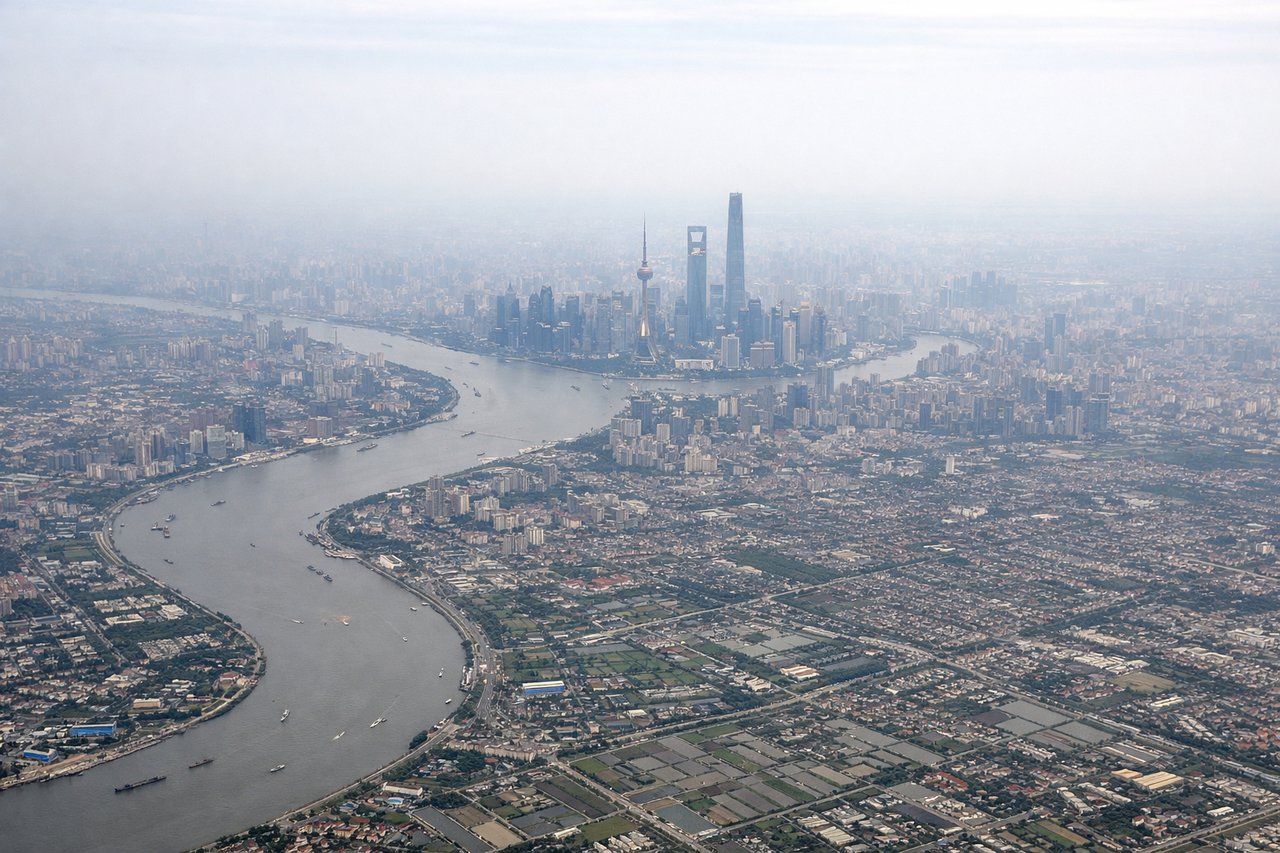
RIGHTPVG's primary departure runways (34L/34R) head roughly northward, so a right-side seat faces east over the Yangtze River estuary and the broad muddy confluence where the river meets the East China Sea. You get a clear view of the massive river mouth, Chongming Island, and the sprawling Pudong waterfront receding behind you.
Landing at NRT
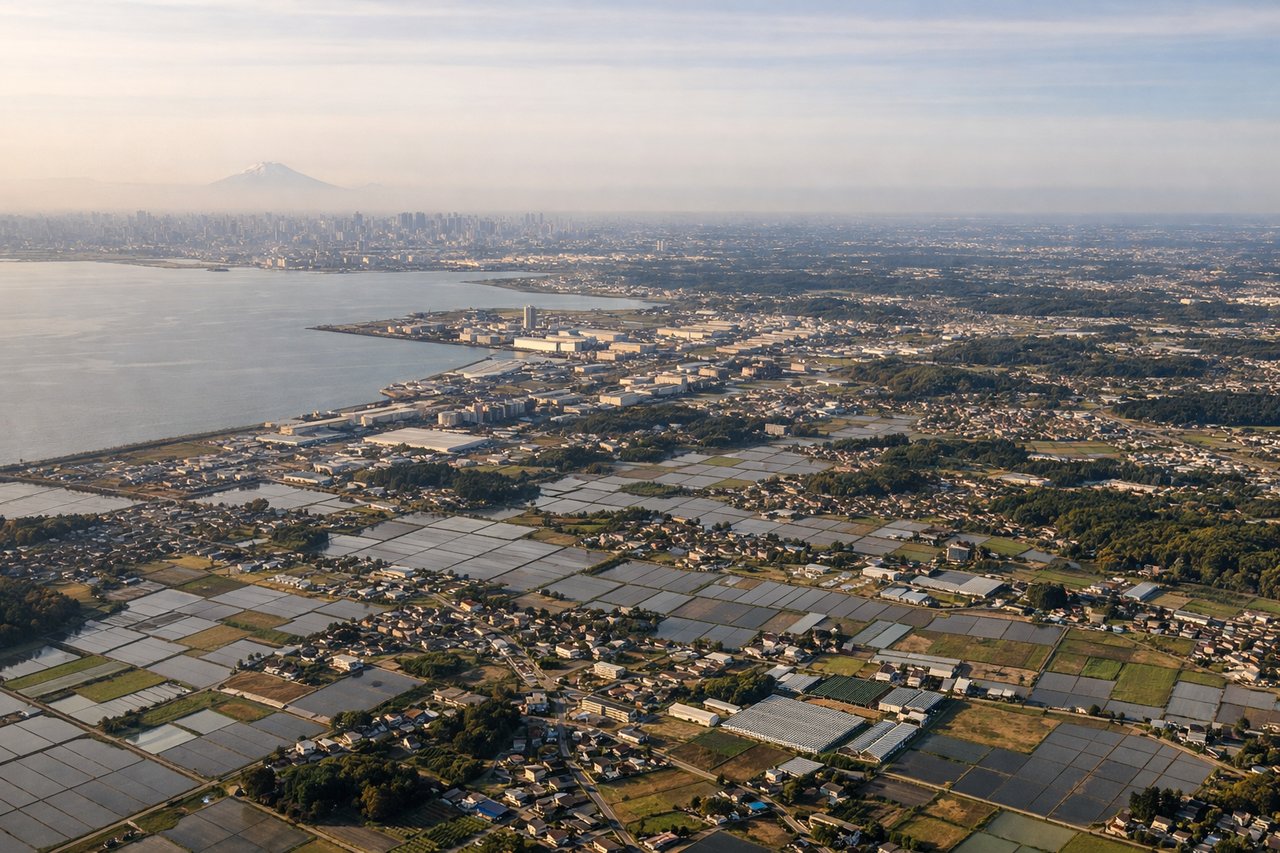
LEFTNRT's primary landing runways (34L/34R) approach from the south, meaning the aircraft tracks northward on final. A left-side seat faces west toward the Kanto Plain, giving views of the Tokyo metropolitan sprawl, Tokyo Bay, and on clear days the iconic silhouette of Mount Fuji roughly 100 km to the southwest sitting on the horizon.
Will your flight be in sunlight?
Pick a date and time in the Sun Map to watch the sun move across your whole flight.
About This Route
Which side of the plane should I sit on flying from Shanghai Pudong International (PVG) to New Tokyo International (NRT)?
Sit on the Left side of the plane for the best views on flights from Shanghai to Tokyo. While the right side wins at takeoff for the Yangtze estuary views, the left side delivers the more dramatic payoff: over the East China Sea you track the Korean Peninsula coastline in the distance, and on arrival into NRT the left side gives you Tokyo Bay, the city, and the chance to spot Mount Fuji — the single most visually striking landmark on this entire route.
What can I see during takeoff from Shanghai Pudong International in Shanghai?
During takeoff from Shanghai Pudong International (PVG), sit on the Right side for the best views. PVG's primary departure runways (34L/34R) head roughly northward, so a right-side seat faces east over the Yangtze River estuary and the broad muddy confluence where the river meets the East China Sea. You get a clear view of the massive river mouth, Chongming Island, and the sprawling Pudong waterfront receding behind you. Notable sights include: Yangtze River estuary and its wide muddy delta mouth, Chongming Island (China's third-largest island), Pudong's dense urban grid and port facilities, East China Sea coastline stretching south.
What can I see when landing at New Tokyo International in Tokyo?
When landing at New Tokyo International (NRT), sit on the Left side for the best views. NRT's primary landing runways (34L/34R) approach from the south, meaning the aircraft tracks northward on final. A left-side seat faces west toward the Kanto Plain, giving views of the Tokyo metropolitan sprawl, Tokyo Bay, and on clear days the iconic silhouette of Mount Fuji roughly 100 km to the southwest sitting on the horizon. Notable sights include: Mount Fuji on the southwestern horizon (on clear days), Tokyo Bay and its reclaimed waterfront, Tokyo metropolitan area urban grid, Chiba Prefecture's flat agricultural and suburban patchwork directly below.
How long is the flight from Shanghai to Tokyo?
The flight from Shanghai Pudong International (PVG) to New Tokyo International (NRT) takes about 2 hours 55 minutes. The shortest flight path between them is 1,116 miles (1,796 km); winds and air traffic control usually add a few percent.
What does the Shanghai to Tokyo flight path pass over?
The flight crosses the East China Sea, passing south of the Korean Peninsula and over the Korea Strait. The Jeju Island volcanic cone may be visible to the north on the left side. The route then crosses the southern tip of the Japanese island of Kyushu or tracks over open water before reaching Honshu. The Japanese coastline of western Honshu and the Kii Peninsula may be visible before descending toward the Kanto Plain.