Right-side seats capture the most dramatic scenery: the Yangtze estuary during departure and Lake Michigan plus Chicago's urban landscape during arrival. The westbound routing over China and Mongolia offers fewer visually distinctive landmarks compared to the arrival sequence.
Flight Path
The flight path crosses central China (Shaanxi and Shanxi provinces with loess plateau terrain), the Gobi Desert region in Inner Mongolia and northern China, then transitions over Russia (southern Siberia with sparse forests and tundra), before crossing into North America over Alaska and Canada. The Rocky Mountains become visible during the approach to the North American continent. Most of the midpoint flight occurs over sparsely populated terrain with limited distinctive visual landmarks from cruising altitude.
Great circle distance and headings ›
.jpg?width=600)

Phase by phase
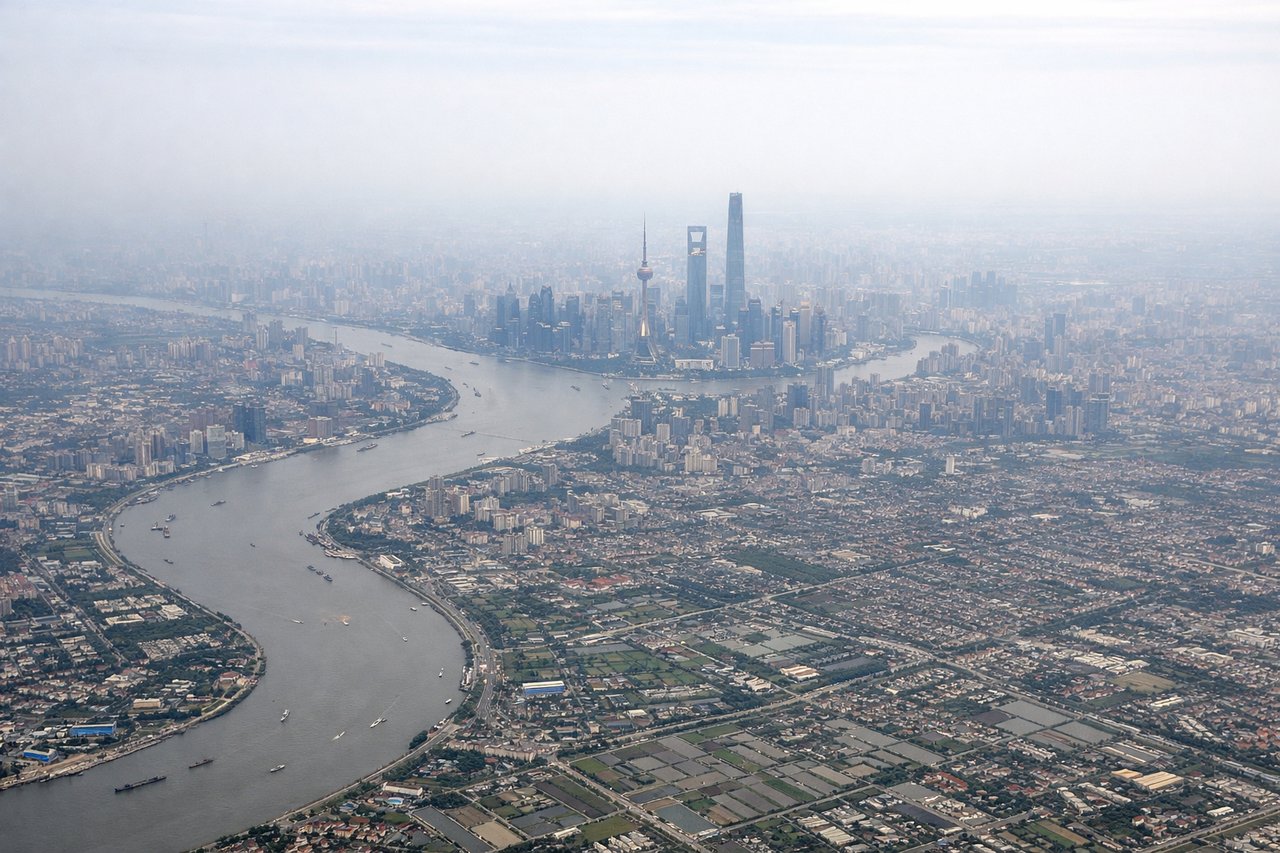
Takeoff from PVG
RIGHTRight-side seats offer views of the Yangtze River estuary and Hangzhou Bay as the aircraft climbs out westbound from Shanghai. The river's distinctive braided channels and tidal mudflats are clearly visible during the initial climb phase.
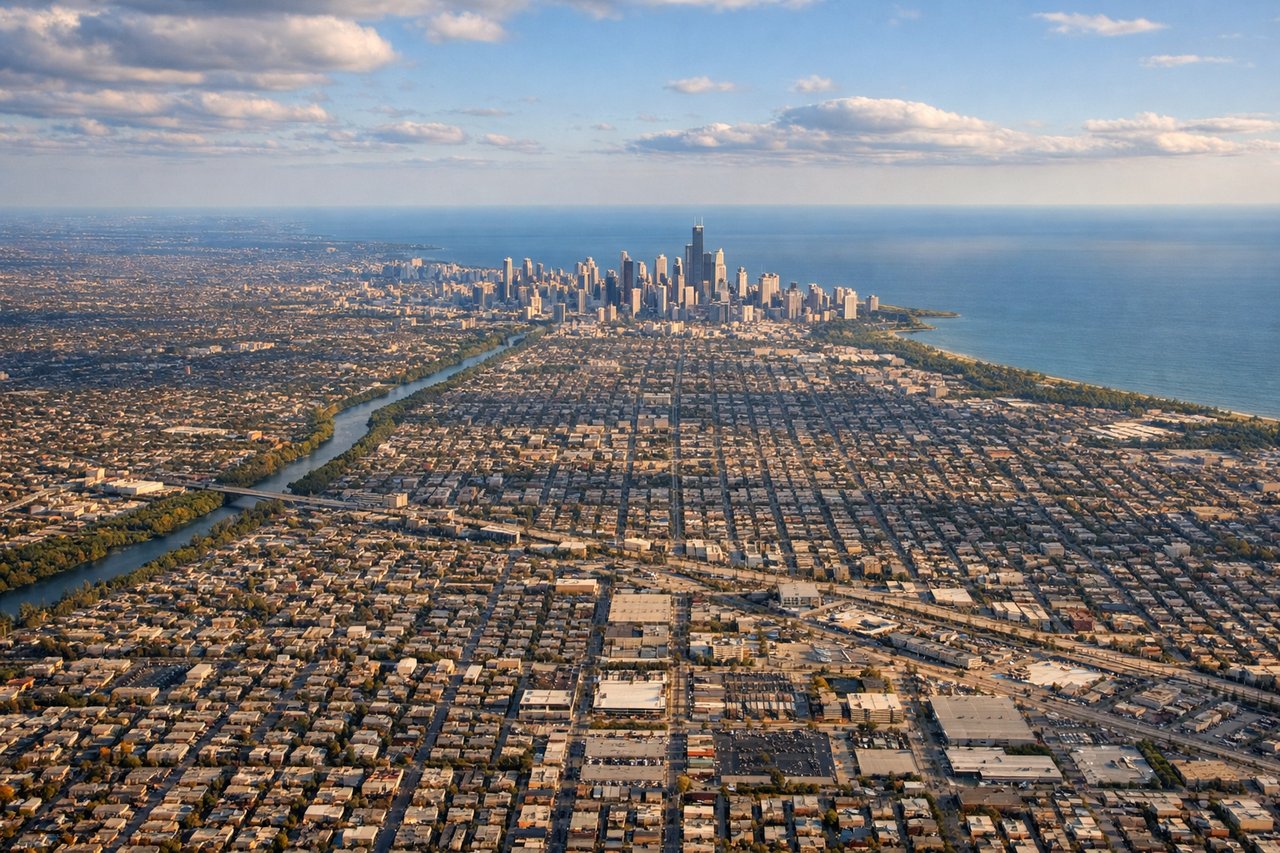
Landing at ORD
LEFTLeft-side seats provide views of the Illinois River valley, Lake Michigan's southern shore, and the Chicago metropolitan area during descent into O'Hare. The contrast between the lake's blue water and the urban grid is striking during final approach from the northeast.
Landmarks on this routeAll landmarks →
Will your flight be in sunlight?
See exactly which side of the plane gets sun and shade at your departure time.
About This Route
Which side of the plane should I sit on flying from Shanghai Pudong International (PVG) to Chicago Ohare International (ORD)?
Sit on the Right side of the plane for the best views on flights from Shanghai to Chicago. Right-side seats capture the most dramatic scenery: the Yangtze estuary during departure and Lake Michigan plus Chicago's urban landscape during arrival. The westbound routing over China and Mongolia offers fewer visually distinctive landmarks compared to the arrival sequence.
What can I see during takeoff from Shanghai Pudong International in Shanghai?
During takeoff from Shanghai Pudong International (PVG), sit on the Right side for the best views. Right-side seats offer views of the Yangtze River estuary and Hangzhou Bay as the aircraft climbs out westbound from Shanghai. The river's distinctive braided channels and tidal mudflats are clearly visible during the initial climb phase. Notable sights include: Yangtze River estuary with multiple distributaries, Hangzhou Bay's curved coastline, East China Sea, Shanghai urban sprawl extending south toward Pudong district.
What can I see when landing at Chicago Ohare International in Chicago?
When landing at Chicago Ohare International (ORD), sit on the Left side for the best views. Left-side seats provide views of the Illinois River valley, Lake Michigan's southern shore, and the Chicago metropolitan area during descent into O'Hare. The contrast between the lake's blue water and the urban grid is striking during final approach from the northeast. Notable sights include: Lake Michigan's southern basin, Chicago downtown skyline and grid pattern, Illinois River valley to the west, Des Plaines River confluence.
How long is the flight from Shanghai to Chicago?
The flight from Shanghai Pudong International (PVG) to Chicago Ohare International (ORD) takes Approximately 13-14 hours.
What does the Shanghai to Chicago flight path pass over?
The flight path crosses central China (Shaanxi and Shanxi provinces with loess plateau terrain), the Gobi Desert region in Inner Mongolia and northern China, then transitions over Russia (southern Siberia with sparse forests and tundra), before crossing into North America over Alaska and Canada. The Rocky Mountains become visible during the approach to the North American continent. Most of the midpoint flight occurs over sparsely populated terrain with limited distinctive visual landmarks from cruising altitude.