The left side wins overall. The Shanghai departure view is genuinely spectacular — the Huangpu delta, the world's busiest port, and the East China Sea coastline are hard to beat. Over the Pacific the views are largely ocean regardless of side, and the Alaska/Canada crossing offers tundra and mountain terrain visible from both sides. The DFW arrival advantage on the right is real but modest given the flat Texas landscape.
Flown PVG to DFW? Did we get it right?
Flight Path
Shanghai to Dallas-Fort Worth is 7,337 miles (11,808 km), a flight of about 13 hours 30 minutes.
The great circle route tracks northeast over the East China Sea, crosses southern Japan near Honshu, then arcs across the North Pacific. The route passes south of the Aleutian Islands chain, crosses the Gulf of Alaska, and transits over the Canadian Rockies in British Columbia and Alberta — where the Rocky Mountain ranges are visible as snow-capped ridgelines. The flight then descends over the Great Plains of Montana, Wyoming, and Kansas before reaching Texas, with the landscape transitioning from rugged mountain terrain to flat agricultural prairie.
Great circle distance and headings ›


Phase by phase
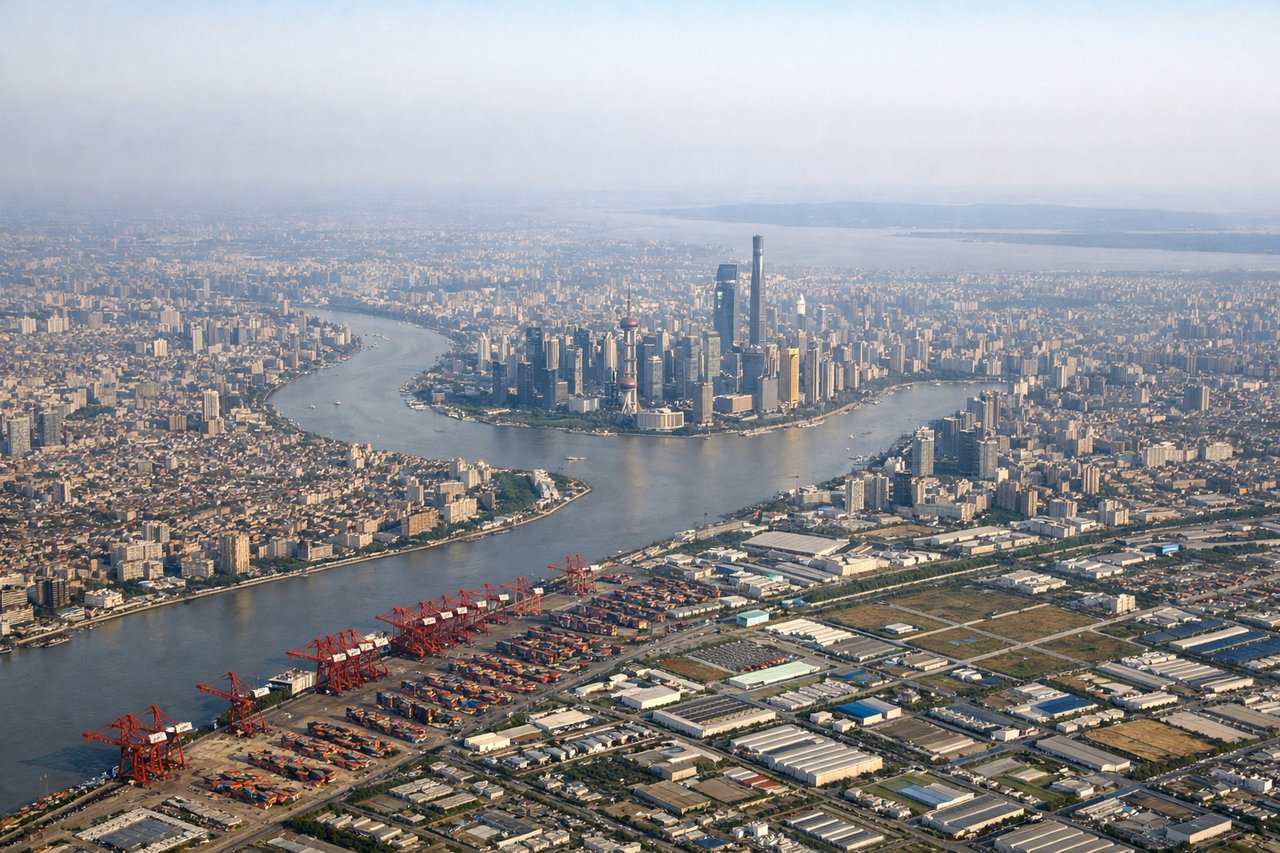
Takeoff from PVG
LEFTDepartures from PVG typically use runways 16/34 or 17/35, with eastward departures over the East China Sea before turning northeast. A left (east-facing) seat gives you the Huangpu River delta, the dense urban grid of Pudong and Puxi, and the sprawling port facilities of Shanghai — one of the busiest container ports in the world. The right side faces inland toward flat agricultural Jiangsu with little of visual interest.
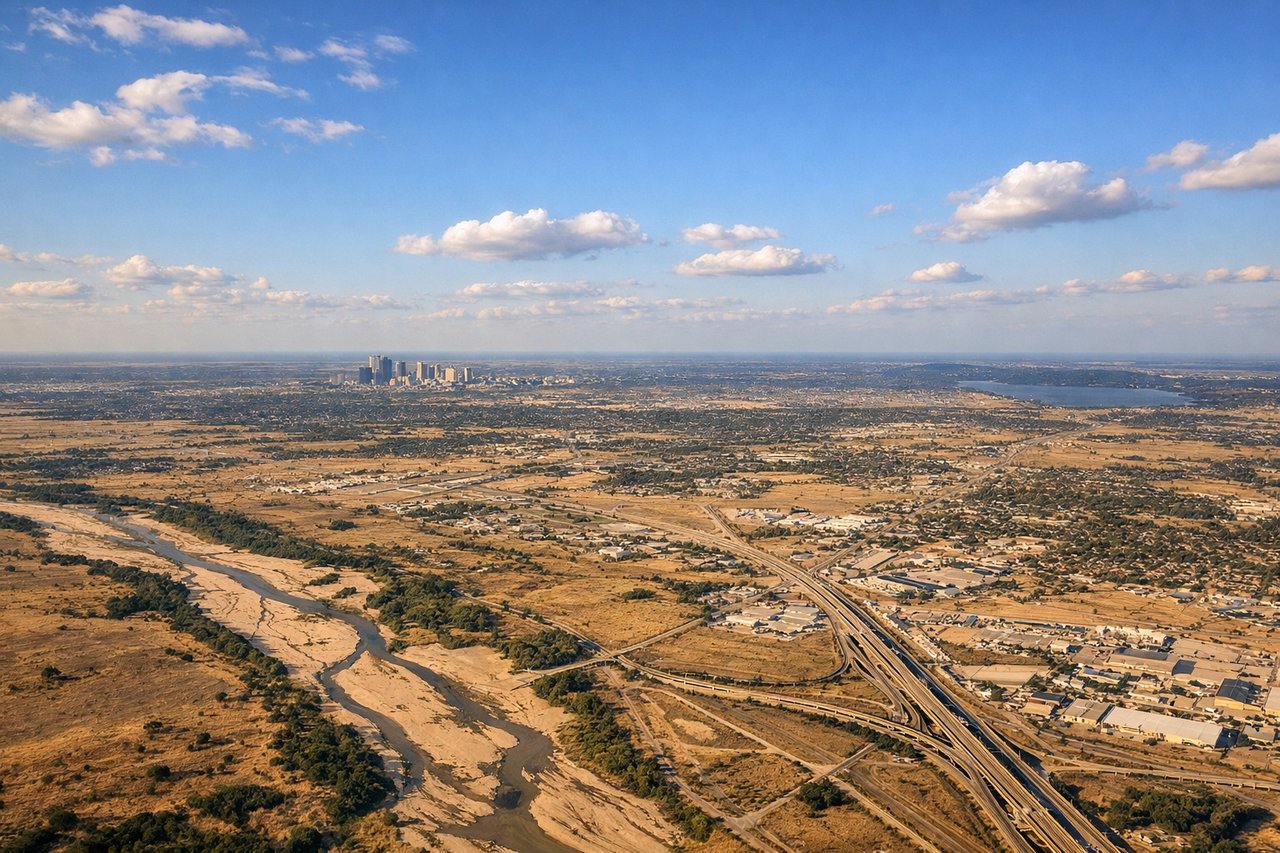
Landing at DFW
RIGHTDFW arrivals from the east or northeast typically use runways 17L/R or 18L/R, approaching from the north. A right (west-facing) seat on approach gives you downtown Dallas skyline, the Trinity River corridor, and the sprawling Fort Worth urban area. The left side faces east toward flat suburban sprawl with little geographic distinction.
Will your flight be in sunlight?
Pick a date and time in the Sun Map to watch the sun move across your whole flight.
About This Route
Which side of the plane should I sit on flying from Shanghai Pudong International (PVG) to Dallas Fort Worth International (DFW)?
Sit on the Left side of the plane for the best views on flights from Shanghai to Dallas-Fort Worth. The left side wins overall. The Shanghai departure view is genuinely spectacular — the Huangpu delta, the world's busiest port, and the East China Sea coastline are hard to beat. Over the Pacific the views are largely ocean regardless of side, and the Alaska/Canada crossing offers tundra and mountain terrain visible from both sides. The DFW arrival advantage on the right is real but modest given the flat Texas landscape.
What can I see during takeoff from Shanghai Pudong International in Shanghai?
During takeoff from Shanghai Pudong International (PVG), sit on the Left side for the best views. Departures from PVG typically use runways 16/34 or 17/35, with eastward departures over the East China Sea before turning northeast. A left (east-facing) seat gives you the Huangpu River delta, the dense urban grid of Pudong and Puxi, and the sprawling port facilities of Shanghai — one of the busiest container ports in the world. The right side faces inland toward flat agricultural Jiangsu with little of visual interest. Notable sights include: Huangpu River and its S-curve through central Shanghai, Pudong container port terminals, Chongming Island in the Yangtze estuary, East China Sea coastline.
What can I see when landing at Dallas Fort Worth International in Dallas-Fort Worth?
When landing at Dallas Fort Worth International (DFW), sit on the Right side for the best views. DFW arrivals from the east or northeast typically use runways 17L/R or 18L/R, approaching from the north. A right (west-facing) seat on approach gives you downtown Dallas skyline, the Trinity River corridor, and the sprawling Fort Worth urban area. The left side faces east toward flat suburban sprawl with little geographic distinction. Notable sights include: Downtown Dallas skyline, Trinity River, Lake Grapevine, Fort Worth urban area.
How long is the flight from Shanghai to Dallas-Fort Worth?
The flight from Shanghai Pudong International (PVG) to Dallas Fort Worth International (DFW) takes about 13 hours 30 minutes. The shortest flight path between them is 7,337 miles (11,808 km); winds and air traffic control usually add a few percent.
What does the Shanghai to Dallas-Fort Worth flight path pass over?
The great circle route tracks northeast over the East China Sea, crosses southern Japan near Honshu, then arcs across the North Pacific. The route passes south of the Aleutian Islands chain, crosses the Gulf of Alaska, and transits over the Canadian Rockies in British Columbia and Alberta — where the Rocky Mountain ranges are visible as snow-capped ridgelines. The flight then descends over the Great Plains of Montana, Wyoming, and Kansas before reaching Texas, with the landscape transitioning from rugged mountain terrain to flat agricultural prairie.