Both sides get one major city view. The right side gets the Manhattan skyline on arrival and has the better chance of seeing the Alaska Range and the Great Lakes–Adirondack region while heading southeast across Canada. The left side's Shanghai skyline departure is strong, but its cruise views are mostly open sea and empty northern terrain.
Flown PVG to JFK? Did we get it right?
Flight Path
Shanghai to New York is 7,378 miles (11,874 km), a flight of about 14 hours 20 minutes.
Yellow Sea and Korean Peninsula or the Sea of Japan, Sea of Okhotsk, Kamchatka Peninsula volcanoes, Bering Sea, interior Alaska (Alaska Range possible on the right), northern Canada, Hudson Bay and James Bay region, Ontario and Quebec, then the Adirondacks or Hudson Valley before New York. Exact tracks vary with winds and routing.
Great circle distance and headings ›


Phase by phase
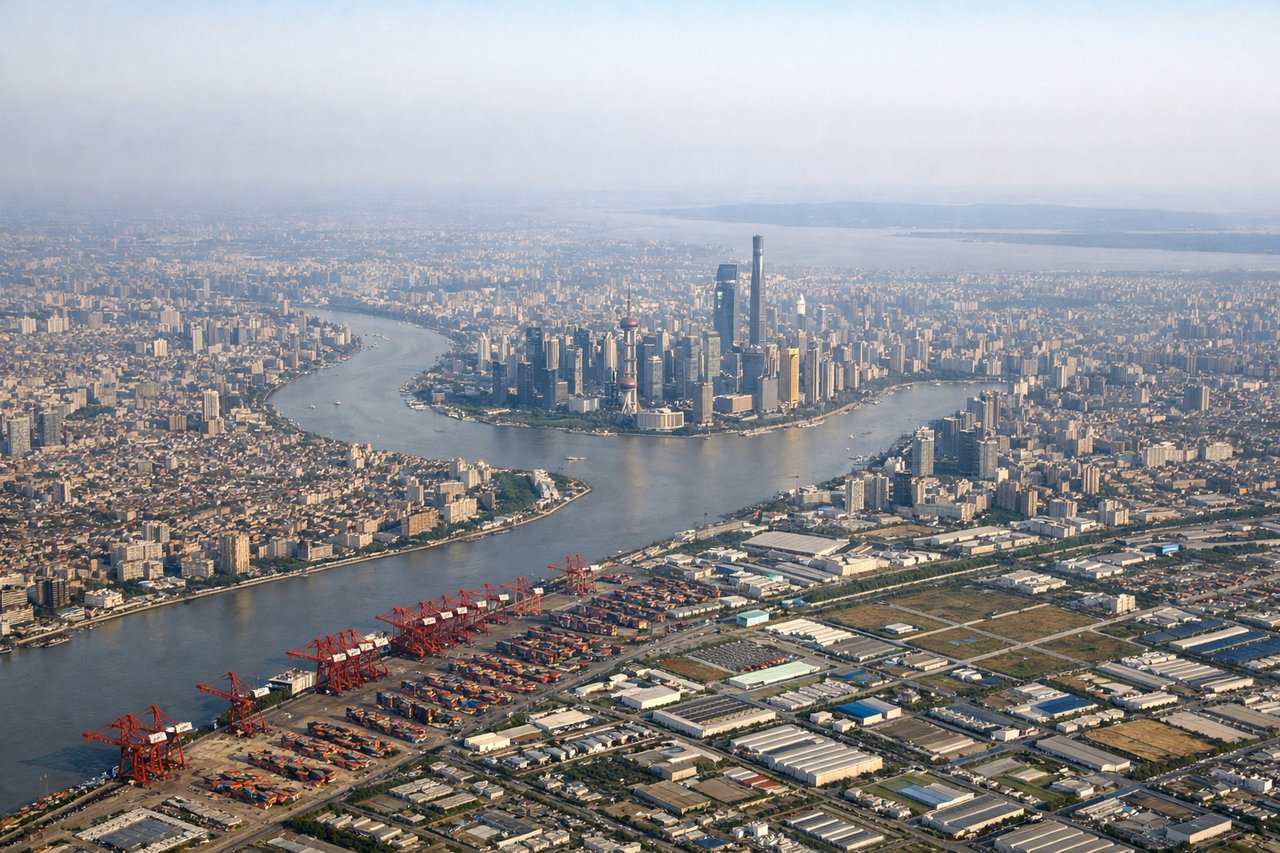
Takeoff from PVG
LEFTEastern China departures to North America usually take off to the north-northwest and then turn right toward the northeast. The left side looks across the Pudong coastal plain toward the Shanghai skyline and the broad Yangtze estuary. The right side mostly sees the East China Sea and Hangzhou Bay.
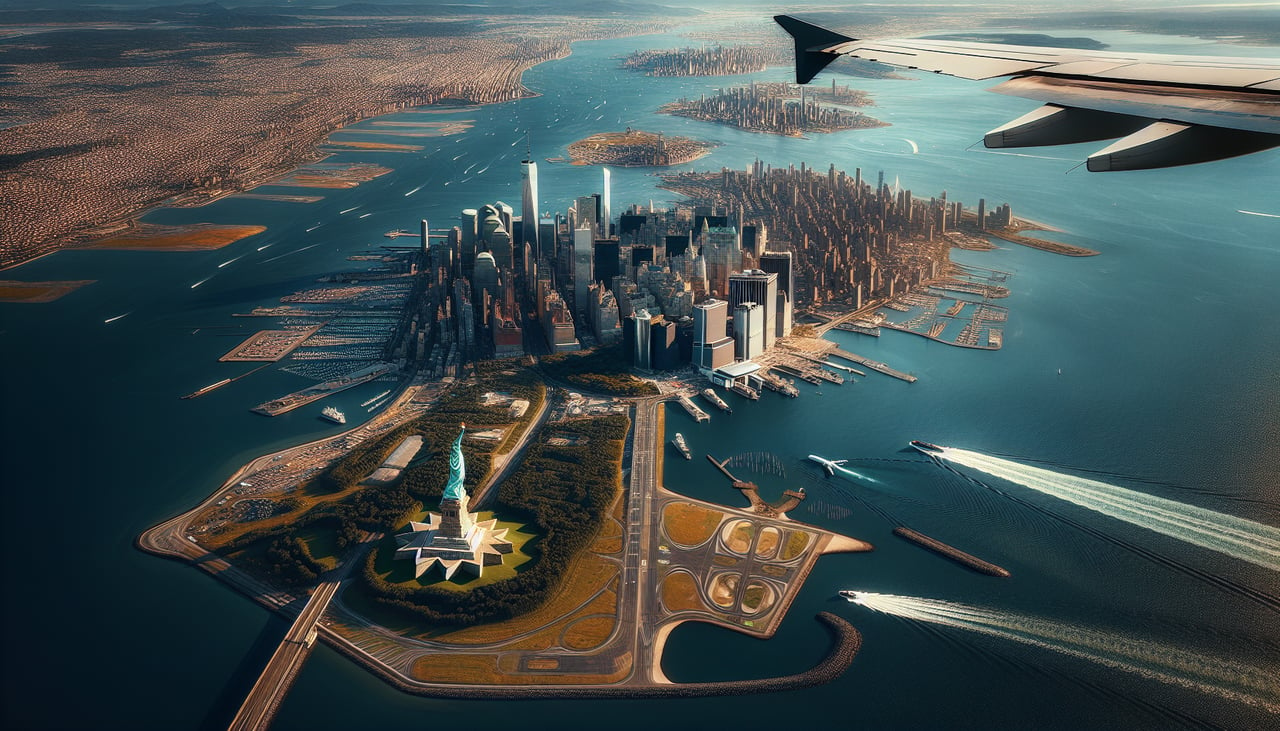
Landing at JFK
RIGHTArrivals from the north into JFK usually come down over Long Island Sound and Queens for runway 22L/22R. That puts the Manhattan skyline on the right side, across Queens and the East River. In other runway configurations the view changes. Right is still the better bet for the Midtown skyline on most northern arrivals.
Will your flight be in sunlight?
Pick a date and time in the Sun Map to watch the sun move across your whole flight.
About This Route
Which side of the plane should I sit on flying from Shanghai Pudong International (PVG) to John F Kennedy International (JFK)?
Sit on the Right side of the plane for the best views on flights from Shanghai to New York. Both sides get one major city view. The right side gets the Manhattan skyline on arrival and has the better chance of seeing the Alaska Range and the Great Lakes–Adirondack region while heading southeast across Canada. The left side's Shanghai skyline departure is strong, but its cruise views are mostly open sea and empty northern terrain.
What can I see during takeoff from Shanghai Pudong International in Shanghai?
During takeoff from Shanghai Pudong International (PVG), sit on the Left side for the best views. Eastern China departures to North America usually take off to the north-northwest and then turn right toward the northeast. The left side looks across the Pudong coastal plain toward the Shanghai skyline and the broad Yangtze estuary. The right side mostly sees the East China Sea and Hangzhou Bay. Notable sights include: Lujiazui skyline (Shanghai Tower, Oriental Pearl Tower), Huangpu River, Yangtze estuary, Chongming Island.
What can I see when landing at John F Kennedy International in New York?
When landing at John F Kennedy International (JFK), sit on the Right side for the best views. Arrivals from the north into JFK usually come down over Long Island Sound and Queens for runway 22L/22R. That puts the Manhattan skyline on the right side, across Queens and the East River. In other runway configurations the view changes. Right is still the better bet for the Midtown skyline on most northern arrivals. Notable sights include: Midtown Manhattan skyline (Empire State Building, Chrysler Building), East River, Flushing Meadows–Corona Park (Citi Field, Unisphere), LaGuardia Airport.
How long is the flight from Shanghai to New York?
The flight from Shanghai Pudong International (PVG) to John F Kennedy International (JFK) takes about 14 hours 20 minutes. The shortest flight path between them is 7,378 miles (11,874 km); winds and air traffic control usually add a few percent.
What does the Shanghai to New York flight path pass over?
Yellow Sea and Korean Peninsula or the Sea of Japan, Sea of Okhotsk, Kamchatka Peninsula volcanoes, Bering Sea, interior Alaska (Alaska Range possible on the right), northern Canada, Hudson Bay and James Bay region, Ontario and Quebec, then the Adirondacks or Hudson Valley before New York. Exact tracks vary with winds and routing.