With roughly 13 hours of open North Pacific cruising offering no landmarks on either side, the outcome hinges on takeoff and landing. The right side's departure view of the Sierra Madre foothills and Bahía de Banderas slightly edges out the left side's bay approach into Narita, though both are modest given the ocean-dominated route.
Flown PVR to NRT? Did we get it right?
Flight Path
Puerto Vallarta to Tokyo is 6,641 miles (10,688 km), a flight of about 13 hours 45 minutes.
Open North Pacific Ocean, well north of the Hawaiian Islands, with no land visible for most of the crossing until nearing the Japanese coast
Great circle distance and headings ›

Phase by phase
Takeoff from PVR
RIGHTDeparting PVR on runway 22, the aircraft climbs out over Bahía de Banderas before turning north to begin the long Pacific crossing. The right side faces inland toward the Sierra Madre Occidental foothills and the Puerto Vallarta coastline curving north, giving a brief but genuine mountain-and-coast view before the turn out to sea.
Landing at NRT
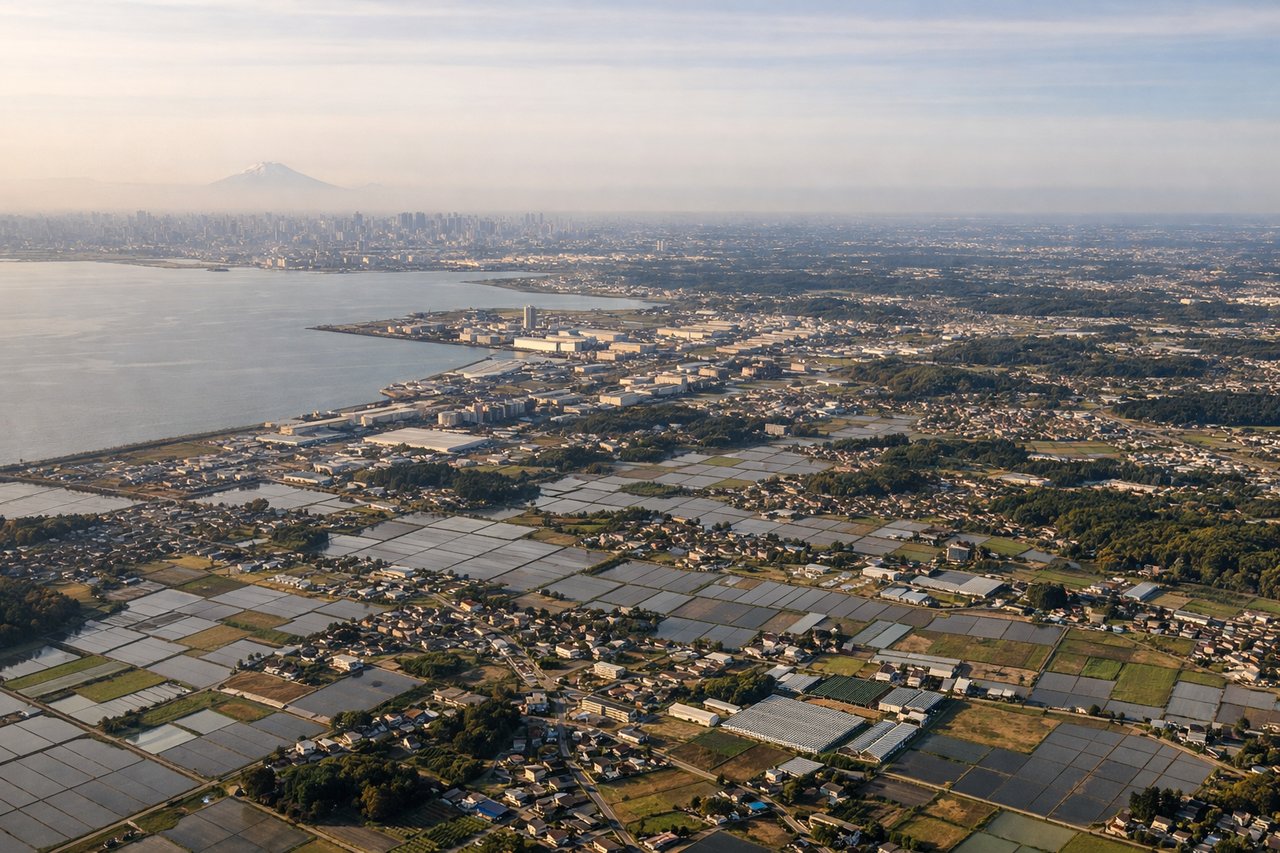
LEFTOn approach to Narita's runway 34 during typical northerly wind conditions, the aircraft descends from the south over Tokyo Bay and the Boso Peninsula. Left-side passengers get a sweeping view of Tokyo Bay, the dense Tokyo-Chiba urban sprawl, and on clear days the distant silhouette of Mount Fuji to the southwest.
Will your flight be in sunlight?
Pick a date and time in the Sun Map to watch the sun move across your whole flight.
About This Route
Which side of the plane should I sit on flying from Licenciado Gustavo Diaz Ordaz International (PVR) to New Tokyo International (NRT)?
Sit on the Right side of the plane for the best views on flights from Puerto Vallarta to Tokyo. With roughly 13 hours of open North Pacific cruising offering no landmarks on either side, the outcome hinges on takeoff and landing. The right side's departure view of the Sierra Madre foothills and Bahía de Banderas slightly edges out the left side's bay approach into Narita, though both are modest given the ocean-dominated route.
What can I see during takeoff from Licenciado Gustavo Diaz Ordaz International in Puerto Vallarta?
During takeoff from Licenciado Gustavo Diaz Ordaz International (PVR), sit on the Right side for the best views. Departing PVR on runway 22, the aircraft climbs out over Bahía de Banderas before turning north to begin the long Pacific crossing. The right side faces inland toward the Sierra Madre Occidental foothills and the Puerto Vallarta coastline curving north, giving a brief but genuine mountain-and-coast view before the turn out to sea. Notable sights include: Sierra Madre Occidental foothills, Bahía de Banderas, Puerto Vallarta coastline, Marietas Islands offshore.
What can I see when landing at New Tokyo International in Tokyo?
When landing at New Tokyo International (NRT), sit on the Left side for the best views. On approach to Narita's runway 34 during typical northerly wind conditions, the aircraft descends from the south over Tokyo Bay and the Boso Peninsula. Left-side passengers get a sweeping view of Tokyo Bay, the dense Tokyo-Chiba urban sprawl, and on clear days the distant silhouette of Mount Fuji to the southwest. Notable sights include: Tokyo Bay, Tokyo-Yokohama skyline, Boso Peninsula coastline, Mount Fuji (distant, weather permitting).
How long is the flight from Puerto Vallarta to Tokyo?
The flight from Licenciado Gustavo Diaz Ordaz International (PVR) to New Tokyo International (NRT) takes about 13 hours 45 minutes. The shortest flight path between them is 6,641 miles (10,688 km); winds and air traffic control usually add a few percent.
What does the Puerto Vallarta to Tokyo flight path pass over?
Open North Pacific Ocean, well north of the Hawaiian Islands, with no land visible for most of the crossing until nearing the Japanese coast