While takeoff favors left seats for Blue Ridge views, the landing experience over Oahu's volcanic landscape and the Pacific approach is more dramatic and geographically distinctive. Right seats capture the final 90 minutes of descent with increasingly detailed views of Hawaii's topography, making the overall journey more rewarding.
Flight Path
The flight path crosses the continental United States westbound, passing over the Great Plains (Kansas, Colorado, New Mexico), then transitions to the Rocky Mountain region before heading over the Pacific. At cruise altitude (35,000-37,000 feet), the Rocky Mountains appear as a distant textured ridge on the western horizon for several hours. The Pacific crossing offers minimal landmarks except occasional cloud formations and the curvature of the Earth becoming more apparent. As the aircraft approaches Hawaii, the Big Island of Hawaii becomes visible approximately 200 miles out, appearing as a dark volcanic mass on the horizon before Oahu comes into view.
Great circle distance and headings ›.jpeg?width=600)

.jpg?width=600)

.jpg?width=600)

.jpeg?width=600)


Phase by phase
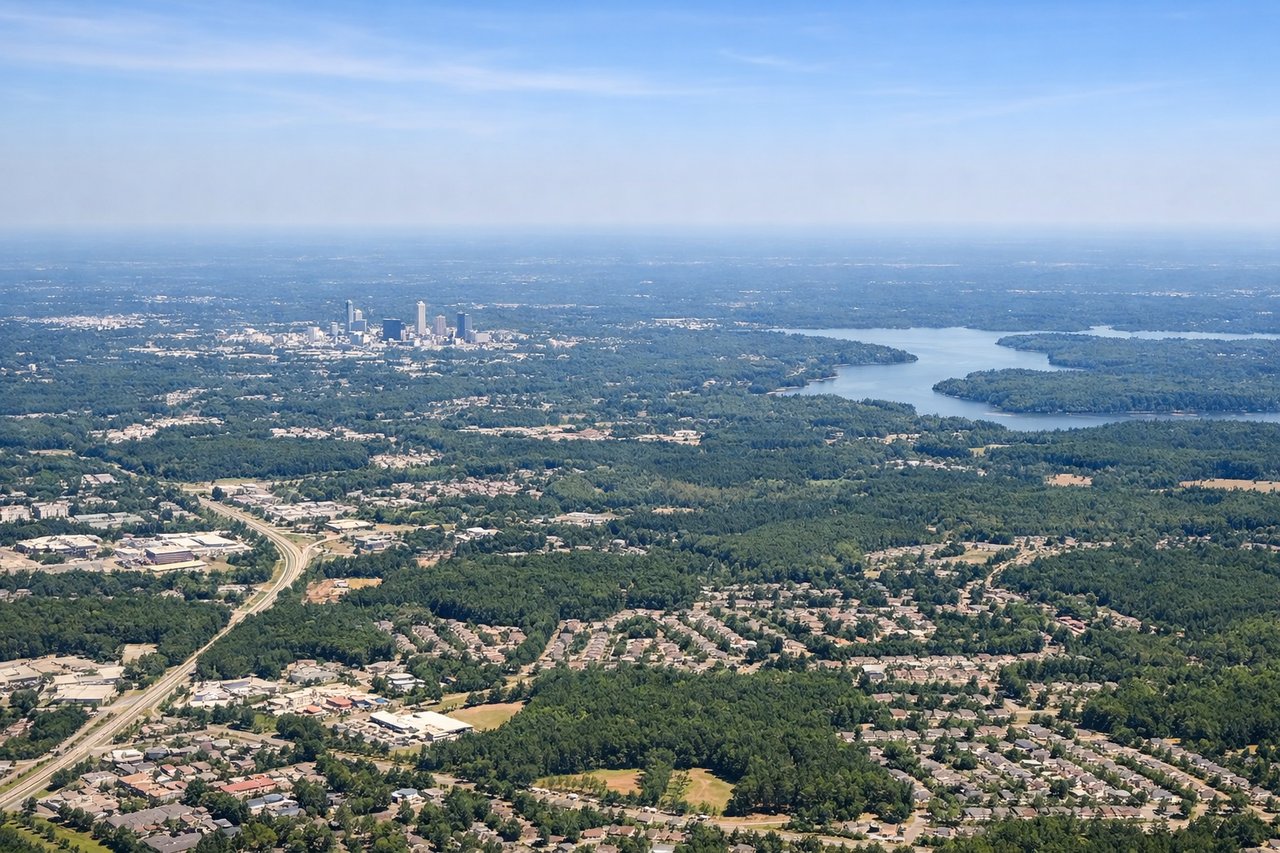
Takeoff from RDU
LEFTRDU typically departs runways 05L/05R or 23L/23R depending on wind. Westbound departures (runway 05) favor left seats for views of the Piedmont region and the Blue Ridge Mountains forming the western horizon. Left seats capture the gradual elevation gain and forested terrain characteristic of central North Carolina.
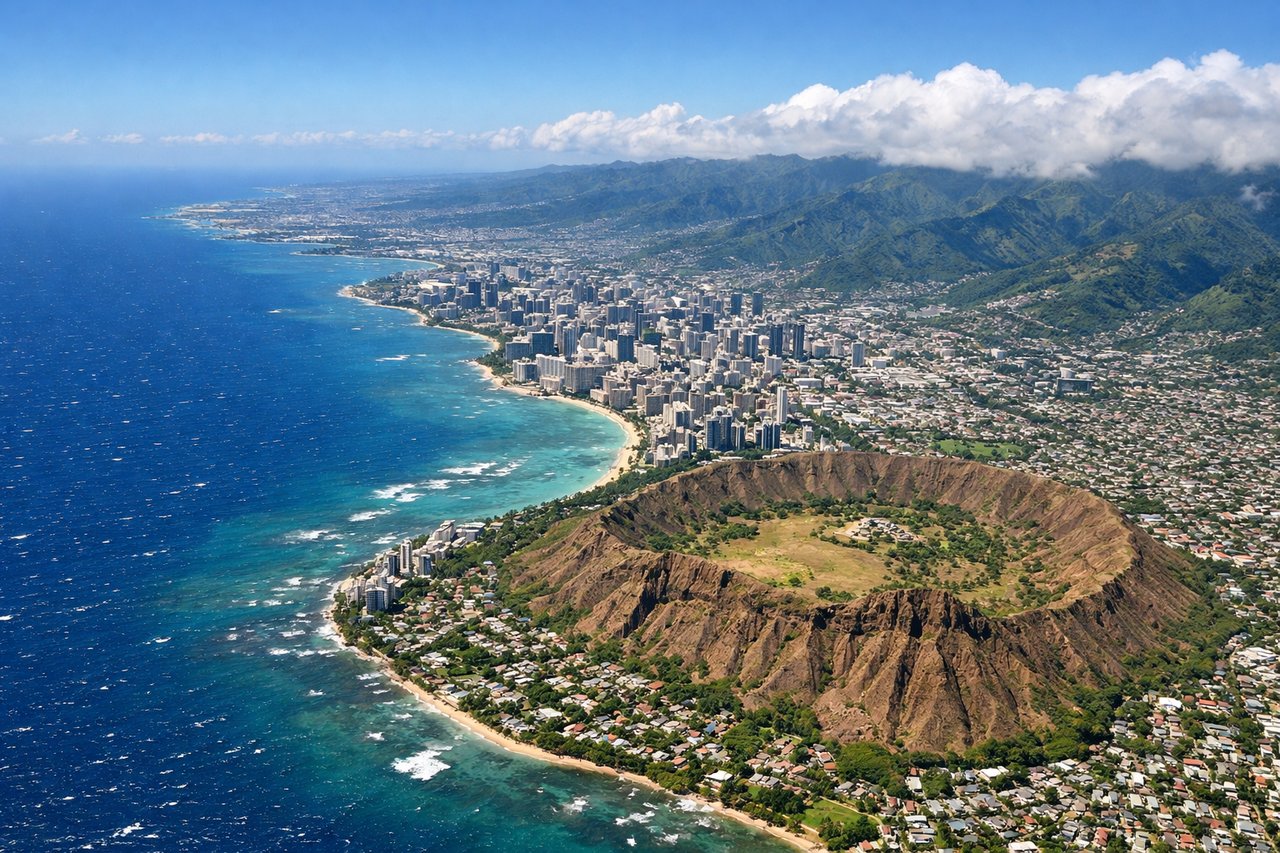
Landing at HNL
RIGHTApproaching HNL typically uses runways 08L/08R or 26L/26R. Eastbound approaches (runway 08) favor right seats for views of the Waianae Range on Oahu's western side and the approach over the Pacific. Right seats capture the volcanic topography and the final descent over the island's windward features.
Landmarks on this routeAll landmarks →
Will your flight be in sunlight?
See exactly which side of the plane gets sun and shade at your departure time.
About This Route
Which side of the plane should I sit on flying from Raleigh Durham International (RDU) to Honolulu International (HNL)?
Sit on the Right side of the plane for the best views on flights from Raleigh-Durham to Honolulu. While takeoff favors left seats for Blue Ridge views, the landing experience over Oahu's volcanic landscape and the Pacific approach is more dramatic and geographically distinctive. Right seats capture the final 90 minutes of descent with increasingly detailed views of Hawaii's topography, making the overall journey more rewarding.
What can I see during takeoff from Raleigh Durham International in Raleigh-Durham?
During takeoff from Raleigh Durham International (RDU), sit on the Left side for the best views. RDU typically departs runways 05L/05R or 23L/23R depending on wind. Westbound departures (runway 05) favor left seats for views of the Piedmont region and the Blue Ridge Mountains forming the western horizon. Left seats capture the gradual elevation gain and forested terrain characteristic of central North Carolina. Notable sights include: Neuse River valley (immediate vicinity), Piedmont plateau terrain, Blue Ridge Mountains (distant western horizon), Research Triangle urban corridor (below during initial climb).
What can I see when landing at Honolulu International in Honolulu?
When landing at Honolulu International (HNL), sit on the Right side for the best views. Approaching HNL typically uses runways 08L/08R or 26L/26R. Eastbound approaches (runway 08) favor right seats for views of the Waianae Range on Oahu's western side and the approach over the Pacific. Right seats capture the volcanic topography and the final descent over the island's windward features. Notable sights include: Waianae Range (western Oahu), Honolulu city and harbor (central Oahu), Koolau Range (eastern Oahu), Pacific Ocean approach corridor.
How long is the flight from Raleigh-Durham to Honolulu?
The flight from Raleigh Durham International (RDU) to Honolulu International (HNL) takes Approximately 10 hours 15 minutes.
What does the Raleigh-Durham to Honolulu flight path pass over?
The flight path crosses the continental United States westbound, passing over the Great Plains (Kansas, Colorado, New Mexico), then transitions to the Rocky Mountain region before heading over the Pacific. At cruise altitude (35,000-37,000 feet), the Rocky Mountains appear as a distant textured ridge on the western horizon for several hours. The Pacific crossing offers minimal landmarks except occasional cloud formations and the curvature of the Earth becoming more apparent. As the aircraft approaches Hawaii, the Big Island of Hawaii becomes visible approximately 200 miles out, appearing as a dark volcanic mass on the horizon before Oahu comes into view.