While takeoff from Recife favors the right side, the landing approach into Madrid from the left side offers more dramatic and extensive scenery—the Sierra de Guadarrama and the approach across the Meseta Central are visually superior to the departure views. Left-side seats capture the most impressive portion of this transatlantic route.
Flown REC to MAD? Did we get it right?
Flight Path
Recife to Madrid is 3,908 miles (6,289 km), a flight of about 7 hours 55 minutes.
The flight path crosses the Atlantic Ocean for roughly 6-7 hours with no visible landmarks. Passengers may see the Azores archipelago if the flight passes within viewing distance (though most direct routing does not). Upon approaching European airspace, the flight enters over Portugal or western Spain, with the Portuguese coast and Iberian Peninsula becoming visible approximately 2-3 hours before Madrid arrival. The Tagus River valley and central Spanish plateau become prominent features during the final descent phase.
Great circle distance and headings ›


Phase by phase
Takeoff from REC
RIGHTRight-side seats offer views of the Recife metropolitan area and the Atlantic coastline as the aircraft climbs northeastward. The city's distinctive beachfront and nearby islands are visible during the initial climb-out phase.
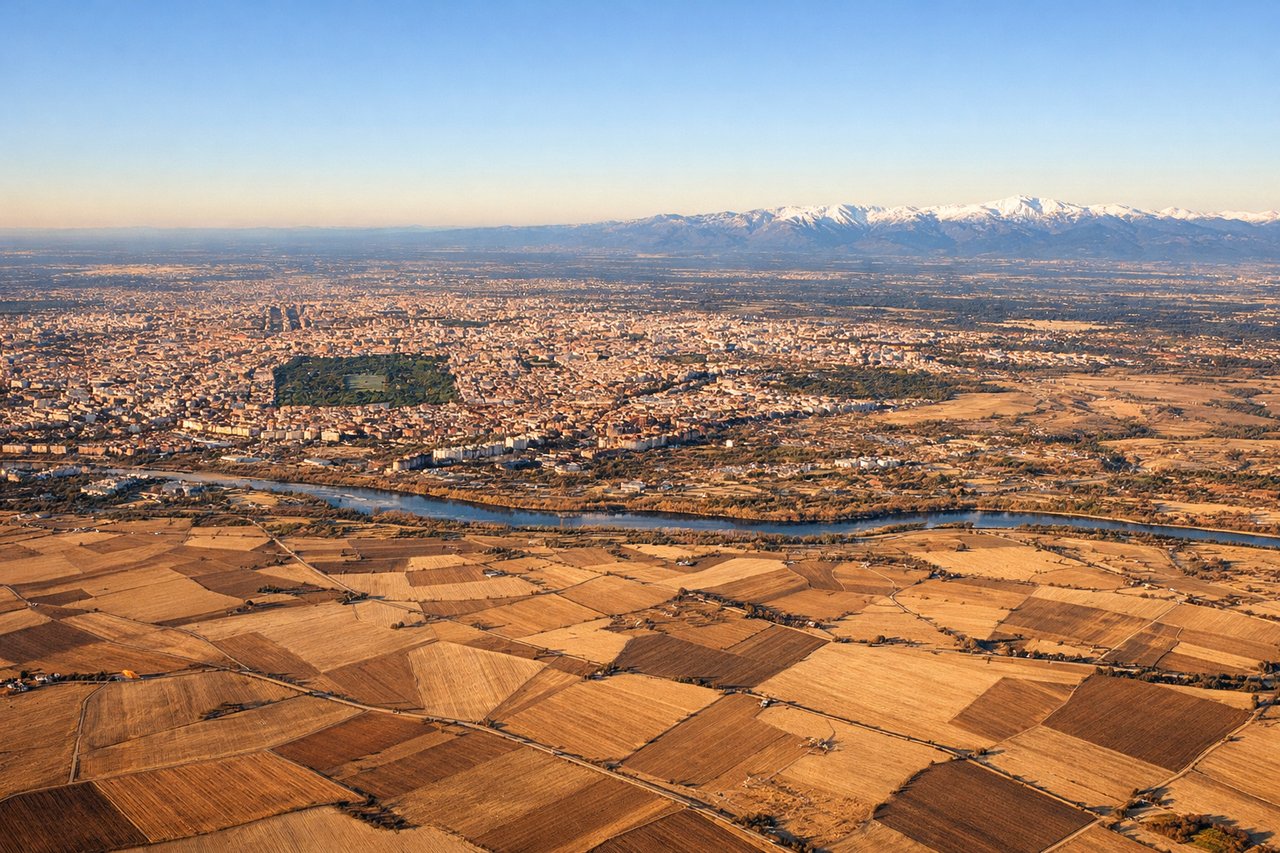
Landing at MAD
LEFTLeft-side seats provide excellent views during the approach to Madrid. As the aircraft descends from the northeast, passengers see the Spanish plateau (Meseta Central), the Sierra de Guadarrama mountain range, and the sprawling Madrid metropolitan area before final approach.
Will your flight be in sunlight?
Pick a date and time in the Sun Map to watch the sun move across your whole flight.
About This Route
Which side of the plane should I sit on flying from Guararapes (REC) to Barajas (MAD)?
Sit on the Left side of the plane for the best views on flights from Recife to Madrid. While takeoff from Recife favors the right side, the landing approach into Madrid from the left side offers more dramatic and extensive scenery—the Sierra de Guadarrama and the approach across the Meseta Central are visually superior to the departure views. Left-side seats capture the most impressive portion of this transatlantic route.
What can I see during takeoff from Guararapes in Recife?
During takeoff from Guararapes (REC), sit on the Right side for the best views. Right-side seats offer views of the Recife metropolitan area and the Atlantic coastline as the aircraft climbs northeastward. The city's distinctive beachfront and nearby islands are visible during the initial climb-out phase. Notable sights include: Recife city center and port facilities, Atlantic Ocean coastline, Boa Viagem Beach, nearby barrier islands and reef formations.
What can I see when landing at Barajas in Madrid?
When landing at Barajas (MAD), sit on the Left side for the best views. Left-side seats provide excellent views during the approach to Madrid. As the aircraft descends from the northeast, passengers see the Spanish plateau (Meseta Central), the Sierra de Guadarrama mountain range, and the sprawling Madrid metropolitan area before final approach. Notable sights include: Sierra de Guadarrama mountain range, Meseta Central plateau, Madrid city sprawl and urban districts, Tagus River valley.
How long is the flight from Recife to Madrid?
The flight from Guararapes (REC) to Barajas (MAD) takes about 7 hours 55 minutes. The shortest flight path between them is 3,908 miles (6,289 km); winds and air traffic control usually add a few percent.
What does the Recife to Madrid flight path pass over?
The flight path crosses the Atlantic Ocean for roughly 6-7 hours with no visible landmarks. Passengers may see the Azores archipelago if the flight passes within viewing distance (though most direct routing does not). Upon approaching European airspace, the flight enters over Portugal or western Spain, with the Portuguese coast and Iberian Peninsula becoming visible approximately 2-3 hours before Madrid arrival. The Tagus River valley and central Spanish plateau become prominent features during the final descent phase.