The takeoff scenery from Roatan—tropical Caribbean waters, reef systems, and island geography—is more visually distinctive than the landing approach. While the Rocky Mountain descent is dramatic, the climb-out over the Bay Islands offers more varied and colorful seascape views.
Flown RTB to DEN? Did we get it right?
Flight Path
Roatan to Denver is 1,958 miles (3,152 km), a flight of about 4 hours 15 minutes.
You'll cross over the Yucatan Peninsula and Gulf of Mexico. Notable landmarks include the Mesoamerican Barrier Reef system (visible early in climb), the Yucatan's flat limestone terrain with cenotes, the Gulf of Mexico coastline near Veracruz or Tampico (depending on exact routing), and eventually the Sierra Madre Oriental mountains as you approach Mexican airspace. The transition from tropical Caribbean to high desert plains is gradual but becomes pronounced as you cross into the continental interior and approach the Rocky Mountain region.
Great circle distance and headings ›

Phase by phase
Takeoff from RTB
RIGHTRight side captures the Caribbean coastline and Bay Islands archipelago as you climb out. You'll see Roatan's own reef system and neighboring islands (Utila, Guanaja) receding beneath you before heading northwest toward the mainland.
Landing at DEN
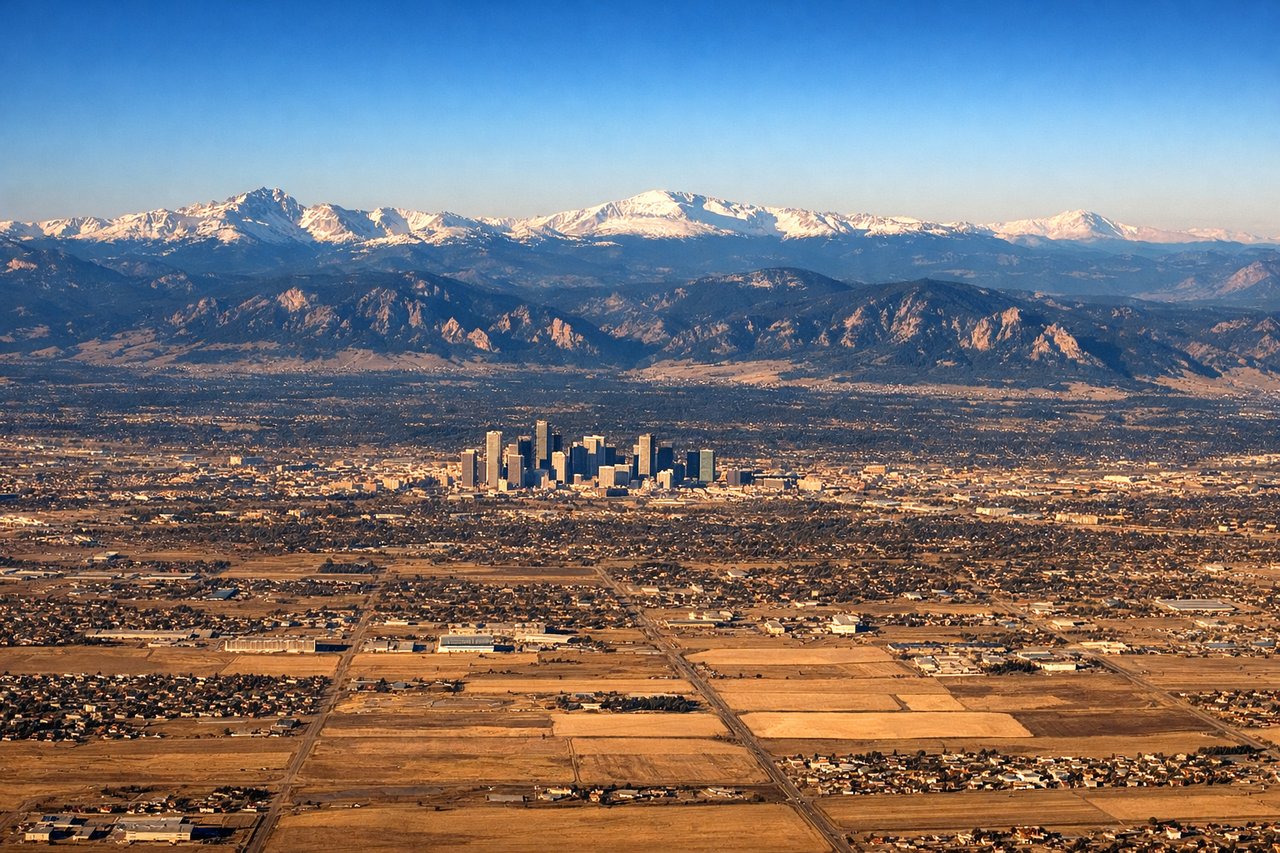
LEFTLeft side offers the best views during descent into Denver. You'll see the Rocky Mountain Front rising dramatically to the west and northwest, with the Front Range peaks (Mount Evans, Mount Bierstadt) becoming increasingly prominent as you descend toward the high plains.
Will your flight be in sunlight?
Pick a date and time in the Sun Map to watch the sun move across your whole flight.
About This Route
Which side of the plane should I sit on flying from Roatan (RTB) to Denver International (DEN)?
Sit on the Right side of the plane for the best views on flights from Roatan to Denver. The takeoff scenery from Roatan—tropical Caribbean waters, reef systems, and island geography—is more visually distinctive than the landing approach. While the Rocky Mountain descent is dramatic, the climb-out over the Bay Islands offers more varied and colorful seascape views.
What can I see during takeoff from Roatan in Roatan?
During takeoff from Roatan (RTB), sit on the Right side for the best views. Right side captures the Caribbean coastline and Bay Islands archipelago as you climb out. You'll see Roatan's own reef system and neighboring islands (Utila, Guanaja) receding beneath you before heading northwest toward the mainland. Notable sights include: Caribbean Sea and coral reef system, Bay Islands archipelago (Utila and Guanaja visible to the east), Roatan's northern coastline, Mesoamerican Barrier Reef.
What can I see when landing at Denver International in Denver?
When landing at Denver International (DEN), sit on the Left side for the best views. Left side offers the best views during descent into Denver. You'll see the Rocky Mountain Front rising dramatically to the west and northwest, with the Front Range peaks (Mount Evans, Mount Bierstadt) becoming increasingly prominent as you descend toward the high plains. Notable sights include: Rocky Mountain Front Range, South Platte River valley, Denver metropolitan area sprawl, High Plains extending eastward.
How long is the flight from Roatan to Denver?
The flight from Roatan (RTB) to Denver International (DEN) takes about 4 hours 15 minutes. The shortest flight path between them is 1,958 miles (3,152 km); winds and air traffic control usually add a few percent.
What does the Roatan to Denver flight path pass over?
You'll cross over the Yucatan Peninsula and Gulf of Mexico. Notable landmarks include the Mesoamerican Barrier Reef system (visible early in climb), the Yucatan's flat limestone terrain with cenotes, the Gulf of Mexico coastline near Veracruz or Tampico (depending on exact routing), and eventually the Sierra Madre Oriental mountains as you approach Mexican airspace. The transition from tropical Caribbean to high desert plains is gradual but becomes pronounced as you cross into the continental interior and approach the Rocky Mountain region.