The left seat delivers the dramatic Rocky Mountain Front Range panorama on departure, which is the single most spectacular moment of this flight. Mid-flight both sides see open Gulf of Mexico and Caribbean water with little differentiation. The right-side Roatan arrival is excellent but briefer. Left wins on total visual impact.
Flown DEN to RTB? Did we get it right?
Flight Path
Denver to Roatan is 1,958 miles (3,152 km), a flight of about 5 hours.
The flight tracks southeast over New Mexico and Texas, crossing the Gulf of Mexico near the Yucatan Channel. Visible features include the Rio Grande valley near El Paso, the flat Texas coastal plain, the Gulf of Mexico open water for roughly 90 minutes, the Yucatan Peninsula of Mexico (if routing goes that way), and the Bay of Honduras before descending toward Roatan.
Great circle distance and headings ›

Phase by phase
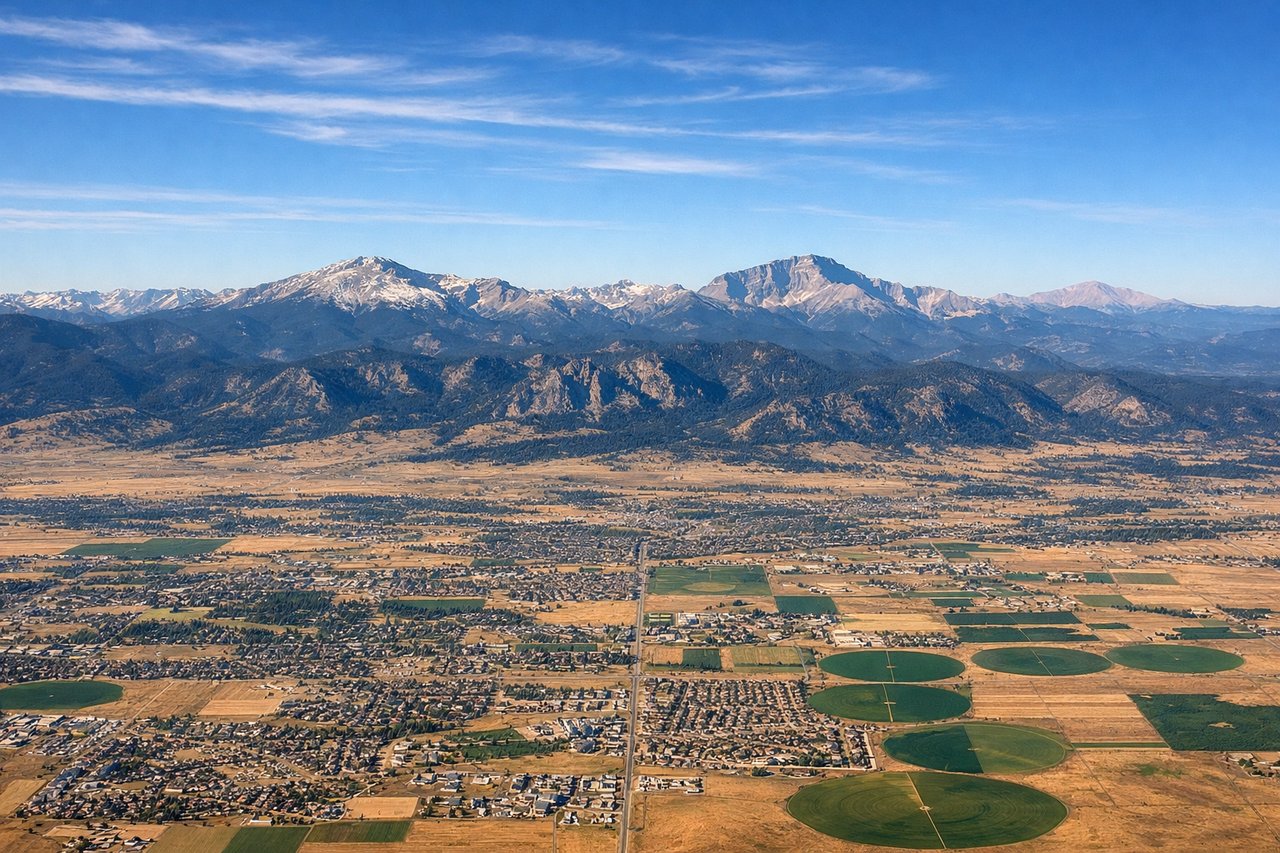
Takeoff from DEN
LEFTDEN typically departs south or southeast on runways 16/17, putting the Rocky Mountains directly to the left (east-facing passengers look west). You get a clear broadside view of the Front Range including Pikes Peak and the entire Denver metro spread below. The right side faces the flat eastern plains with little of interest.
Landing at RTB
RIGHTRoatan's runway 07/25 typically has aircraft approaching from the east over open Caribbean water, landing westward toward the island. On right-side seats you get the full length of Roatan island laid out — a narrow 40-mile strip of green jungle ridge surrounded by turquoise reef water. The left side faces the Honduran mainland mountains.
Will your flight be in sunlight?
Pick a date and time in the Sun Map to watch the sun move across your whole flight.
About This Route
Which side of the plane should I sit on flying from Denver International (DEN) to Roatan (RTB)?
Sit on the Left side of the plane for the best views on flights from Denver to Roatan. The left seat delivers the dramatic Rocky Mountain Front Range panorama on departure, which is the single most spectacular moment of this flight. Mid-flight both sides see open Gulf of Mexico and Caribbean water with little differentiation. The right-side Roatan arrival is excellent but briefer. Left wins on total visual impact.
What can I see during takeoff from Denver International in Denver?
During takeoff from Denver International (DEN), sit on the Left side for the best views. DEN typically departs south or southeast on runways 16/17, putting the Rocky Mountains directly to the left (east-facing passengers look west). You get a clear broadside view of the Front Range including Pikes Peak and the entire Denver metro spread below. The right side faces the flat eastern plains with little of interest. Notable sights include: Front Range of the Rockies, Pikes Peak (south), Denver downtown skyline, Cherry Creek Reservoir.
What can I see when landing at Roatan in Roatan?
When landing at Roatan (RTB), sit on the Right side for the best views. Roatan's runway 07/25 typically has aircraft approaching from the east over open Caribbean water, landing westward toward the island. On right-side seats you get the full length of Roatan island laid out — a narrow 40-mile strip of green jungle ridge surrounded by turquoise reef water. The left side faces the Honduran mainland mountains. Notable sights include: Roatan island reef system, Caribbean turquoise shallows over Mesoamerican Barrier Reef, West Bay and West End beaches, Honduran mainland mountains to the south.
How long is the flight from Denver to Roatan?
The flight from Denver International (DEN) to Roatan (RTB) takes about 5 hours. The shortest flight path between them is 1,958 miles (3,152 km); winds and air traffic control usually add a few percent.
What does the Denver to Roatan flight path pass over?
The flight tracks southeast over New Mexico and Texas, crossing the Gulf of Mexico near the Yucatan Channel. Visible features include the Rio Grande valley near El Paso, the flat Texas coastal plain, the Gulf of Mexico open water for roughly 90 minutes, the Yucatan Peninsula of Mexico (if routing goes that way), and the Bay of Honduras before descending toward Roatan.