Santa Fe to Chicago is 1,070 miles (1,723 km), a flight of about 3 hours 15 minutes.
While the Santa Fe departure offers dramatic mountain scenery, the Chicago arrival provides more visually striking urban and water features. Left-side seats capture both the Sangre de Cristos during climb-out (by leaning forward) and the full Lake Michigan and skyline approach, making it the better overall choice for this route.
Flight Path
The flight path crosses the Texas Panhandle and Oklahoma, passing east of the Caprock Escarpment and over the High Plains. Notable features include the Canadian River valley in the Oklahoma Panhandle, the Wichita Mountains visible to the southeast in Oklahoma, and the transition from high plains to the Mississippi River valley as the flight approaches Illinois. The Arkansas River valley becomes visible in eastern Oklahoma and western Arkansas.
Great circle distance and headings ›.jpg?width=600)


Phase by phase
Takeoff from SAF
RIGHTRight-side seats capture the Sangre de Cristo Mountains immediately east of Santa Fe during climb-out, with the Rio Grande valley visible to the west. The mountains rise dramatically from the high desert plateau and dominate the early departure phase.
Landing at ORD
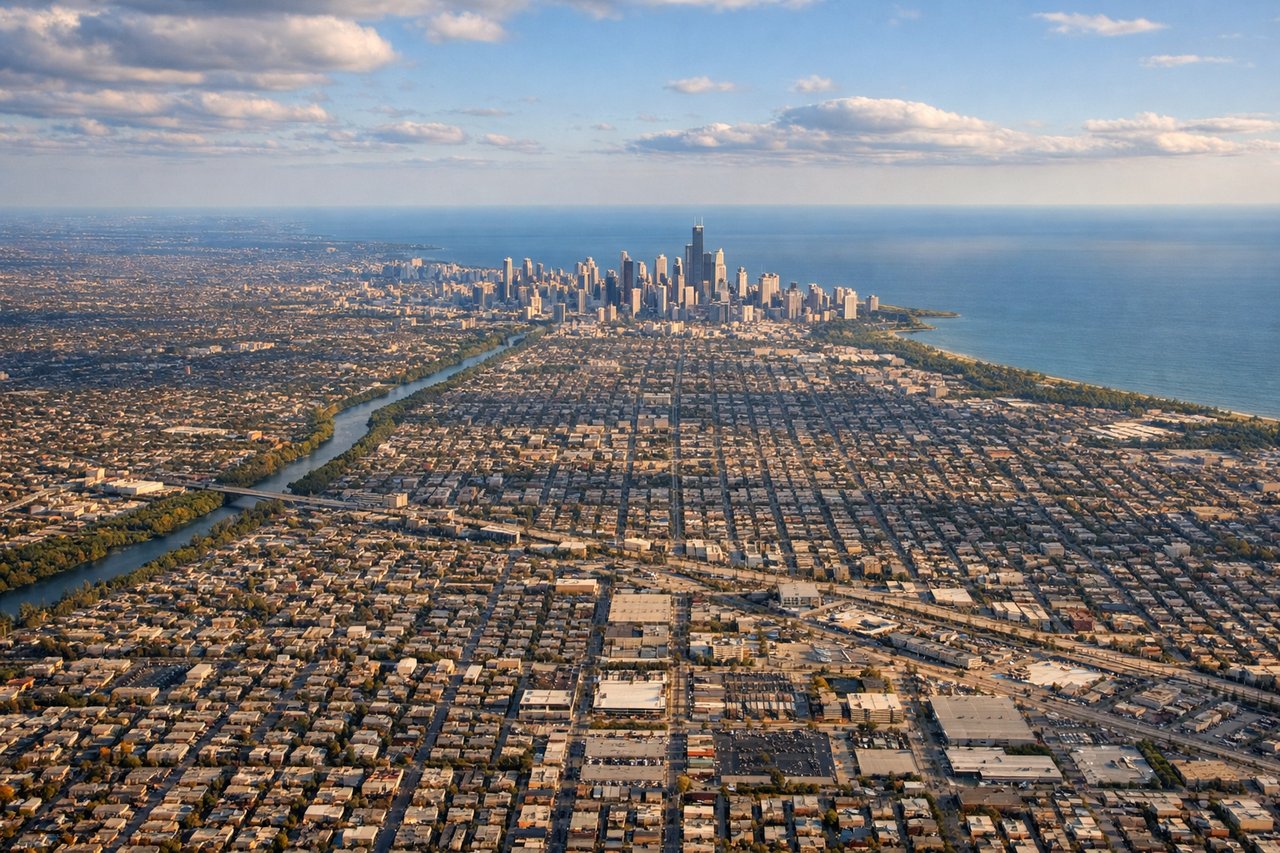
LEFTLeft-side seats offer views of Lake Michigan and Chicago's downtown skyline during the final approach into O'Hare from the west. The lake's vast blue expanse and the city's distinctive high-rise cluster provide excellent urban scenery in the descent phase.
Landmarks on this routeAll landmarks →
Will your flight be in sunlight?
Pick a date and time in the Sun Map to watch the sun move across your whole flight.
About This Route
Which side of the plane should I sit on flying from Santa Fe Muni (SAF) to Chicago Ohare International (ORD)?
Sit on the Left side of the plane for the best views on flights from Santa Fe to Chicago. While the Santa Fe departure offers dramatic mountain scenery, the Chicago arrival provides more visually striking urban and water features. Left-side seats capture both the Sangre de Cristos during climb-out (by leaning forward) and the full Lake Michigan and skyline approach, making it the better overall choice for this route.
What can I see during takeoff from Santa Fe Muni in Santa Fe?
During takeoff from Santa Fe Muni (SAF), sit on the Right side for the best views. Right-side seats capture the Sangre de Cristo Mountains immediately east of Santa Fe during climb-out, with the Rio Grande valley visible to the west. The mountains rise dramatically from the high desert plateau and dominate the early departure phase. Notable sights include: Sangre de Cristo Mountains, Rio Grande valley, Santa Fe plateau at ~7,000 ft elevation, Jemez Mountains to the northwest.
What can I see when landing at Chicago Ohare International in Chicago?
When landing at Chicago Ohare International (ORD), sit on the Left side for the best views. Left-side seats offer views of Lake Michigan and Chicago's downtown skyline during the final approach into O'Hare from the west. The lake's vast blue expanse and the city's distinctive high-rise cluster provide excellent urban scenery in the descent phase. Notable sights include: Lake Michigan, Chicago downtown skyline and Willis Tower, Chicago River, Grant Park along the lakefront.
How long is the flight from Santa Fe to Chicago?
The flight from Santa Fe Muni (SAF) to Chicago Ohare International (ORD) takes about 3 hours 15 minutes. The shortest flight path between them is 1,070 miles (1,723 km); winds and air traffic control usually add a few percent.
What does the Santa Fe to Chicago flight path pass over?
The flight path crosses the Texas Panhandle and Oklahoma, passing east of the Caprock Escarpment and over the High Plains. Notable features include the Canadian River valley in the Oklahoma Panhandle, the Wichita Mountains visible to the southeast in Oklahoma, and the transition from high plains to the Mississippi River valley as the flight approaches Illinois. The Arkansas River valley becomes visible in eastern Oklahoma and western Arkansas.