Right-side seats capture the most visually distinctive segment at takeoff (San Diego Bay and downtown), while the flight path westward across inland California and Arizona offers minimal dramatic features. Left seats gain advantage only during the final approach to San Antonio. Right wins overall due to the superior takeoff experience.
Flight Path
The flight path crosses inland Southern California (Inland Empire region with sprawling development), then transitions into the Colorado Desert and Arizona. Notable features include the Salton Sea (visible as a large inland water body if routed south of direct path), the Colorado River valley near the California-Arizona border, and the Sonoran Desert terrain. Arizona's terrain becomes increasingly mountainous with the Superstition Mountains and other ranges visible in the distance. As the flight approaches Texas, the landscape transitions to the Edwards Plateau and Hill Country with increasing elevation variation. Most of the cruise segment offers limited distinctive landmarks—primarily desert and semi-arid terrain with sparse development.
Great circle distance and headings ›Phase by phase
Takeoff from SAN
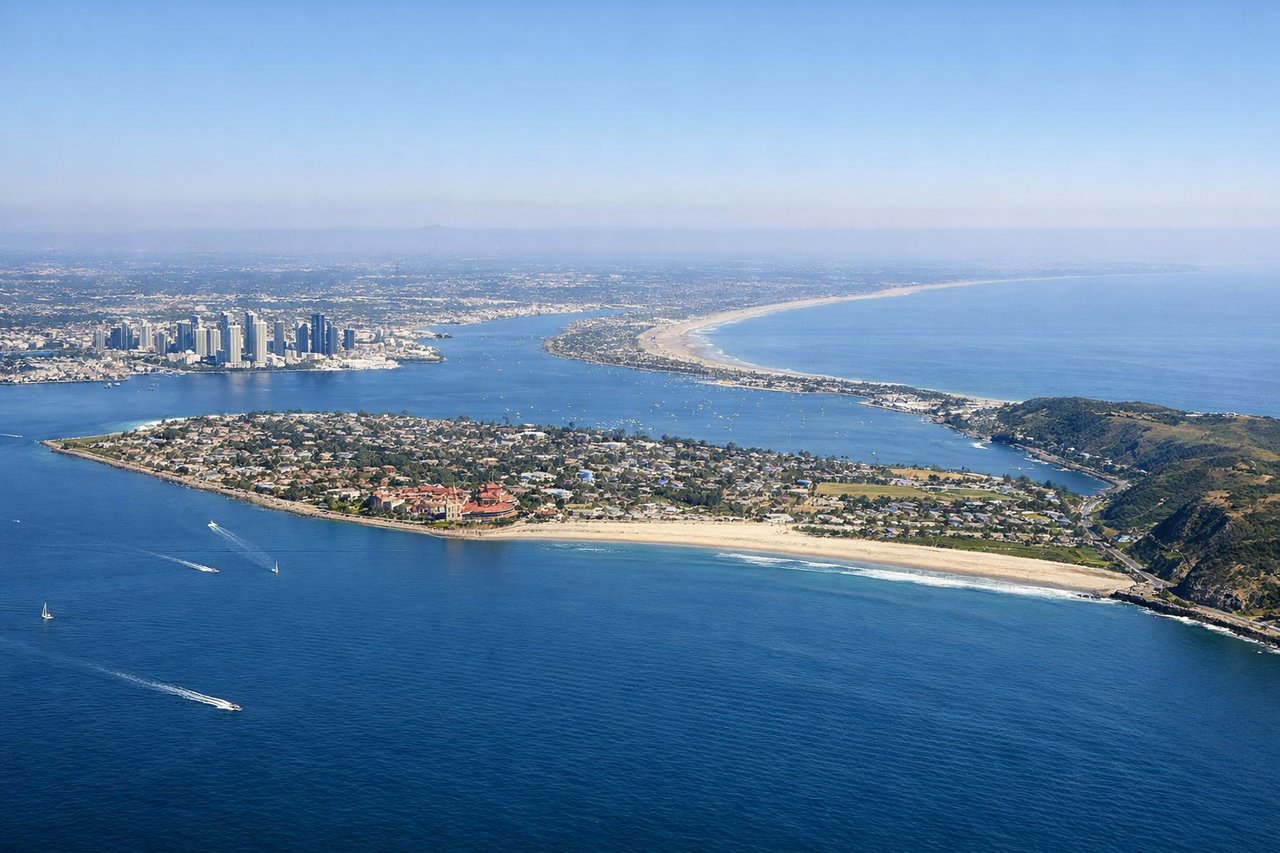
RIGHTSAN typically departs runway 09L or 09R heading east. Right-side seats offer immediate views of San Diego Bay, the downtown skyline, and the transition from urban coastal terrain to inland valleys. Left seats face the Pacific Ocean and North Island, which are less distinctive during climb-out.
Landing at SAT
LEFTSAT typically lands runway 12L or 12R heading northeast. Left-side seats during approach offer views of the Texas Hill Country terrain, the Colorado River valley, and the city's northern approach corridor. Right seats face less distinctive flat terrain to the east.
Will your flight be in sunlight?
See exactly which side of the plane gets sun and shade at your departure time.
About This Route
Which side of the plane should I sit on flying from San Diego International Lindbergh Fld (SAN) to San Antonio International (SAT)?
Sit on the Right side of the plane for the best views on flights from San Diego to San Antonio. Right-side seats capture the most visually distinctive segment at takeoff (San Diego Bay and downtown), while the flight path westward across inland California and Arizona offers minimal dramatic features. Left seats gain advantage only during the final approach to San Antonio. Right wins overall due to the superior takeoff experience.
What can I see during takeoff from San Diego International Lindbergh Fld in San Diego?
During takeoff from San Diego International Lindbergh Fld (SAN), sit on the Right side for the best views. SAN typically departs runway 09L or 09R heading east. Right-side seats offer immediate views of San Diego Bay, the downtown skyline, and the transition from urban coastal terrain to inland valleys. Left seats face the Pacific Ocean and North Island, which are less distinctive during climb-out. Notable sights include: San Diego Bay (immediately below), Downtown San Diego skyline (southeast), Coronado Island (south), Mission Valley urban sprawl (east).
What can I see when landing at San Antonio International in San Antonio?
When landing at San Antonio International (SAT), sit on the Left side for the best views. SAT typically lands runway 12L or 12R heading northeast. Left-side seats during approach offer views of the Texas Hill Country terrain, the Colorado River valley, and the city's northern approach corridor. Right seats face less distinctive flat terrain to the east. Notable sights include: Colorado River valley (north of airport), Texas Hill Country rolling terrain (northwest), San Antonio city sprawl (south and west), Lake Travis or Medina Lake (distant northwest).
How long is the flight from San Diego to San Antonio?
The flight from San Diego International Lindbergh Fld (SAN) to San Antonio International (SAT) takes Approximately 3 hours 15 minutes.
What does the San Diego to San Antonio flight path pass over?
The flight path crosses inland Southern California (Inland Empire region with sprawling development), then transitions into the Colorado Desert and Arizona. Notable features include the Salton Sea (visible as a large inland water body if routed south of direct path), the Colorado River valley near the California-Arizona border, and the Sonoran Desert terrain. Arizona's terrain becomes increasingly mountainous with the Superstition Mountains and other ranges visible in the distance. As the flight approaches Texas, the landscape transitions to the Edwards Plateau and Hill Country with increasing elevation variation. Most of the cruise segment offers limited distinctive landmarks—primarily desert and semi-arid terrain with sparse development.