Santiago to London is 689 miles (1,108 km), a flight of about 2 hours 15 minutes.
While the Santiago departure offers coastal drama, the landing sequence on the right side over the North Downs and Surrey Hills provides more sustained scenic variety and recognizable English landscape features. The cruise phase over the Bay of Biscay and English Channel is ocean-dominated on both sides (limiting both to 2.0 max for that segment), but the landing approach on the right captures genuine terrain relief and pastoral beauty that outweighs the coastal takeoff advantage.
Flight Path
Bay of Biscay (open Atlantic, minimal landmarks), Brittany coast (if visible during cruise at altitude), English Channel, Cornish and Devon coastlines (distant, on horizon during descent), New Forest and Isle of Wight (visible during approach descent)
Great circle distance and headings ›
.jpeg?width=600)
Phase by phase
Takeoff from SCQ
LEFTSantiago de Compostela sits in Galicia's Atlantic coastal region. Left-side departures (northbound on runway 35 or southbound on runway 17, depending on wind) typically offer views of the Ría de Arousa estuary system and the Galician coastline with its characteristic rias (drowned river valleys). Right side faces inland toward relatively flat agricultural terrain.
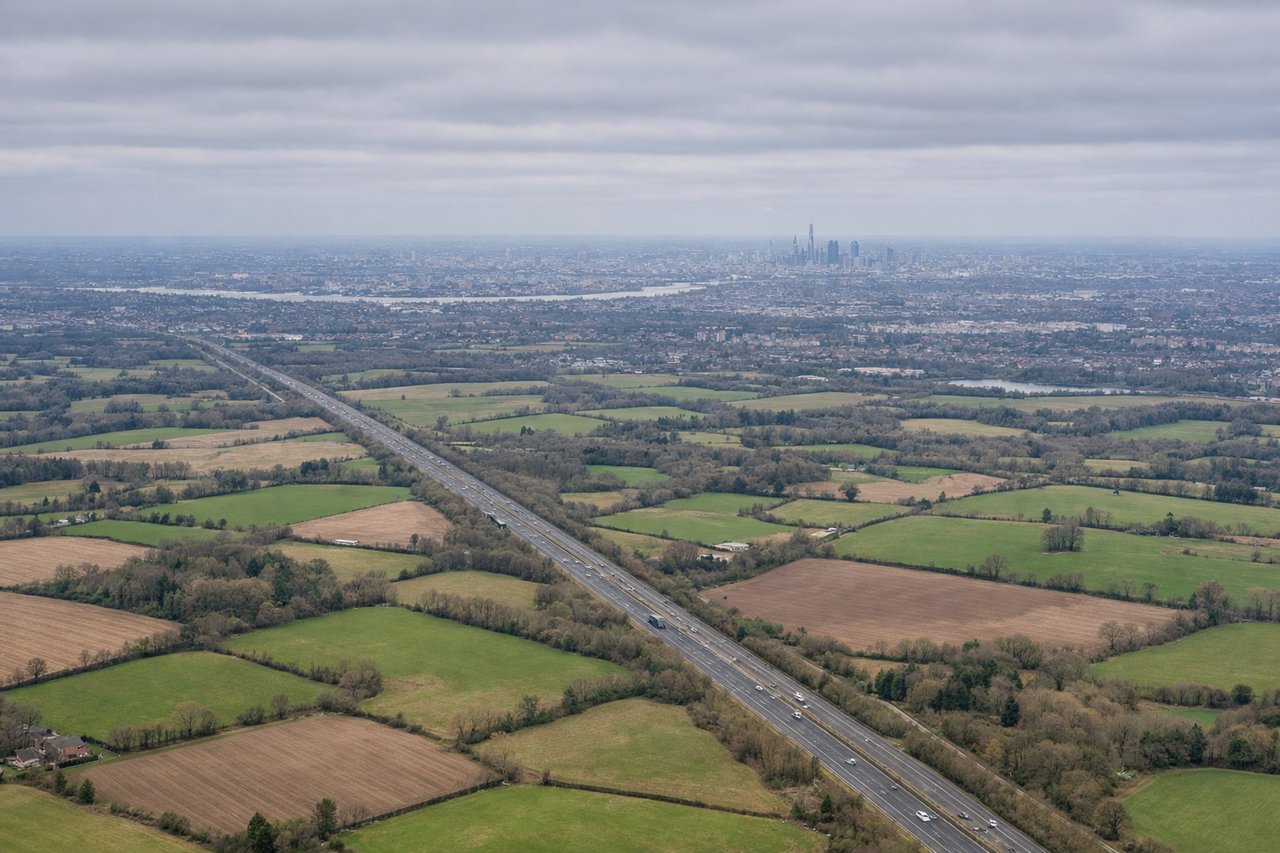
Landing at LGW
RIGHTGatwick's typical westbound approach (runway 26) brings aircraft over southern England's varied terrain. Right-side views during descent capture the North Downs, Surrey Hills, and the patchwork of English countryside with villages, woodlands, and field patterns. Left side faces the English Channel and open water during much of the approach.
Landmarks on this routeAll landmarks →
Will your flight be in sunlight?
Pick a date and time in the Sun Map to watch the sun move across your whole flight.
About This Route
Which side of the plane should I sit on flying from Santiago (SCQ) to Gatwick (LGW)?
Sit on the Right side of the plane for the best views on flights from Santiago to London. While the Santiago departure offers coastal drama, the landing sequence on the right side over the North Downs and Surrey Hills provides more sustained scenic variety and recognizable English landscape features. The cruise phase over the Bay of Biscay and English Channel is ocean-dominated on both sides (limiting both to 2.0 max for that segment), but the landing approach on the right captures genuine terrain relief and pastoral beauty that outweighs the coastal takeoff advantage.
What can I see during takeoff from Santiago in Santiago?
During takeoff from Santiago (SCQ), sit on the Left side for the best views. Santiago de Compostela sits in Galicia's Atlantic coastal region. Left-side departures (northbound on runway 35 or southbound on runway 17, depending on wind) typically offer views of the Ría de Arousa estuary system and the Galician coastline with its characteristic rias (drowned river valleys). Right side faces inland toward relatively flat agricultural terrain. Notable sights include: Ría de Arousa estuary, Atlantic coastline, Galician agricultural plains, small coastal towns.
What can I see when landing at Gatwick in London?
When landing at Gatwick (LGW), sit on the Right side for the best views. Gatwick's typical westbound approach (runway 26) brings aircraft over southern England's varied terrain. Right-side views during descent capture the North Downs, Surrey Hills, and the patchwork of English countryside with villages, woodlands, and field patterns. Left side faces the English Channel and open water during much of the approach. Notable sights include: North Downs ridge, Surrey Hills, English countryside villages and woodlands, Thames Valley.
How long is the flight from Santiago to London?
The flight from Santiago (SCQ) to Gatwick (LGW) takes about 2 hours 15 minutes. The shortest flight path between them is 689 miles (1,108 km); winds and air traffic control usually add a few percent.
What does the Santiago to London flight path pass over?
Bay of Biscay (open Atlantic, minimal landmarks), Brittany coast (if visible during cruise at altitude), English Channel, Cornish and Devon coastlines (distant, on horizon during descent), New Forest and Isle of Wight (visible during approach descent)