The left side benefits from a clearer view of Glacier National Park's peaks and the northern Rockies during cruise, plus the more landmark-dense Mall approach into DCA, giving it a slight edge over the right side's single strong moment at takeoff.
Flight Path
Northern Rocky Mountains near Glacier National Park, the plains of Montana and North Dakota, and the western Great Lakes region beneath the flight path
Great circle distance and headings ›
.jpg?width=600)


.jpeg?width=600)
Phase by phase
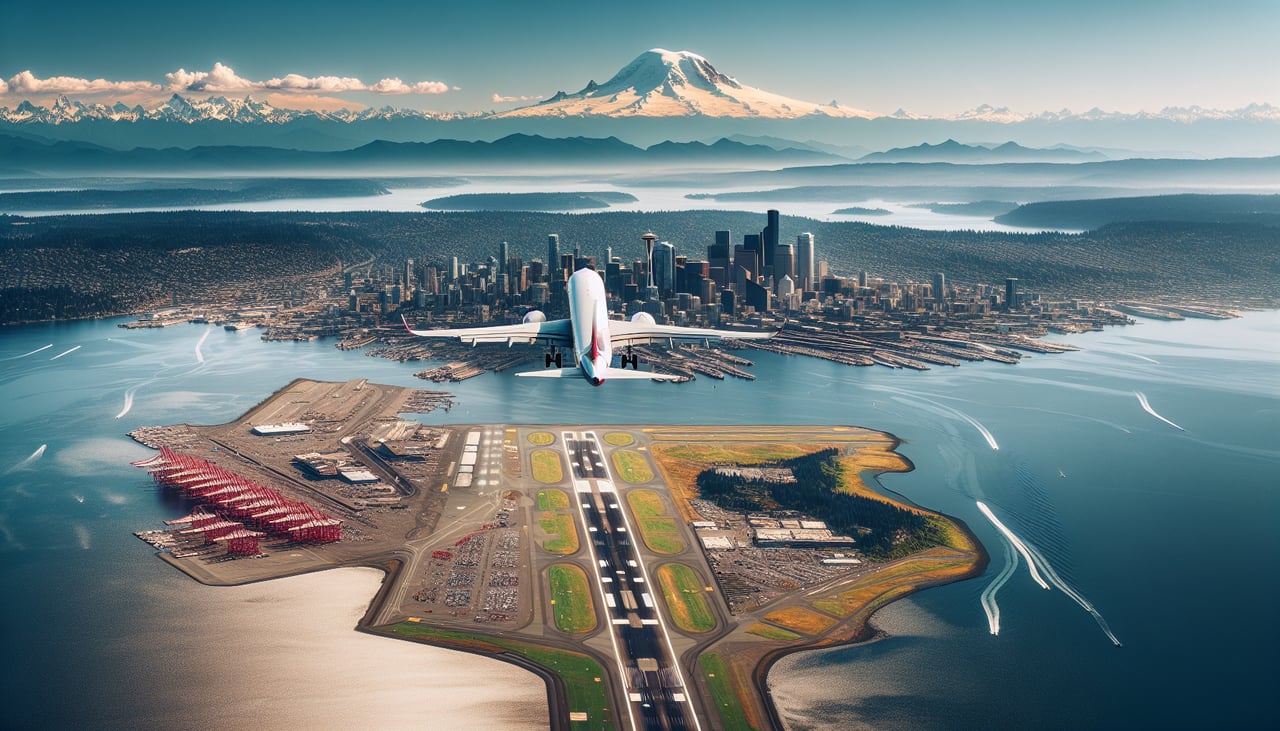
Takeoff from SEA
RIGHTDeparting SEA southbound before the turn east, the right side gives a strong view of Mount Rainier's glaciated summit rising over the Cascade foothills, with Puget Sound and the Seattle skyline visible just after liftoff.
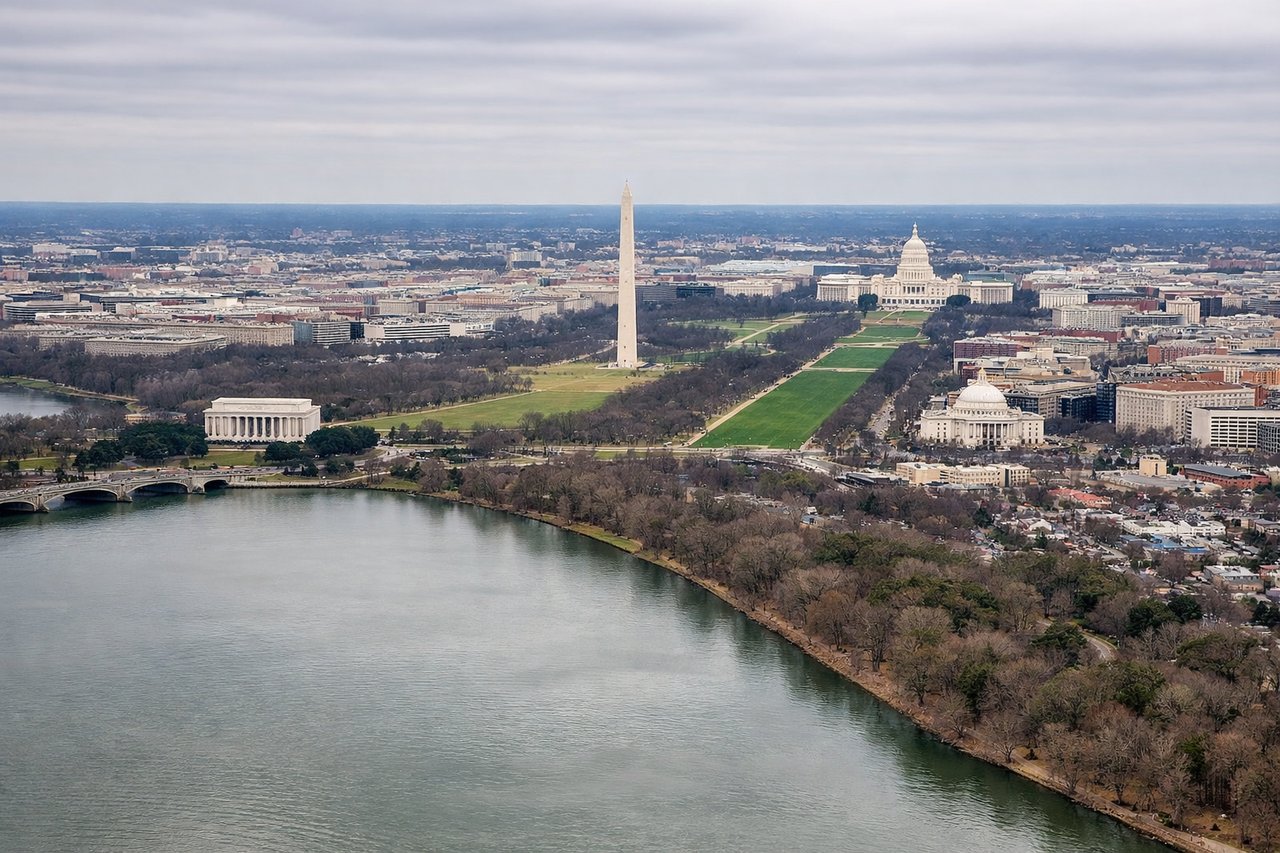
Landing at DCA
LEFTThe River Visual approach to Runway 19 tracks south along the Potomac, and from the left side passengers get a close, continuous view of the National Mall corridor including the Washington Monument, Lincoln Memorial, and the Capitol dome just before touchdown.
Landmarks on this routeAll landmarks →
Will your flight be in sunlight?
See exactly which side of the plane gets sun and shade at your departure time.
About This Route
Which side of the plane should I sit on flying from Seattle Tacoma International (SEA) to Ronald Reagan Washington National (DCA)?
Sit on the Left side of the plane for the best views on flights from Seattle to Washington. The left side benefits from a clearer view of Glacier National Park's peaks and the northern Rockies during cruise, plus the more landmark-dense Mall approach into DCA, giving it a slight edge over the right side's single strong moment at takeoff.
What can I see during takeoff from Seattle Tacoma International in Seattle?
During takeoff from Seattle Tacoma International (SEA), sit on the Right side for the best views. Departing SEA southbound before the turn east, the right side gives a strong view of Mount Rainier's glaciated summit rising over the Cascade foothills, with Puget Sound and the Seattle skyline visible just after liftoff. Notable sights include: Mount Rainier, Puget Sound, Seattle skyline, Cascade foothills.
What can I see when landing at Ronald Reagan Washington National in Washington?
When landing at Ronald Reagan Washington National (DCA), sit on the Left side for the best views. The River Visual approach to Runway 19 tracks south along the Potomac, and from the left side passengers get a close, continuous view of the National Mall corridor including the Washington Monument, Lincoln Memorial, and the Capitol dome just before touchdown. Notable sights include: Washington Monument, Lincoln Memorial, U.S. Capitol, Potomac River.
How long is the flight from Seattle to Washington?
The flight from Seattle Tacoma International (SEA) to Ronald Reagan Washington National (DCA) takes 4h 45m.
What does the Seattle to Washington flight path pass over?
Northern Rocky Mountains near Glacier National Park, the plains of Montana and North Dakota, and the western Great Lakes region beneath the flight path