The right side delivers the spectacular Mount Rainier and Cascade Range views on departure, which are among the most dramatic scenery on any domestic US route. The landing views at Florence are modest regardless of side, so the takeoff experience tips the balance decisively to the right.
Flight Path
The flight tracks southeast across the Columbia Plateau and high desert of Idaho and Utah, then over the Rocky Mountain foothills near the Wyoming-Colorado border. Crossing into the Great Plains over Kansas or Missouri, the terrain flattens dramatically. The flight then crosses the Appalachian Mountains over Tennessee or North Carolina, with the Blue Ridge and Smoky Mountains visible as a broad wrinkled ridge system before descending into the flat Carolina coastal plain toward Florence.
Great circle distance and headings ›
.jpg?width=600)
_48.jpg?width=600)


.jpeg?width=600)
Phase by phase
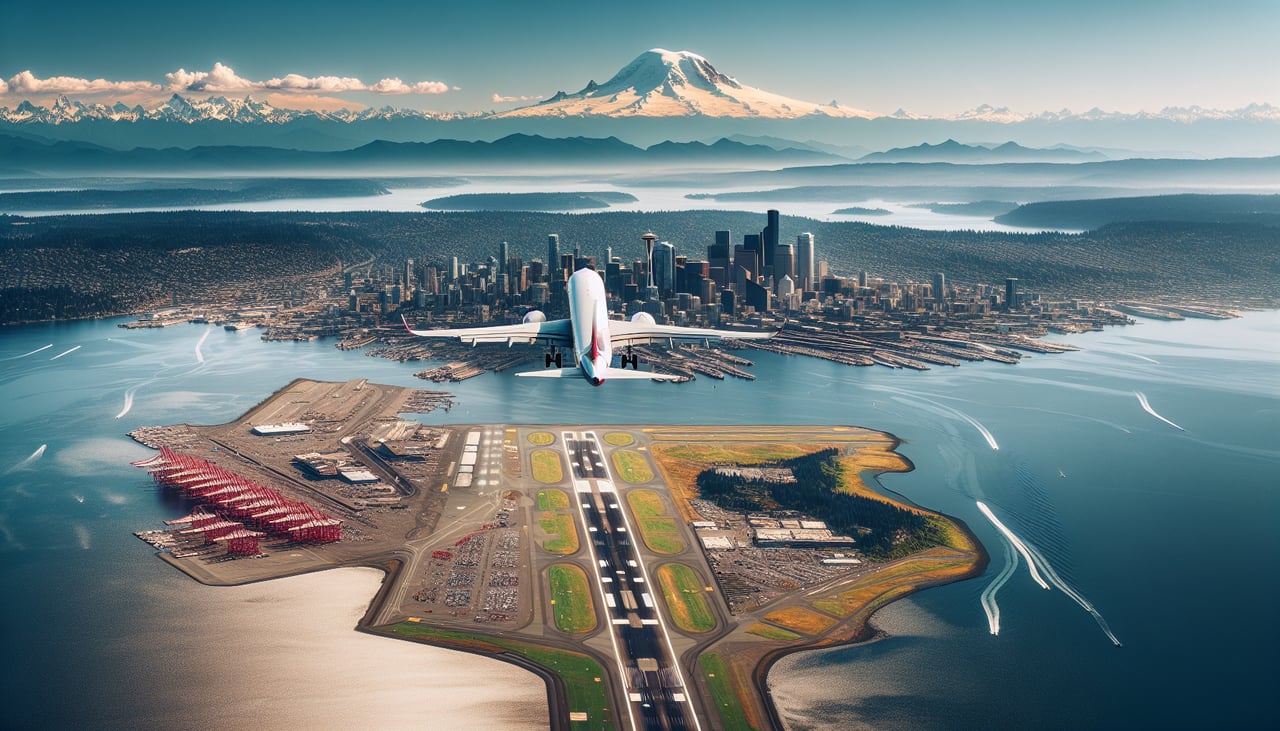
Takeoff from SEA
RIGHTSEA typically departs south on runway 16R/16C, then turns east or southeast. The right side gives you a clear look at Mount Rainier dominating the eastern skyline, plus the full sweep of Lake Washington and the Seattle skyline receding behind you. The Cascade Range lines up along the right side as you climb out.
Landing at FLO
LEFTFlorence Regional typically receives aircraft from the northwest on approaches to runway 27 or from the north. The left side tracks over the South Carolina coastal plain and gives the best view of the Pee Dee River basin and the flat pine forest lowlands characteristic of the Carolina sandhills. On a runway 09 approach from the east, the left side looks south toward the coastal plain.
Landmarks on this routeAll landmarks →
Will your flight be in sunlight?
See exactly which side of the plane gets sun and shade at your departure time.
About This Route
Which side of the plane should I sit on flying from Seattle Tacoma International (SEA) to Florence Rgnl (FLO)?
Sit on the Right side of the plane for the best views on flights from Seattle to Florence. The right side delivers the spectacular Mount Rainier and Cascade Range views on departure, which are among the most dramatic scenery on any domestic US route. The landing views at Florence are modest regardless of side, so the takeoff experience tips the balance decisively to the right.
What can I see during takeoff from Seattle Tacoma International in Seattle?
During takeoff from Seattle Tacoma International (SEA), sit on the Right side for the best views. SEA typically departs south on runway 16R/16C, then turns east or southeast. The right side gives you a clear look at Mount Rainier dominating the eastern skyline, plus the full sweep of Lake Washington and the Seattle skyline receding behind you. The Cascade Range lines up along the right side as you climb out. Notable sights include: Mount Rainier (14,411 ft), Lake Washington, Seattle downtown skyline, Cascade Range foothills.
What can I see when landing at Florence Rgnl in Florence?
When landing at Florence Rgnl (FLO), sit on the Left side for the best views. Florence Regional typically receives aircraft from the northwest on approaches to runway 27 or from the north. The left side tracks over the South Carolina coastal plain and gives the best view of the Pee Dee River basin and the flat pine forest lowlands characteristic of the Carolina sandhills. On a runway 09 approach from the east, the left side looks south toward the coastal plain. Notable sights include: Pee Dee River, Carolina sandhills pine forest, Francis Marion National Forest (distant), flat coastal plain farmland.
How long is the flight from Seattle to Florence?
The flight from Seattle Tacoma International (SEA) to Florence Rgnl (FLO) takes Approximately 4 hours 30 minutes to 5 hours.
What does the Seattle to Florence flight path pass over?
The flight tracks southeast across the Columbia Plateau and high desert of Idaho and Utah, then over the Rocky Mountain foothills near the Wyoming-Colorado border. Crossing into the Great Plains over Kansas or Missouri, the terrain flattens dramatically. The flight then crosses the Appalachian Mountains over Tennessee or North Carolina, with the Blue Ridge and Smoky Mountains visible as a broad wrinkled ridge system before descending into the flat Carolina coastal plain toward Florence.