The right side wins on the strength of the Cascades and Mount Rainier during departure plus a mid-flight pass near the Rocky Mountains and Colorado Plateau canyon country, while the left side spends most of the flight over featureless Great Plains farmland.
Flight Path
The great-circle route passes near the Utah-Colorado border, giving views of the Rocky Mountains' western slope and the red-rock canyon country of the Colorado Plateau before the terrain flattens into the Great Plains of Kansas and Oklahoma.
Great circle distance and headings ›
.jpg?width=600)
Phase by phase
Takeoff from SEA
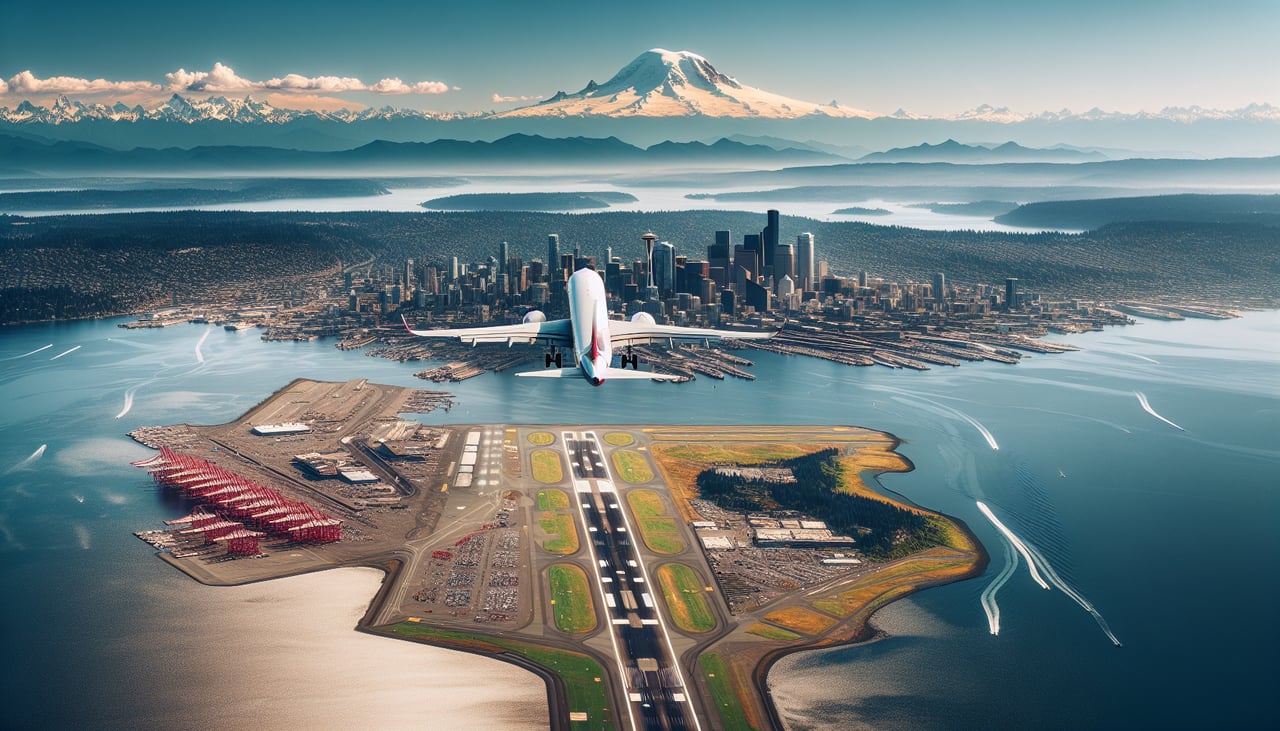
RIGHTAs the aircraft climbs out of SEA and turns onto its southeast routing, the right side faces the Cascades, putting Mount Rainier's glaciated summit and the forested foothills directly in view within the first few minutes. Puget Sound and the Tacoma waterfront also unfold below on this side during the initial turn.
Landing at IAH
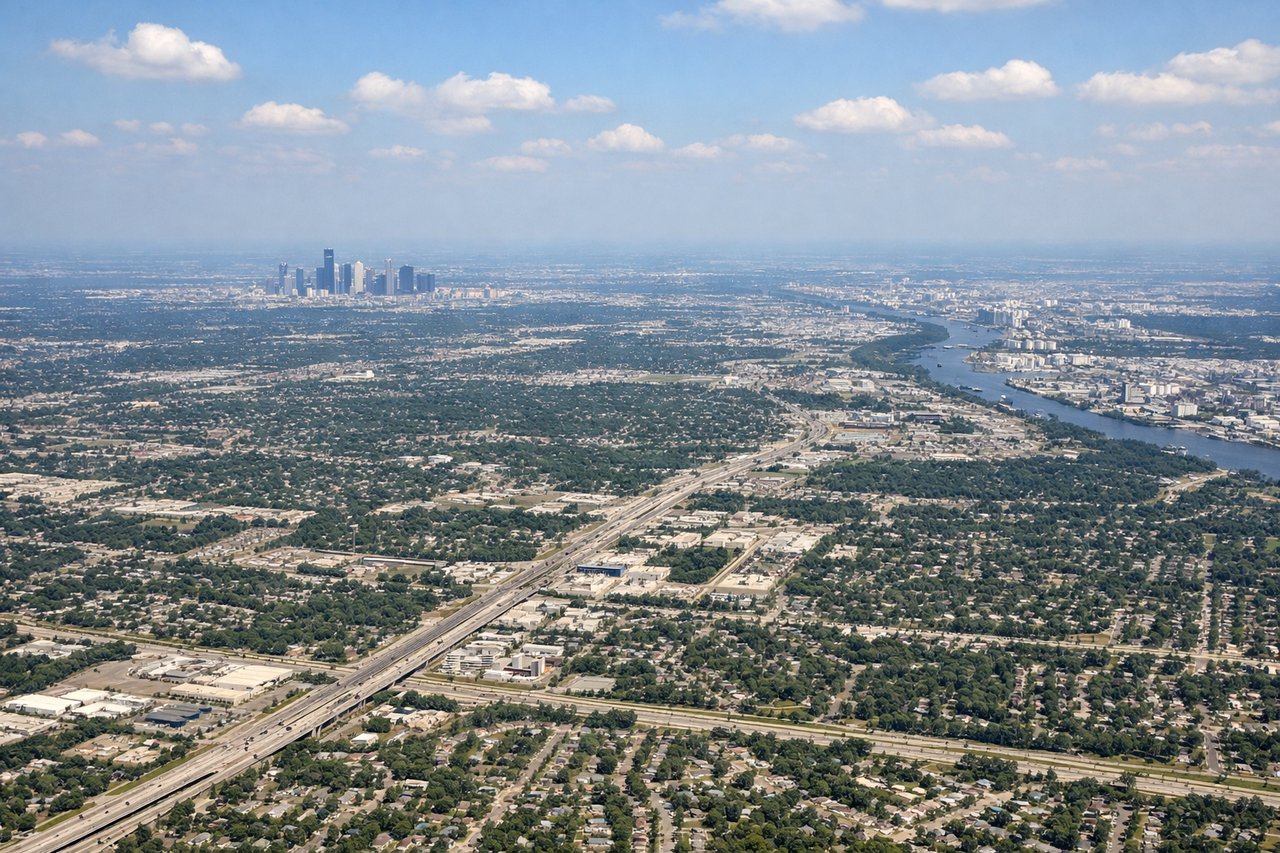
LEFTOn the descent into IAH from the north, the left side offers a clear look at Houston's downtown skyline and the sprawling bayou-laced suburbs before the final flat approach over Humble and Aldine. It's the only distinct urban landmark on an otherwise flat coastal plain arrival.
Landmarks on this routeAll landmarks →
Will your flight be in sunlight?
See exactly which side of the plane gets sun and shade at your departure time.
About This Route
Which side of the plane should I sit on flying from Seattle Tacoma International (SEA) to George Bush Intcntl Houston (IAH)?
Sit on the Right side of the plane for the best views on flights from Seattle to Houston. The right side wins on the strength of the Cascades and Mount Rainier during departure plus a mid-flight pass near the Rocky Mountains and Colorado Plateau canyon country, while the left side spends most of the flight over featureless Great Plains farmland.
What can I see during takeoff from Seattle Tacoma International in Seattle?
During takeoff from Seattle Tacoma International (SEA), sit on the Right side for the best views. As the aircraft climbs out of SEA and turns onto its southeast routing, the right side faces the Cascades, putting Mount Rainier's glaciated summit and the forested foothills directly in view within the first few minutes. Puget Sound and the Tacoma waterfront also unfold below on this side during the initial turn. Notable sights include: Mount Rainier, Puget Sound, Tacoma waterfront, Cascade Range foothills.
What can I see when landing at George Bush Intcntl Houston in Houston?
When landing at George Bush Intcntl Houston (IAH), sit on the Left side for the best views. On the descent into IAH from the north, the left side offers a clear look at Houston's downtown skyline and the sprawling bayou-laced suburbs before the final flat approach over Humble and Aldine. It's the only distinct urban landmark on an otherwise flat coastal plain arrival. Notable sights include: Downtown Houston skyline, Lake Houston, Sam Houston Tollway loop, bayou waterways.
How long is the flight from Seattle to Houston?
The flight from Seattle Tacoma International (SEA) to George Bush Intcntl Houston (IAH) takes 3h 55m.
What does the Seattle to Houston flight path pass over?
The great-circle route passes near the Utah-Colorado border, giving views of the Rocky Mountains' western slope and the red-rock canyon country of the Colorado Plateau before the terrain flattens into the Great Plains of Kansas and Oklahoma.