Right-side seats capture the most dramatic scenery: the Cascade Range and Mount Rainier during departure are visually striking and iconic. While the landing approach into Madison offers pleasant agricultural and lake views on the left, the volcanic peaks of the Pacific Northwest are more memorable and distinctive.
Flight Path
The flight path crosses the Columbia River Plateau and enters the Great Plains. Notable features include the Columbia River (visible as a major waterway cutting through eastern Washington), the transition from forested Pacific Northwest to semi-arid plateau terrain around central Washington, and eventually the agricultural heartland of eastern Washington and Idaho before entering the Great Plains of Montana and North Dakota. The flight passes south of the Bitterroot Range and crosses into the upper Midwest, with the terrain gradually becoming flatter and more agricultural as you approach Wisconsin.
Great circle distance and headings ›
.jpg?width=600)
Phase by phase
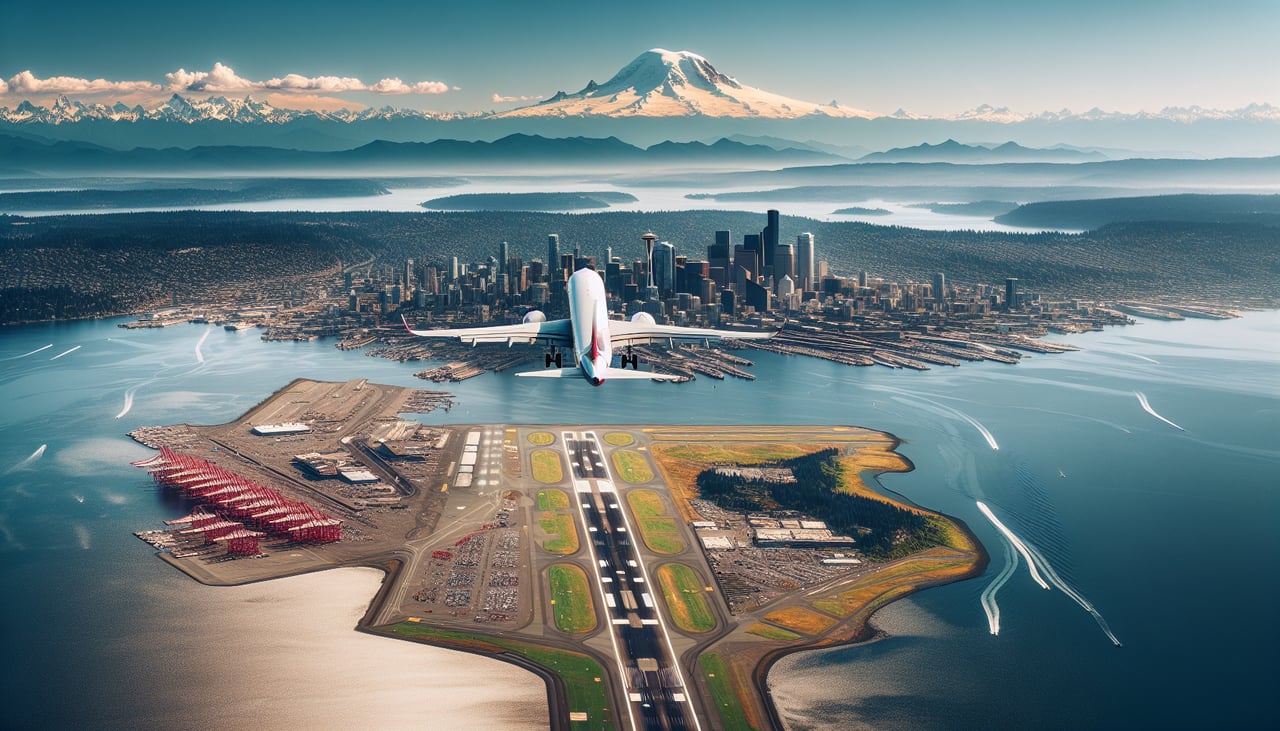
Takeoff from SEA
RIGHTRight-side seats offer views of the Cascade Range during the initial climb eastbound from Seattle-Tacoma. The mountains rise dramatically to the east and will be visible on your right as the aircraft climbs out over Puget Sound.
Landing at MSN
LEFTLeft-side seats provide views of Wisconsin's landscape during the descent into Madison. The terrain transitions from forested areas to agricultural land, and you'll see the Dane County lakes and Madison's urban core positioned on the left as you approach from the west.
Landmarks on this routeAll landmarks →
Will your flight be in sunlight?
See exactly which side of the plane gets sun and shade at your departure time.
About This Route
Which side of the plane should I sit on flying from Seattle Tacoma International (SEA) to Dane Co Rgnl Truax Fld (MSN)?
Sit on the Right side of the plane for the best views on flights from Seattle to Madison. Right-side seats capture the most dramatic scenery: the Cascade Range and Mount Rainier during departure are visually striking and iconic. While the landing approach into Madison offers pleasant agricultural and lake views on the left, the volcanic peaks of the Pacific Northwest are more memorable and distinctive.
What can I see during takeoff from Seattle Tacoma International in Seattle?
During takeoff from Seattle Tacoma International (SEA), sit on the Right side for the best views. Right-side seats offer views of the Cascade Range during the initial climb eastbound from Seattle-Tacoma. The mountains rise dramatically to the east and will be visible on your right as the aircraft climbs out over Puget Sound. Notable sights include: Cascade Range (snow-capped peaks), Puget Sound (water body below), Mount Rainier (dominant volcanic peak to the southeast), Lake Washington (visible inland before climbing higher).
What can I see when landing at Dane Co Rgnl Truax Fld in Madison?
When landing at Dane Co Rgnl Truax Fld (MSN), sit on the Left side for the best views. Left-side seats provide views of Wisconsin's landscape during the descent into Madison. The terrain transitions from forested areas to agricultural land, and you'll see the Dane County lakes and Madison's urban core positioned on the left as you approach from the west. Notable sights include: Isthmus of Madison (narrow land between lakes), Lake Mendota and Lake Monona (two major lakes flanking the city), Wisconsin agricultural landscape (rolling farmland), Madison downtown district (visible urban center).
How long is the flight from Seattle to Madison?
The flight from Seattle Tacoma International (SEA) to Dane Co Rgnl Truax Fld (MSN) takes Approximately 4 hours 15 minutes.
What does the Seattle to Madison flight path pass over?
The flight path crosses the Columbia River Plateau and enters the Great Plains. Notable features include the Columbia River (visible as a major waterway cutting through eastern Washington), the transition from forested Pacific Northwest to semi-arid plateau terrain around central Washington, and eventually the agricultural heartland of eastern Washington and Idaho before entering the Great Plains of Montana and North Dakota. The flight passes south of the Bitterroot Range and crosses into the upper Midwest, with the terrain gradually becoming flatter and more agricultural as you approach Wisconsin.