Right-side seats offer the superior experience: Mount Rainier and the Cascades during departure are among North America's most dramatic alpine views, while the landing approach over the Bohemian Plateau and Vltava River is equally compelling. Left-side departure views are limited to Puget Sound and distant Olympics.
Flight Path
The flight path crosses the Canadian Rockies (visible from altitude over British Columbia), the Great Plains of North America, the Atlantic Ocean, and the North European Plain. Notable geographic transitions include the Rocky Mountain chain near the Canadian border, the transition from North American to European airspace over the Atlantic, and the approach to Central Europe over the North European Plain and Bohemian Plateau.
Great circle distance and headings ›
.jpg?width=600)


.jpg?width=600)
Phase by phase
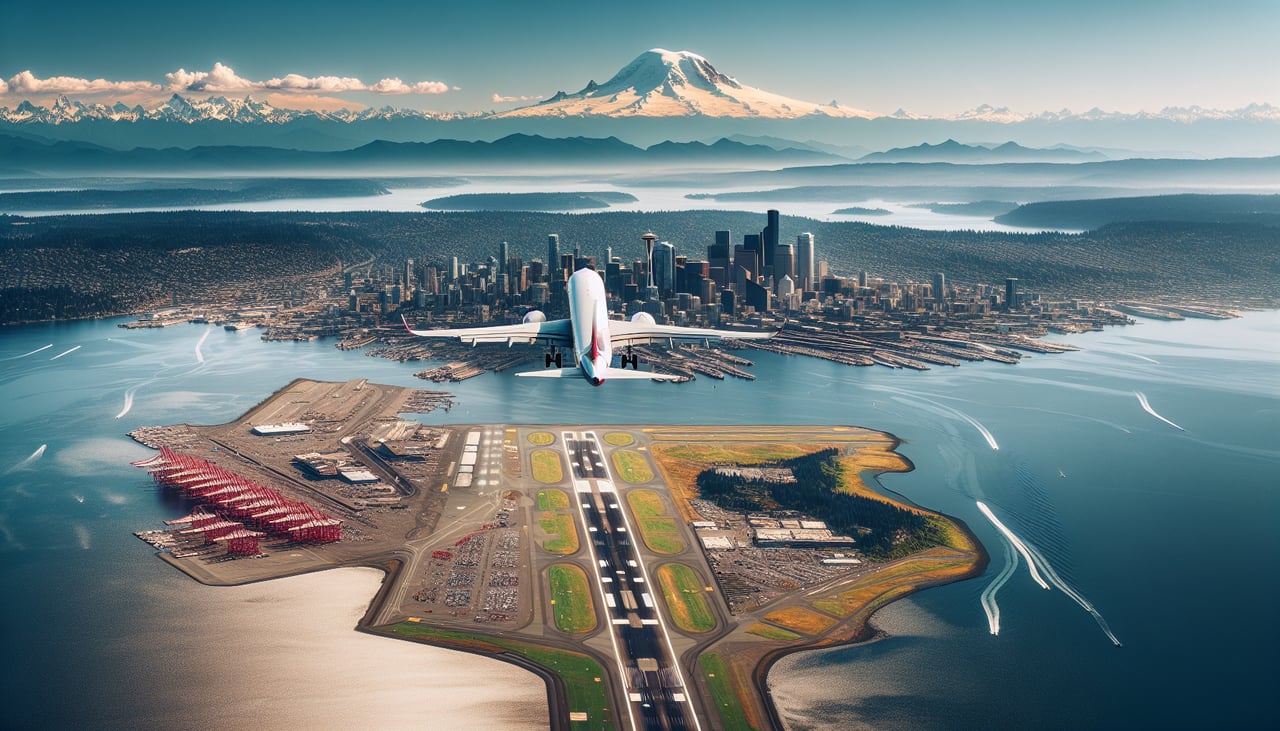
Takeoff from SEA
RIGHTRight-side seats offer views of the Cascade Range and Mount Rainier during the initial climb eastward from Seattle-Tacoma. The mountain is typically visible on clear days as the aircraft gains altitude and turns toward the northeast corridor.
Landing at PRG
LEFTLeft-side seats provide views of the Bohemian Plateau and the Vltava River valley as the aircraft descends toward Prague from the northwest. The river's distinctive meanders and the city's urban sprawl become visible during the final approach.
Landmarks on this routeAll landmarks →
Will your flight be in sunlight?
See exactly which side of the plane gets sun and shade at your departure time.
About This Route
Which side of the plane should I sit on flying from Seattle Tacoma International (SEA) to Ruzyne (PRG)?
Sit on the Right side of the plane for the best views on flights from Seattle to Prague. Right-side seats offer the superior experience: Mount Rainier and the Cascades during departure are among North America's most dramatic alpine views, while the landing approach over the Bohemian Plateau and Vltava River is equally compelling. Left-side departure views are limited to Puget Sound and distant Olympics.
What can I see during takeoff from Seattle Tacoma International in Seattle?
During takeoff from Seattle Tacoma International (SEA), sit on the Right side for the best views. Right-side seats offer views of the Cascade Range and Mount Rainier during the initial climb eastward from Seattle-Tacoma. The mountain is typically visible on clear days as the aircraft gains altitude and turns toward the northeast corridor. Notable sights include: Mount Rainier (14,411 ft), Cascade Range, Puget Sound, Olympic Mountains to the west.
What can I see when landing at Ruzyne in Prague?
When landing at Ruzyne (PRG), sit on the Left side for the best views. Left-side seats provide views of the Bohemian Plateau and the Vltava River valley as the aircraft descends toward Prague from the northwest. The river's distinctive meanders and the city's urban sprawl become visible during the final approach. Notable sights include: Vltava River, Prague city center, Bohemian Plateau, Elbe River valley to the north.
How long is the flight from Seattle to Prague?
The flight from Seattle Tacoma International (SEA) to Ruzyne (PRG) takes 9h 35m.
What does the Seattle to Prague flight path pass over?
The flight path crosses the Canadian Rockies (visible from altitude over British Columbia), the Great Plains of North America, the Atlantic Ocean, and the North European Plain. Notable geographic transitions include the Rocky Mountain chain near the Canadian border, the transition from North American to European airspace over the Atlantic, and the approach to Central Europe over the North European Plain and Bohemian Plateau.