Right-side seats win for the full journey: Mount Rainier and the Cascades dominate the departure, and the right side maintains better views of the Sierra Nevada and interior California ranges during the long cruise south before the final approach favors the left.
Flown SEA to SBP? Did we get it right?
Flight Path
Seattle to San Luis Obispo is 848 miles (1,365 km), a flight of about 2 hours 45 minutes.
Sacramento Valley (agricultural plains), Sierra Nevada range (eastern horizon), Lake Tahoe region, Diablo Range near San Francisco Bay area, Salinas Valley, and the transition from inland valleys to the coastal Santa Lucia Range
Great circle distance and headings ›


Phase by phase
Takeoff from SEA
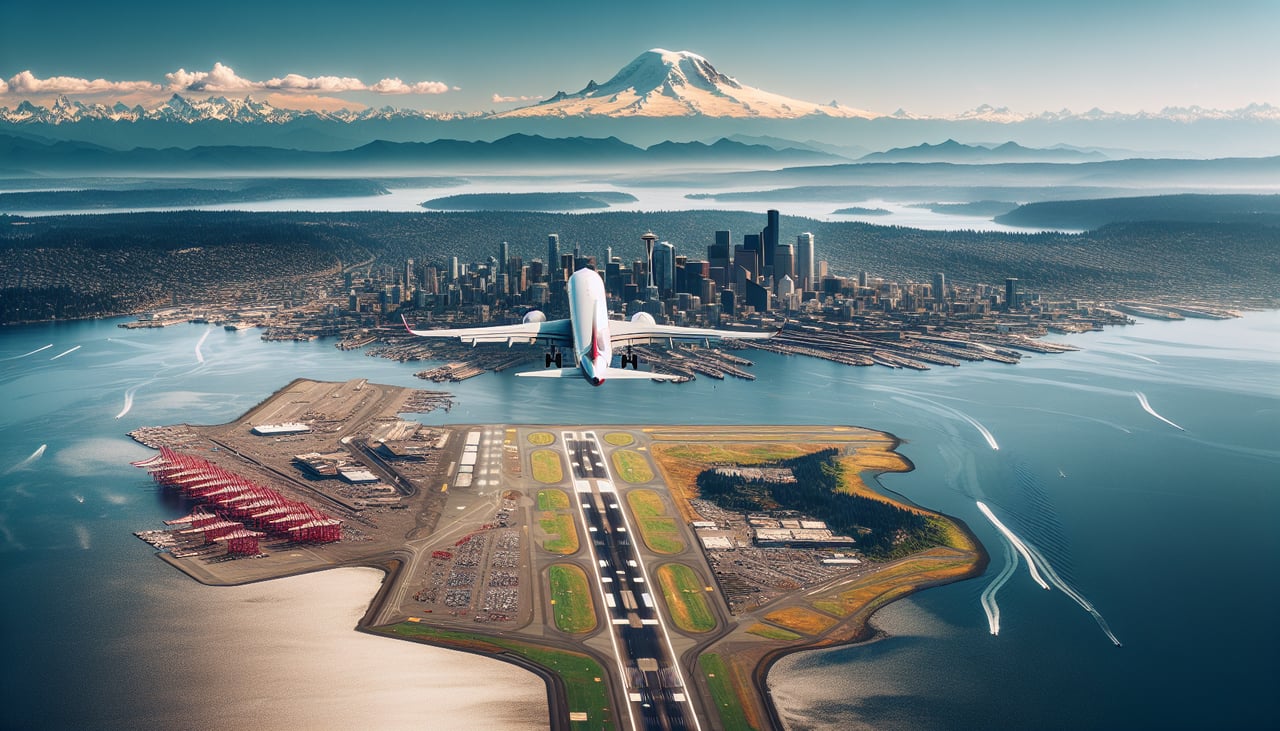
RIGHTRight-side seats capture the Cascade Range and Mount Rainier during the initial climb-out heading south. The mountain dominates the eastern horizon as you depart Seattle-Tacoma, providing dramatic early scenery before the flight turns toward the coast.
Landing at SBP
LEFTLeft-side seats offer the best views during descent into San Luis Obispo. You'll see the Santa Lucia Range, the Big Sur coastline, and Morro Bay's distinctive volcanic peak as you approach from the north. The terrain is dramatic and visually distinctive.
Will your flight be in sunlight?
Pick a date and time in the Sun Map to watch the sun move across your whole flight.
About This Route
Which side of the plane should I sit on flying from Seattle Tacoma International (SEA) to San Luis County Regional Airport (SBP)?
Sit on the Right side of the plane for the best views on flights from Seattle to San Luis Obispo. Right-side seats win for the full journey: Mount Rainier and the Cascades dominate the departure, and the right side maintains better views of the Sierra Nevada and interior California ranges during the long cruise south before the final approach favors the left.
What can I see during takeoff from Seattle Tacoma International in Seattle?
During takeoff from Seattle Tacoma International (SEA), sit on the Right side for the best views. Right-side seats capture the Cascade Range and Mount Rainier during the initial climb-out heading south. The mountain dominates the eastern horizon as you depart Seattle-Tacoma, providing dramatic early scenery before the flight turns toward the coast. Notable sights include: Mount Rainier (14,411 ft), Cascade Range, Puget Sound, Olympic Mountains to the west.
What can I see when landing at San Luis County Regional Airport in San Luis Obispo?
When landing at San Luis County Regional Airport (SBP), sit on the Left side for the best views. Left-side seats offer the best views during descent into San Luis Obispo. You'll see the Santa Lucia Range, the Big Sur coastline, and Morro Bay's distinctive volcanic peak as you approach from the north. The terrain is dramatic and visually distinctive. Notable sights include: Santa Lucia Range, Morro Rock (Morro Bay), Pacific coastline, Santa Lucia Peak.
How long is the flight from Seattle to San Luis Obispo?
The flight from Seattle Tacoma International (SEA) to San Luis County Regional Airport (SBP) takes about 2 hours 45 minutes. The shortest flight path between them is 848 miles (1,365 km); winds and air traffic control usually add a few percent.
What does the Seattle to San Luis Obispo flight path pass over?
Sacramento Valley (agricultural plains), Sierra Nevada range (eastern horizon), Lake Tahoe region, Diablo Range near San Francisco Bay area, Salinas Valley, and the transition from inland valleys to the coastal Santa Lucia Range