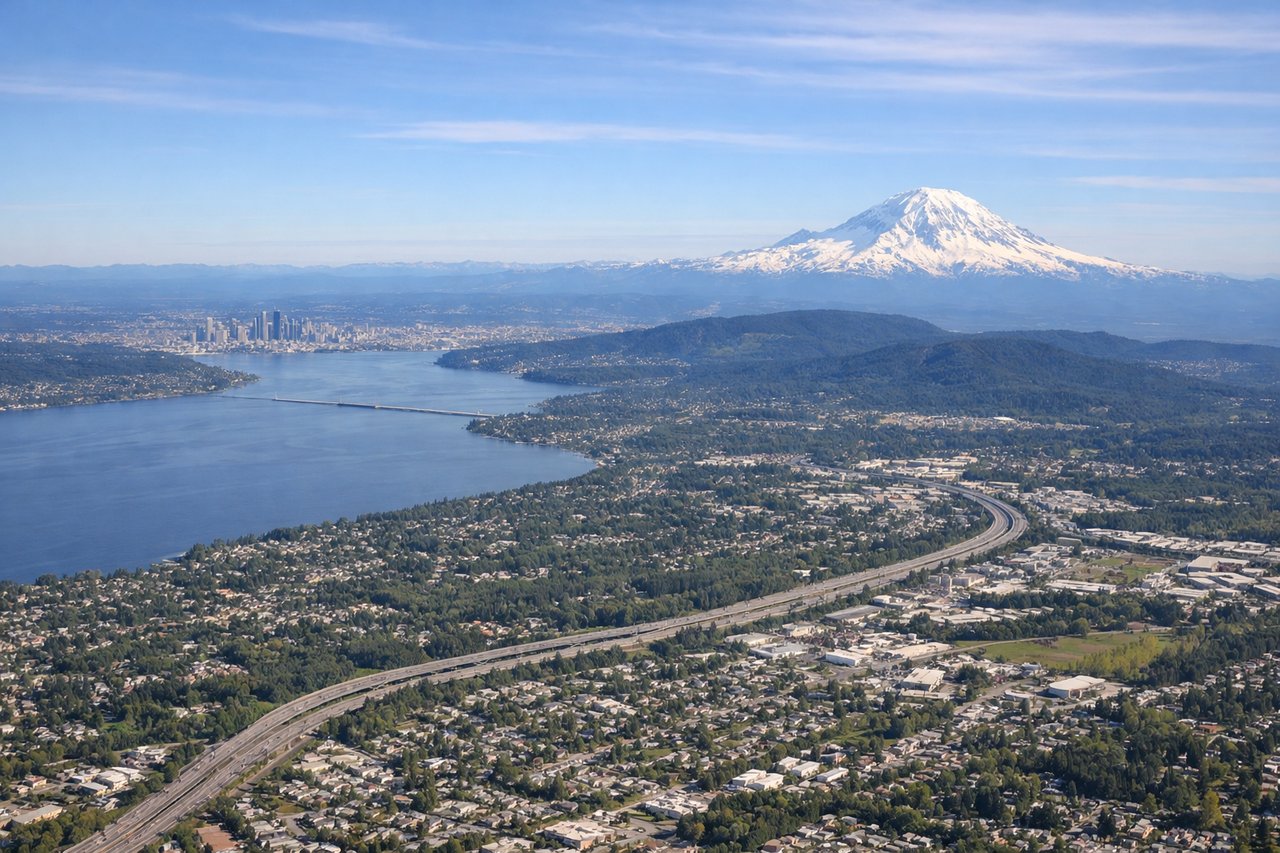
The left side wins overall due to the spectacular Pacific Northwest departure views — Mount Rainier and Puget Sound are among the most dramatic airport-vicinity scenery in North America. The Sydney arrival on the right is excellent but brief. The flight tracks south over the Pacific, so mid-flight views are ocean only regardless of side.
Flown SEA to SYD? Did we get it right?
Flight Path
Seattle to Sydney is 7,750 miles (12,472 km), a flight of about 17 hours 45 minutes.
The great circle route from SEA to SYD arcs southwest across the North Pacific, passing south of the Aleutian Islands chain, then crosses the vast open Pacific Ocean. The flight passes near or over the Hawaiian Islands chain (visible if routing goes near Honolulu latitude), crosses the equator over the central Pacific, then tracks southwest toward Fiji and New Caledonia before descending toward eastern Australia. The Tasman Sea is crossed in the final hours. Mid-flight is almost entirely open ocean with no land visible for roughly 10 to 12 hours.
Great circle distance and headings ›


Phase by phase
Takeoff from SEA
LEFTSEA typically departs south on runway 16L/16R or north on 34L/34R. Southbound departures on 16L/16R have left-side seats facing east toward the Cascade Range and Mount Rainier. Northbound departures on 34L/34R bank left over Puget Sound, giving left-side views of downtown Seattle, Elliott Bay, and the Olympic Mountains across the water.
Landing at SYD
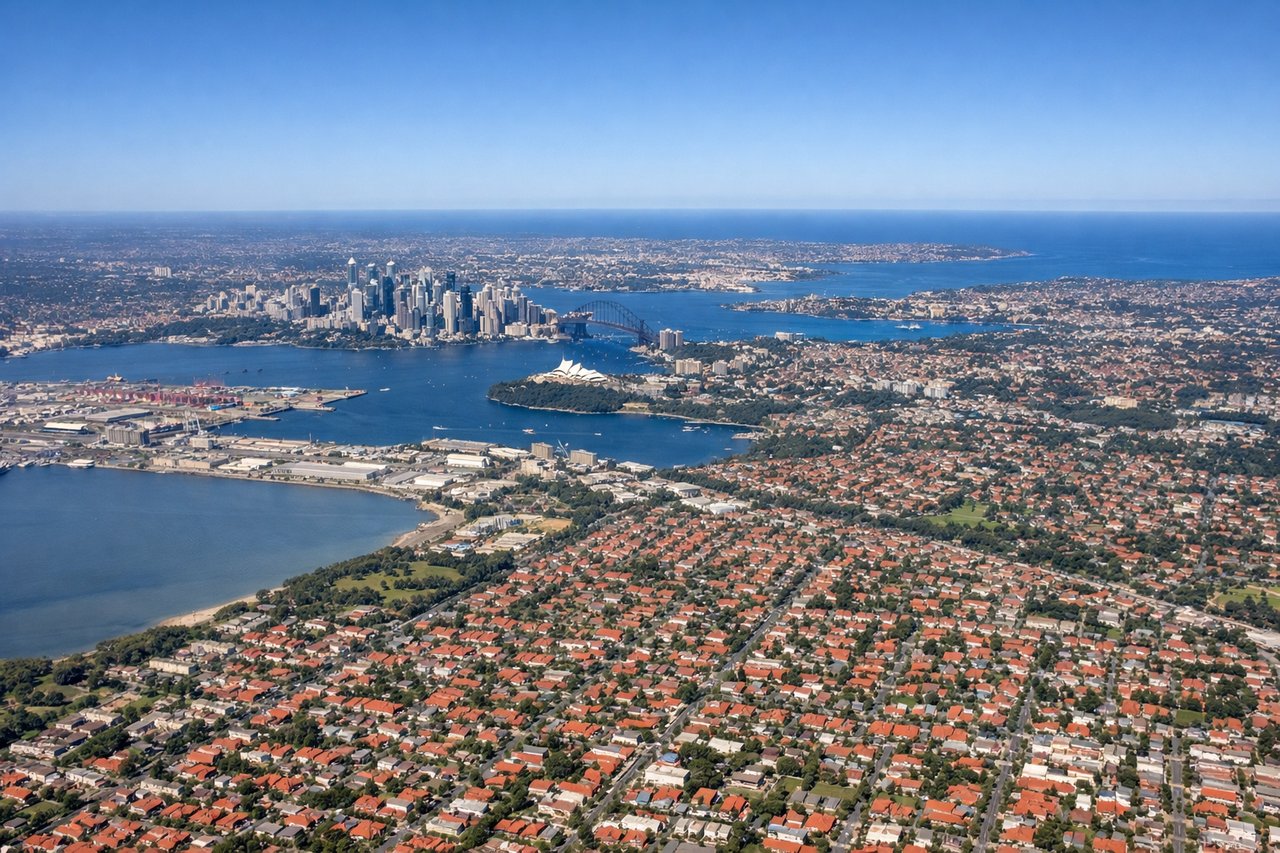
RIGHTSydney Airport sits on the northern shore of Botany Bay. Aircraft typically land from the north on runway 34L/34R or from the south on 16L/16R. On the common northerly approach over Botany Bay, right-side seats look west over the Sydney CBD skyline, Sydney Harbour, and the Harbour Bridge. Left-side seats face east over the Pacific Ocean with little to see.
Will your flight be in sunlight?
Pick a date and time in the Sun Map to watch the sun move across your whole flight.
About This Route
Which side of the plane should I sit on flying from Seattle Tacoma International (SEA) to Kingsford Smith International Airport (SYD)?
Sit on the Left side of the plane for the best views on flights from Seattle to Sydney. The left side wins overall due to the spectacular Pacific Northwest departure views — Mount Rainier and Puget Sound are among the most dramatic airport-vicinity scenery in North America. The Sydney arrival on the right is excellent but brief. The flight tracks south over the Pacific, so mid-flight views are ocean only regardless of side.
What can I see during takeoff from Seattle Tacoma International in Seattle?
During takeoff from Seattle Tacoma International (SEA), sit on the Left side for the best views. SEA typically departs south on runway 16L/16R or north on 34L/34R. Southbound departures on 16L/16R have left-side seats facing east toward the Cascade Range and Mount Rainier. Northbound departures on 34L/34R bank left over Puget Sound, giving left-side views of downtown Seattle, Elliott Bay, and the Olympic Mountains across the water. Notable sights include: Mount Rainier (14,411 ft, dominant volcanic cone to the southeast), Puget Sound (the inland sea directly west of the airport), Downtown Seattle skyline and Elliott Bay, Lake Washington (large freshwater lake immediately east of Seattle).
What can I see when landing at Kingsford Smith International Airport in Sydney?
When landing at Kingsford Smith International Airport (SYD), sit on the Right side for the best views. Sydney Airport sits on the northern shore of Botany Bay. Aircraft typically land from the north on runway 34L/34R or from the south on 16L/16R. On the common northerly approach over Botany Bay, right-side seats look west over the Sydney CBD skyline, Sydney Harbour, and the Harbour Bridge. Left-side seats face east over the Pacific Ocean with little to see. Notable sights include: Sydney Harbour and the Harbour Bridge (clearly visible to the northwest on approach), Sydney CBD skyline (cluster of towers west of the flight path), Botany Bay (the large bay the aircraft flies directly over on final approach), Royal National Park (dark forested plateau visible to the south on longer finals).
How long is the flight from Seattle to Sydney?
The flight from Seattle Tacoma International (SEA) to Kingsford Smith International Airport (SYD) takes about 17 hours 45 minutes. The shortest flight path between them is 7,750 miles (12,472 km); winds and air traffic control usually add a few percent.
What does the Seattle to Sydney flight path pass over?
The great circle route from SEA to SYD arcs southwest across the North Pacific, passing south of the Aleutian Islands chain, then crosses the vast open Pacific Ocean. The flight passes near or over the Hawaiian Islands chain (visible if routing goes near Honolulu latitude), crosses the equator over the central Pacific, then tracks southwest toward Fiji and New Caledonia before descending toward eastern Australia. The Tasman Sea is crossed in the final hours. Mid-flight is almost entirely open ocean with no land visible for roughly 10 to 12 hours.