San Francisco to New York is 2,573 miles (4,141 km), a flight of about 5 hours 15 minutes.
The left side bookends the flight with two genuine landmarks — the San Francisco Bay and skyline at departure, and the Manhattan skyline at arrival — while the cruise portion over the northern Rockies, Great Salt Lake, and Great Lakes region is roughly symmetrical between sides. The right side lacks any comparable urban or coastal payoff during takeoff or landing.
Flight Path
Flight path crosses the Sierra Nevada near Lake Tahoe, the Great Salt Lake and Wasatch Range in Utah, the high plains of Wyoming and Nebraska, and later the Great Lakes region near Lake Michigan and Lake Erie before descending toward the Hudson Valley and New York City.
Great circle distance and headings ›


.jpeg?width=600)
.jpg?width=600)
Phase by phase
Takeoff from SFO
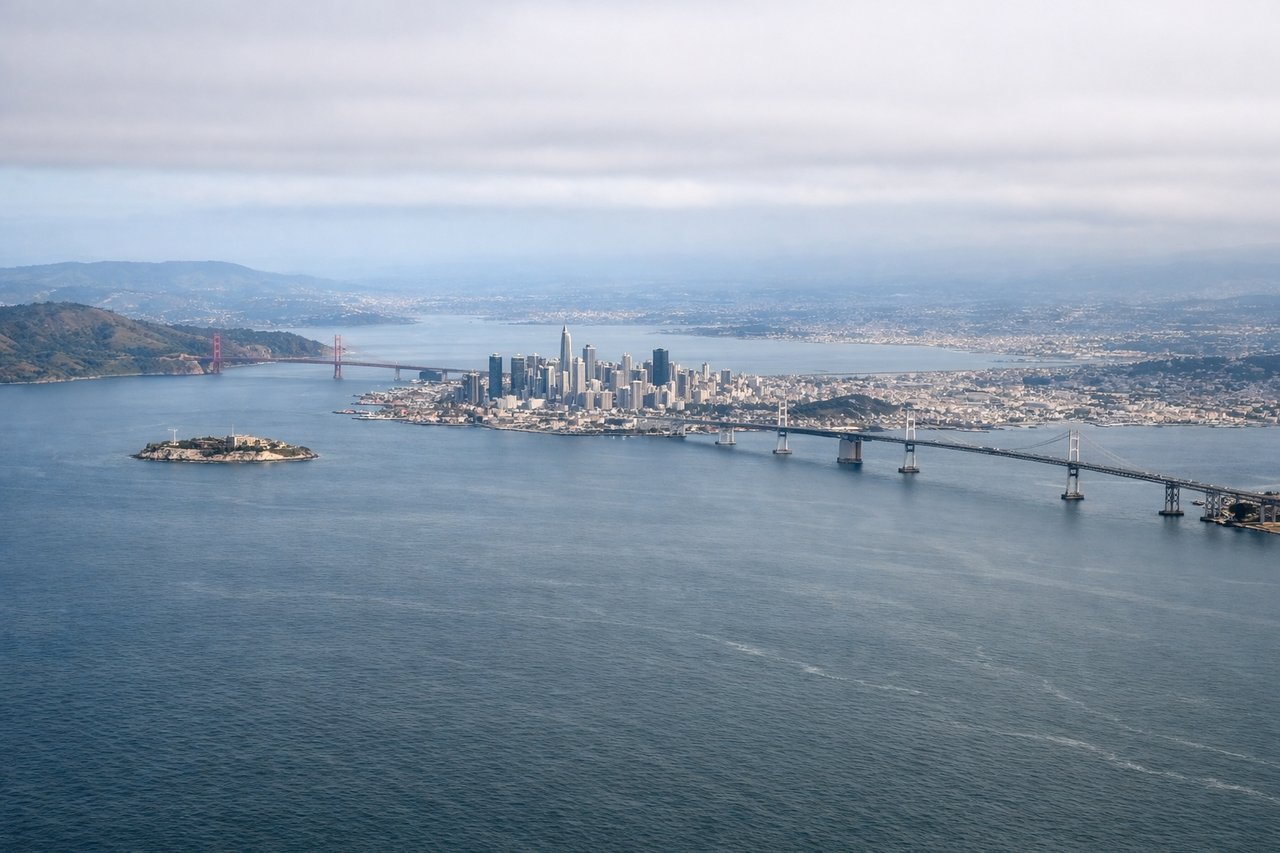
LEFTSFO departures on the eastbound runways climb out over the Bay and then bank left to line up on the transcontinental track toward New York, swinging the left side of the aircraft toward downtown San Francisco, the Golden Gate Bridge, and the Marin headlands. The right side only shows the flatter South Bay and Diablo Range foothills.
Landing at LGA
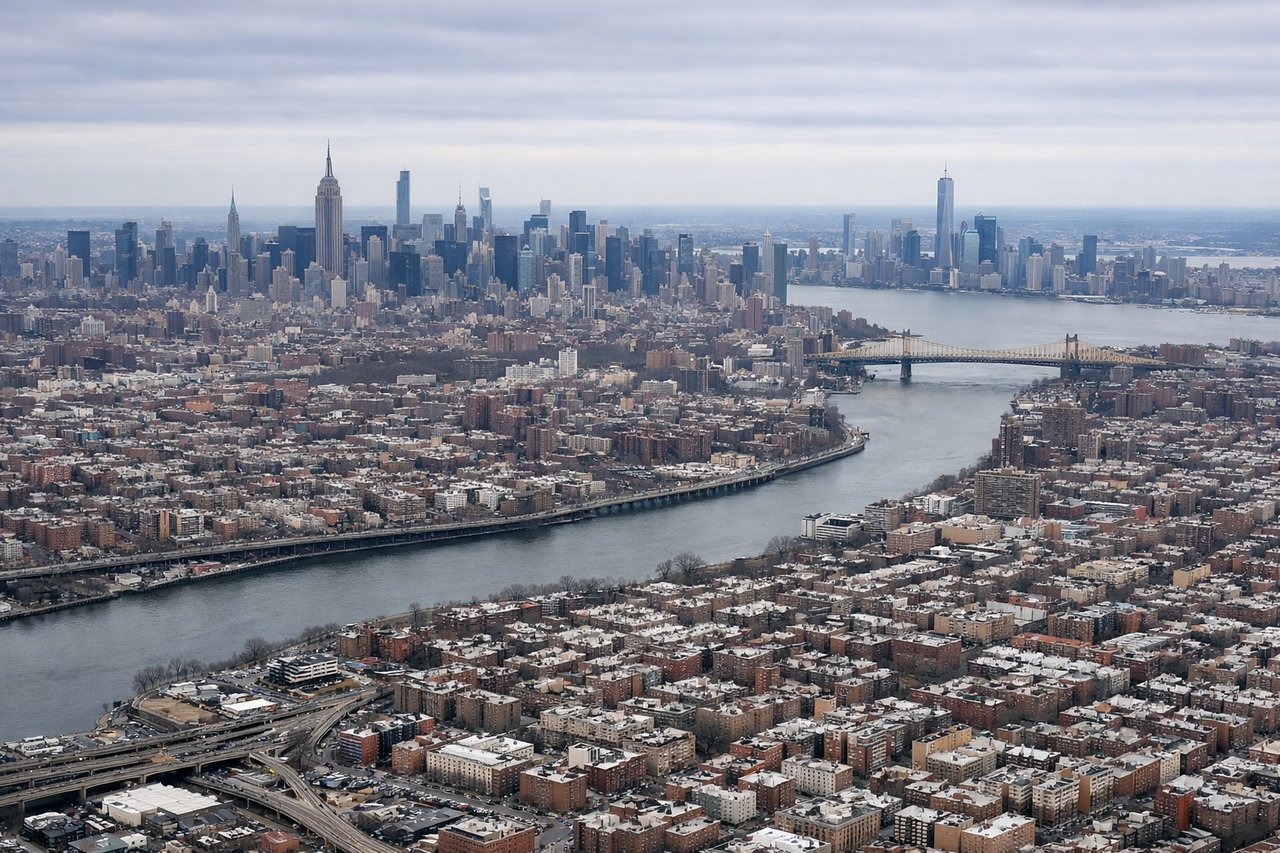
LEFTLGA arrivals from the west are typically vectored north over Long Island Sound before turning southwest for final approach, and on that turn the Manhattan skyline and the East River line up on the left side of the cabin. The right side instead faces the flatter residential expanse of Queens and the Bronx with no comparable landmark.
Landmarks on this routeAll landmarks →
Will your flight be in sunlight?
Pick a date and time in the Sun Map to watch the sun move across your whole flight.
About This Route
Which side of the plane should I sit on flying from San Francisco International (SFO) to La Guardia (LGA)?
Sit on the Left side of the plane for the best views on flights from San Francisco to New York. The left side bookends the flight with two genuine landmarks — the San Francisco Bay and skyline at departure, and the Manhattan skyline at arrival — while the cruise portion over the northern Rockies, Great Salt Lake, and Great Lakes region is roughly symmetrical between sides. The right side lacks any comparable urban or coastal payoff during takeoff or landing.
What can I see during takeoff from San Francisco International in San Francisco?
During takeoff from San Francisco International (SFO), sit on the Left side for the best views. SFO departures on the eastbound runways climb out over the Bay and then bank left to line up on the transcontinental track toward New York, swinging the left side of the aircraft toward downtown San Francisco, the Golden Gate Bridge, and the Marin headlands. The right side only shows the flatter South Bay and Diablo Range foothills. Notable sights include: San Francisco skyline, Golden Gate Bridge, San Francisco Bay, Marin Headlands.
What can I see when landing at La Guardia in New York?
When landing at La Guardia (LGA), sit on the Left side for the best views. LGA arrivals from the west are typically vectored north over Long Island Sound before turning southwest for final approach, and on that turn the Manhattan skyline and the East River line up on the left side of the cabin. The right side instead faces the flatter residential expanse of Queens and the Bronx with no comparable landmark. Notable sights include: Manhattan skyline, East River, Long Island Sound, Throgs Neck Bridge.
How long is the flight from San Francisco to New York?
The flight from San Francisco International (SFO) to La Guardia (LGA) takes about 5 hours 15 minutes. The shortest flight path between them is 2,573 miles (4,141 km); winds and air traffic control usually add a few percent.
What does the San Francisco to New York flight path pass over?
Flight path crosses the Sierra Nevada near Lake Tahoe, the Great Salt Lake and Wasatch Range in Utah, the high plains of Wyoming and Nebraska, and later the Great Lakes region near Lake Michigan and Lake Erie before descending toward the Hudson Valley and New York City.