While the left side wins the SFO departure with bay and bridge views, the right side offers a more consistently scenic experience overall thanks to glimpses of the Sierra Nevada and desert Southwest during cruise plus a dramatic Miami arrival over Biscayne Bay and the city skyline.
Flown SFO to MIA? Did we get it right?
Flight Path
San Francisco to Miami is 2,581 miles (4,154 km), a flight of about 5 hours 10 minutes.
Sierra Nevada range, Mojave Desert, southern Rocky Mountains foothills, West Texas plains, Gulf of Mexico coastline near the Florida panhandle
Great circle distance and headings ›


Phase by phase
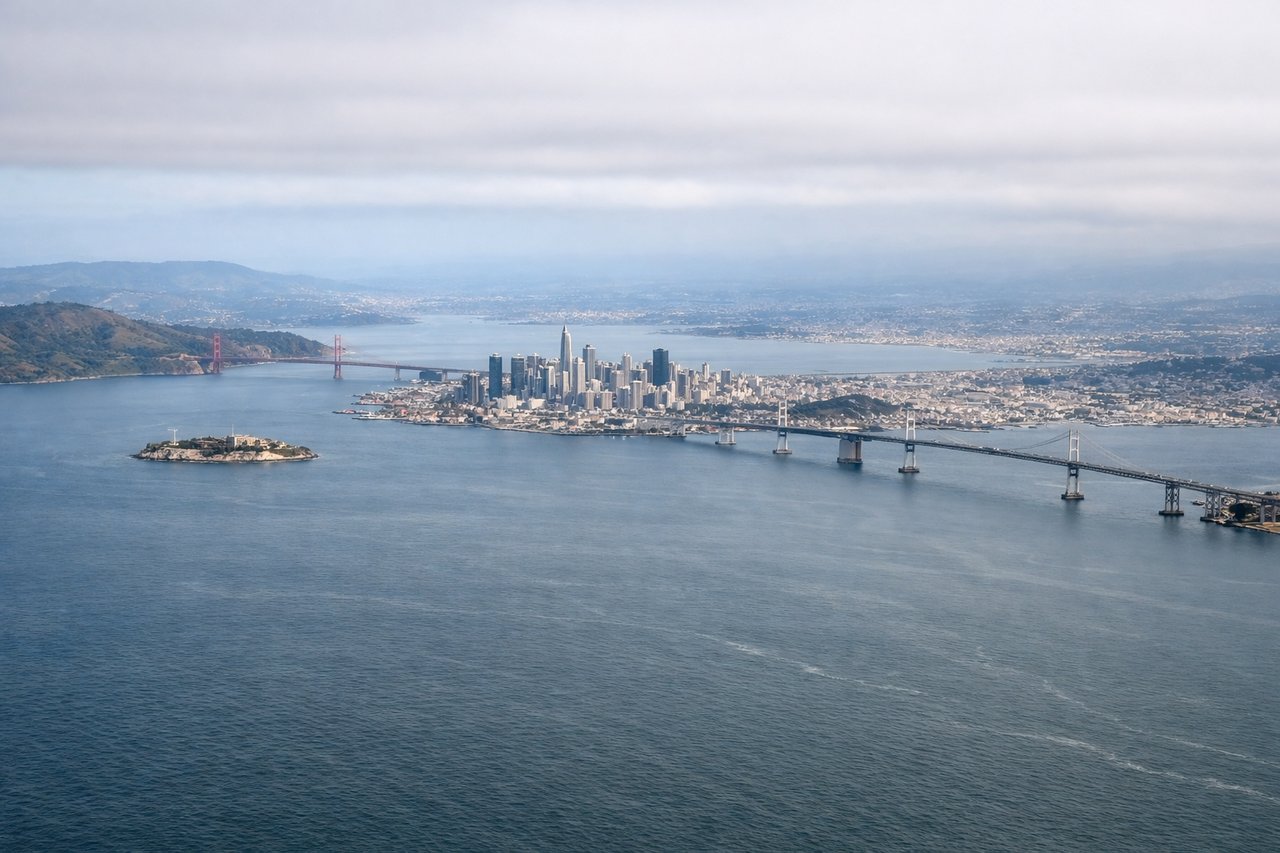
Takeoff from SFO
LEFTDeparting SFO on the eastern runways (heading ~118°), the initial climb curves over San Francisco Bay with downtown San Francisco, the Golden Gate Bridge, and the Marin headlands visible to the north on the left side. The right side mostly shows the South Bay and Peninsula suburbs, which are less dramatic.
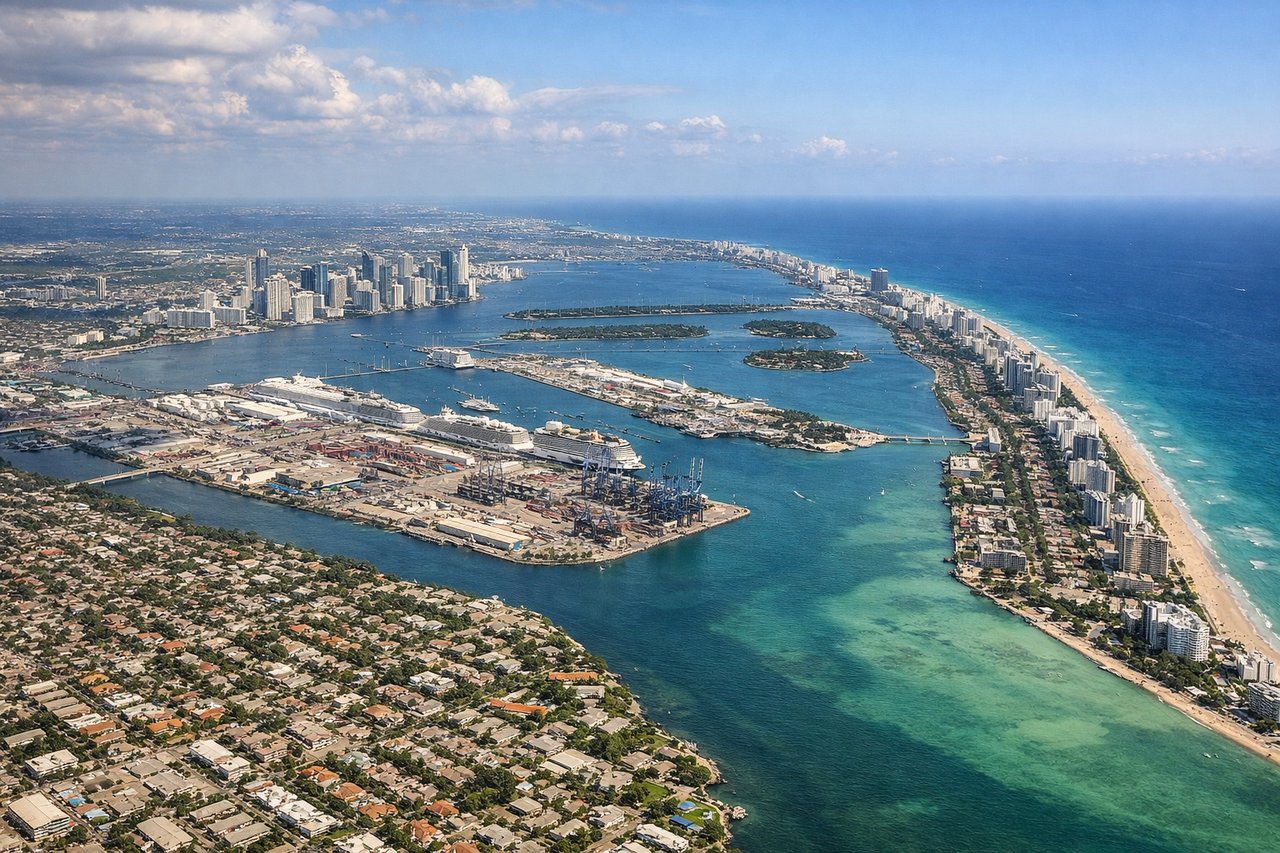
Landing at MIA
RIGHTArriving at MIA from the west, aircraft typically land eastbound on the 08/09 runways, putting the south side of the plane facing Biscayne Bay, the Miami skyline, and the barrier islands during the final descent. The left side over this approach mostly shows flat suburban sprawl and the Everglades edge, less visually striking.
Will your flight be in sunlight?
Pick a date and time in the Sun Map to watch the sun move across your whole flight.
About This Route
Which side of the plane should I sit on flying from San Francisco International (SFO) to Miami International (MIA)?
Sit on the Right side of the plane for the best views on flights from San Francisco to Miami. While the left side wins the SFO departure with bay and bridge views, the right side offers a more consistently scenic experience overall thanks to glimpses of the Sierra Nevada and desert Southwest during cruise plus a dramatic Miami arrival over Biscayne Bay and the city skyline.
What can I see during takeoff from San Francisco International in San Francisco?
During takeoff from San Francisco International (SFO), sit on the Left side for the best views. Departing SFO on the eastern runways (heading ~118°), the initial climb curves over San Francisco Bay with downtown San Francisco, the Golden Gate Bridge, and the Marin headlands visible to the north on the left side. The right side mostly shows the South Bay and Peninsula suburbs, which are less dramatic. Notable sights include: Golden Gate Bridge, San Francisco skyline, Marin Headlands, San Francisco Bay.
What can I see when landing at Miami International in Miami?
When landing at Miami International (MIA), sit on the Right side for the best views. Arriving at MIA from the west, aircraft typically land eastbound on the 08/09 runways, putting the south side of the plane facing Biscayne Bay, the Miami skyline, and the barrier islands during the final descent. The left side over this approach mostly shows flat suburban sprawl and the Everglades edge, less visually striking. Notable sights include: Biscayne Bay, Downtown Miami skyline, Miami Beach barrier islands, Everglades edge.
How long is the flight from San Francisco to Miami?
The flight from San Francisco International (SFO) to Miami International (MIA) takes about 5 hours 10 minutes. The shortest flight path between them is 2,581 miles (4,154 km); winds and air traffic control usually add a few percent.
What does the San Francisco to Miami flight path pass over?
Sierra Nevada range, Mojave Desert, southern Rocky Mountains foothills, West Texas plains, Gulf of Mexico coastline near the Florida panhandle