San Juan to Miami is 1,039 miles (1,672 km), a flight of about 3 hours 15 minutes.
While takeoff offers good coastal views on the right, the landing approach on the left provides more dramatic and varied scenery—the Everglades wetlands and Miami's urban landscape are more visually distinctive than the open Atlantic seen during departure.
Flight Path
The flight path crosses the Mona Passage (open Atlantic water between Puerto Rico and Hispaniola), then passes over or near the Bahamas archipelago. At cruise altitude, you may see the turquoise shallow banks and islands of the Bahamas, particularly the Berry Islands and Andros Island if the flight path trends slightly north. The water transitions from deep blue Atlantic to lighter turquoise over the Bahama Banks. The final approach descends over the Florida peninsula, crossing the Everglades from west to east before reaching Miami.
Great circle distance and headings ›

Phase by phase
Takeoff from SIG
RIGHTRight-side seats capture the northern Puerto Rico coastline and the Atlantic Ocean as you climb out. The aircraft departs northwestward, so right windows face the immediate coastal geography and open water.
Landing at MIA
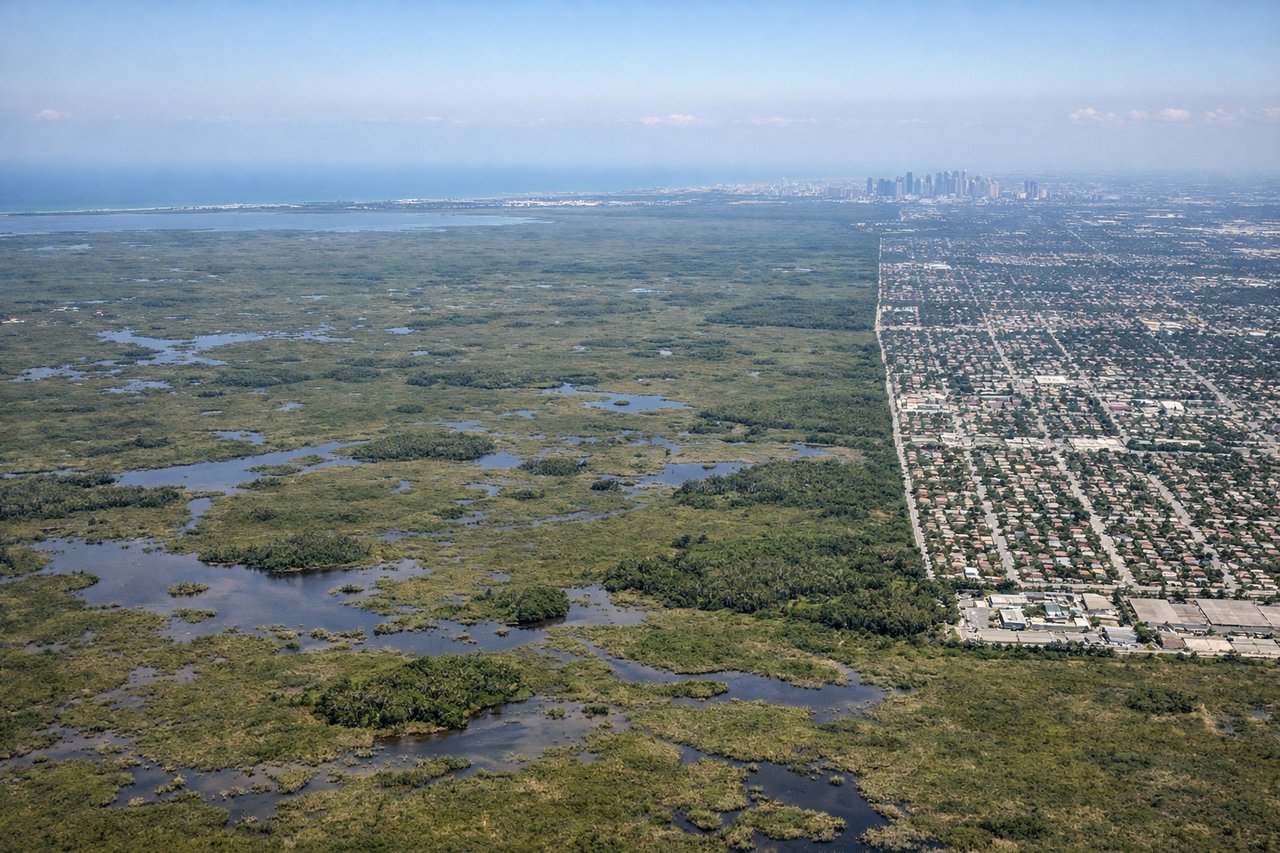
LEFTLeft-side seats offer the best views during approach to Miami. The aircraft descends from the northwest over the Everglades and Florida mainland, so left windows face the wetlands, coastal bays, and Miami's urban sprawl as you approach from the west.
Landmarks on this routeAll landmarks →
Will your flight be in sunlight?
Pick a date and time in the Sun Map to watch the sun move across your whole flight.
About This Route
Which side of the plane should I sit on flying from Fernando Luis Ribas Dominicci (SIG) to Miami International (MIA)?
Sit on the Left side of the plane for the best views on flights from San Juan to Miami. While takeoff offers good coastal views on the right, the landing approach on the left provides more dramatic and varied scenery—the Everglades wetlands and Miami's urban landscape are more visually distinctive than the open Atlantic seen during departure.
What can I see during takeoff from Fernando Luis Ribas Dominicci in San Juan?
During takeoff from Fernando Luis Ribas Dominicci (SIG), sit on the Right side for the best views. Right-side seats capture the northern Puerto Rico coastline and the Atlantic Ocean as you climb out. The aircraft departs northwestward, so right windows face the immediate coastal geography and open water. Notable sights include: Northern Puerto Rico coastline, Atlantic Ocean, San Juan metropolitan area receding below, Cordillera Central mountain ridge to the south.
What can I see when landing at Miami International in Miami?
When landing at Miami International (MIA), sit on the Left side for the best views. Left-side seats offer the best views during approach to Miami. The aircraft descends from the northwest over the Everglades and Florida mainland, so left windows face the wetlands, coastal bays, and Miami's urban sprawl as you approach from the west. Notable sights include: Florida Everglades wetlands, Biscayne Bay, Miami metropolitan area, Florida Keys extending south.
How long is the flight from San Juan to Miami?
The flight from Fernando Luis Ribas Dominicci (SIG) to Miami International (MIA) takes about 3 hours 15 minutes. The shortest flight path between them is 1,039 miles (1,672 km); winds and air traffic control usually add a few percent.
What does the San Juan to Miami flight path pass over?
The flight path crosses the Mona Passage (open Atlantic water between Puerto Rico and Hispaniola), then passes over or near the Bahamas archipelago. At cruise altitude, you may see the turquoise shallow banks and islands of the Bahamas, particularly the Berry Islands and Andros Island if the flight path trends slightly north. The water transitions from deep blue Atlantic to lighter turquoise over the Bahama Banks. The final approach descends over the Florida peninsula, crossing the Everglades from west to east before reaching Miami.