Singapore to Nanjing is 2,313 miles (3,722 km), a flight of about 5 hours.
While takeoff favors the right, the landing approach on the left provides more dramatic and distinctive scenery with the Yangtze River and Nanjing's geography. The left side captures the most visually interesting portion of the flight path overall.
Flight Path
The flight path crosses the South China Sea northwestward, passing over or near the Hainan Island region, then transitions over the Vietnamese and Laotian borders into southern China. Notable features include the coastlines of southern China (Guangdong and Fujian provinces), the transition from coastal plains to interior terrain, and eventually the Yangtze River valley as you approach Nanjing from the southeast. The Wuyi Mountains and other ranges of southeastern China may be visible as distant ridges depending on exact flight routing and weather conditions.
Great circle distance and headings ›


Phase by phase
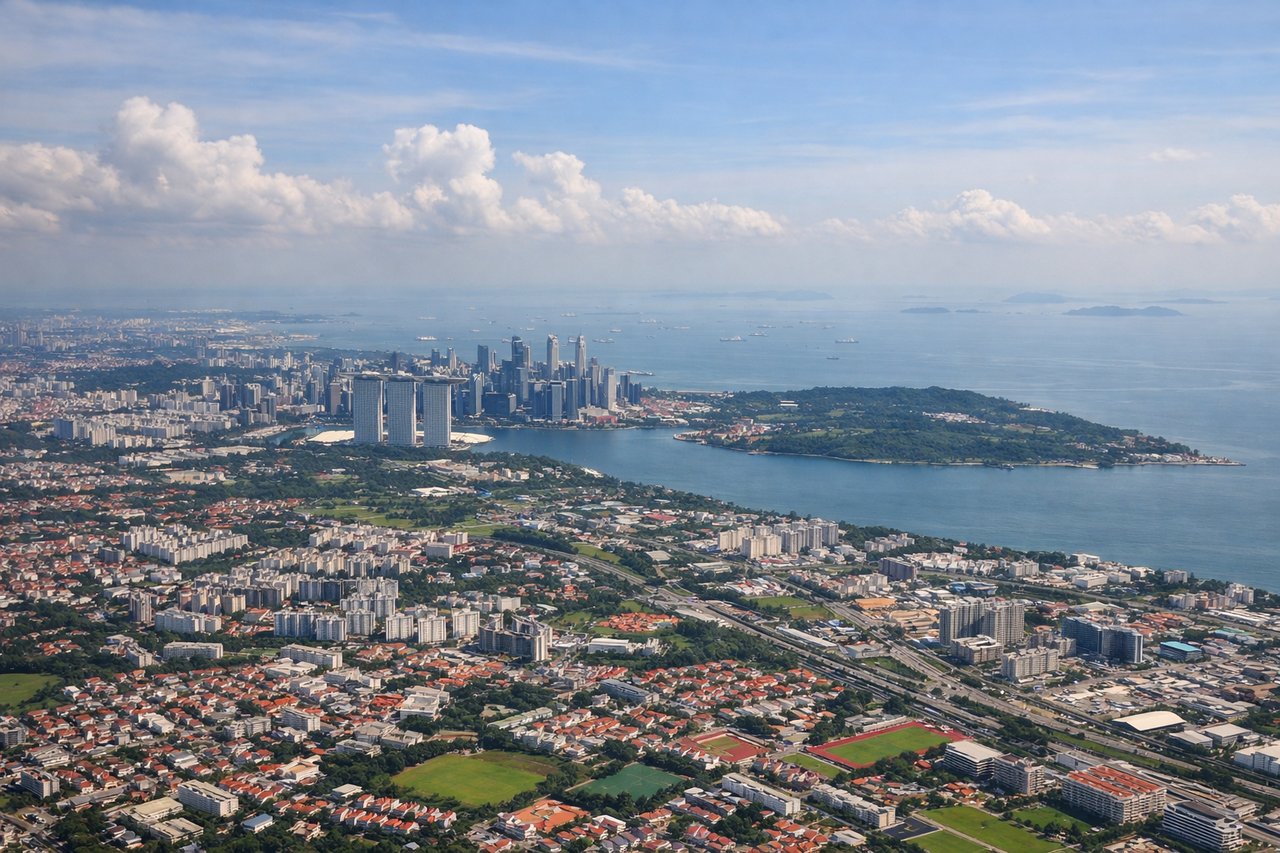
Takeoff from SIN
RIGHTRight side offers views of Singapore's urban sprawl and the Strait of Malacca as you climb northwestward. The left side faces the South China Sea with fewer distinctive landmarks during initial climb.
Landing at NKG
LEFTLeft side provides views of the Yangtze River, Nanjing's urban landscape, and the surrounding Jiangsu Province terrain as you descend from the northeast. The right side faces less distinctive agricultural plains.
Landmarks on this routeAll landmarks →
Will your flight be in sunlight?
Pick a date and time in the Sun Map to watch the sun move across your whole flight.
About This Route
Which side of the plane should I sit on flying from Singapore Changi (SIN) to Lu Kou Airport (NKG)?
Sit on the Left side of the plane for the best views on flights from Singapore to Nanjing. While takeoff favors the right, the landing approach on the left provides more dramatic and distinctive scenery with the Yangtze River and Nanjing's geography. The left side captures the most visually interesting portion of the flight path overall.
What can I see during takeoff from Singapore Changi in Singapore?
During takeoff from Singapore Changi (SIN), sit on the Right side for the best views. Right side offers views of Singapore's urban sprawl and the Strait of Malacca as you climb northwestward. The left side faces the South China Sea with fewer distinctive landmarks during initial climb. Notable sights include: Singapore city center and port facilities, Johor Strait, Strait of Malacca coastline, Malaysian peninsula outline.
What can I see when landing at Lu Kou Airport in Nanjing?
When landing at Lu Kou Airport (NKG), sit on the Left side for the best views. Left side provides views of the Yangtze River, Nanjing's urban landscape, and the surrounding Jiangsu Province terrain as you descend from the northeast. The right side faces less distinctive agricultural plains. Notable sights include: Yangtze River and its meanders, Nanjing city center, Purple Mountain (Zijin Shan), Jiangsu Province plains.
How long is the flight from Singapore to Nanjing?
The flight from Singapore Changi (SIN) to Lu Kou Airport (NKG) takes about 5 hours. The shortest flight path between them is 2,313 miles (3,722 km); winds and air traffic control usually add a few percent.
What does the Singapore to Nanjing flight path pass over?
The flight path crosses the South China Sea northwestward, passing over or near the Hainan Island region, then transitions over the Vietnamese and Laotian borders into southern China. Notable features include the coastlines of southern China (Guangdong and Fujian provinces), the transition from coastal plains to interior terrain, and eventually the Yangtze River valley as you approach Nanjing from the southeast. The Wuyi Mountains and other ranges of southeastern China may be visible as distant ridges depending on exact flight routing and weather conditions.