The left side delivers a stronger, more continuous scenic package: dramatic Wasatch peaks at departure, glimpses of the Lake Mead/Grand Canyon region during cruise, and the iconic downtown San Diego skyline on arrival, versus the flatter valley and desert views on the right.
Flight Path
Southern Utah's Colorado Plateau edge, the Lake Mead/Grand Canyon region near the Nevada-Arizona border, and the Mojave Desert before descending toward Southern California
Great circle distance and headings ›


Phase by phase
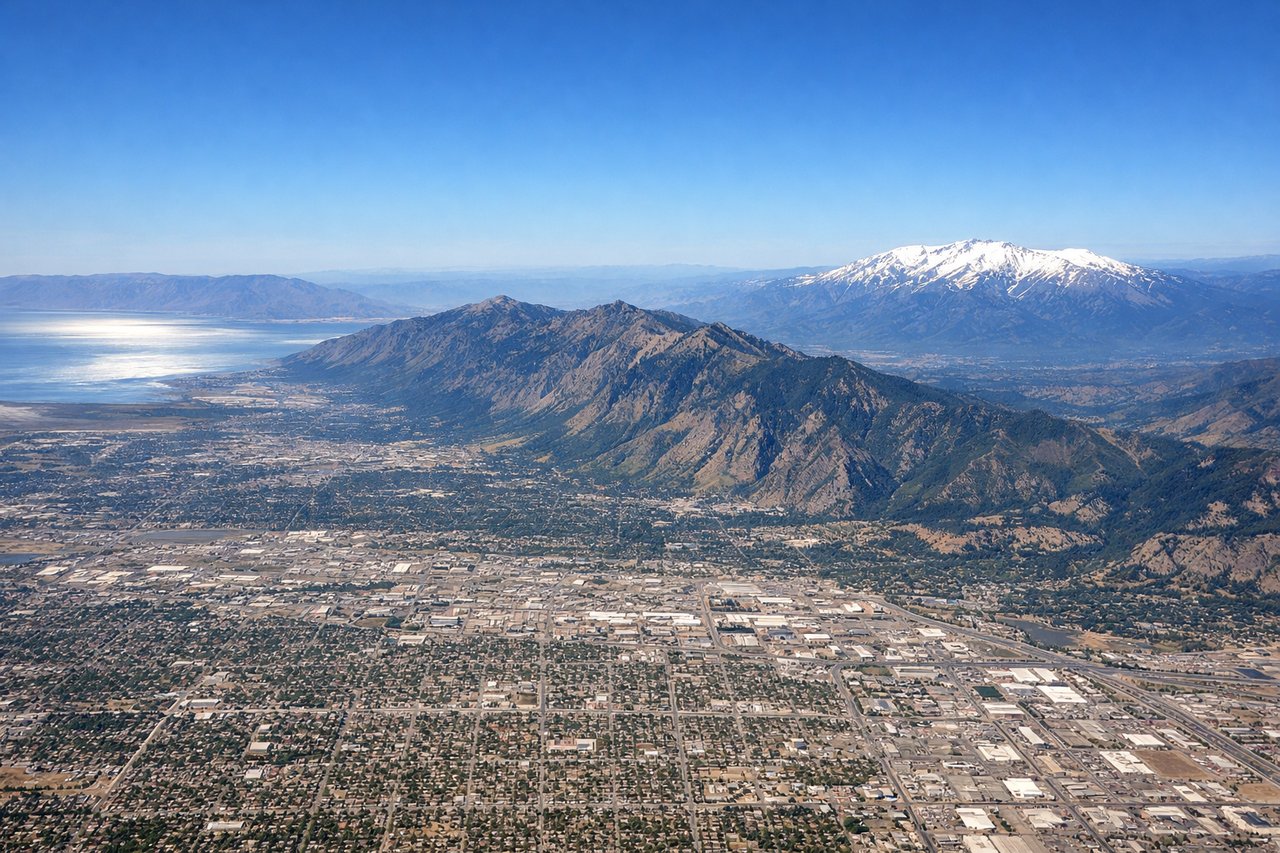
Takeoff from SLC
LEFTDeparting SLC to the south puts the Wasatch Front's steep, snow-streaked peaks (Mount Olympus, Twin Peaks, Lone Peak) right off the left wing during the climb. The right side looks out over the flatter Salt Lake Valley toward the Oquirrh Mountains and the edge of the Great Salt Lake, which is interesting but less dramatic than the close-in Wasatch wall.

Landing at SAN
LEFTOn the standard westbound approach into Runway 27, the aircraft passes just north of downtown San Diego, putting the high-rise skyline, Balboa Park's green canyon, and San Diego Bay directly out the left windows in the final minutes before landing. The right side mostly shows Mission Valley and residential mesas, which are far less striking.
Landmarks on this routeAll landmarks →
Will your flight be in sunlight?
See exactly which side of the plane gets sun and shade at your departure time.
About This Route
Which side of the plane should I sit on flying from Salt Lake City International (SLC) to San Diego International Lindbergh Fld (SAN)?
Sit on the Left side of the plane for the best views on flights from Salt Lake City to San Diego. The left side delivers a stronger, more continuous scenic package: dramatic Wasatch peaks at departure, glimpses of the Lake Mead/Grand Canyon region during cruise, and the iconic downtown San Diego skyline on arrival, versus the flatter valley and desert views on the right.
What can I see during takeoff from Salt Lake City International in Salt Lake City?
During takeoff from Salt Lake City International (SLC), sit on the Left side for the best views. Departing SLC to the south puts the Wasatch Front's steep, snow-streaked peaks (Mount Olympus, Twin Peaks, Lone Peak) right off the left wing during the climb. The right side looks out over the flatter Salt Lake Valley toward the Oquirrh Mountains and the edge of the Great Salt Lake, which is interesting but less dramatic than the close-in Wasatch wall. Notable sights include: Wasatch Range (Mount Olympus, Twin Peaks), Salt Lake Valley floor, Great Salt Lake in the distance to the right.
What can I see when landing at San Diego International Lindbergh Fld in San Diego?
When landing at San Diego International Lindbergh Fld (SAN), sit on the Left side for the best views. On the standard westbound approach into Runway 27, the aircraft passes just north of downtown San Diego, putting the high-rise skyline, Balboa Park's green canyon, and San Diego Bay directly out the left windows in the final minutes before landing. The right side mostly shows Mission Valley and residential mesas, which are far less striking. Notable sights include: Downtown San Diego skyline, Balboa Park, San Diego Bay, Coronado Bridge in the distance.
How long is the flight from Salt Lake City to San Diego?
The flight from Salt Lake City International (SLC) to San Diego International Lindbergh Fld (SAN) takes 2h 05m.
What does the Salt Lake City to San Diego flight path pass over?
Southern Utah's Colorado Plateau edge, the Lake Mead/Grand Canyon region near the Nevada-Arizona border, and the Mojave Desert before descending toward Southern California