While left offers better takeoff views of the Sierra Nevada, right seats provide superior landing views of Florida's dramatic coastal geography—the Atlantic, Intracoastal, and barrier islands. The landing experience outweighs the takeoff advantage given the visual distinctiveness of South Florida's water features.
Flown SMF to FLL? Did we get it right?
Flight Path
Sacramento to Fort Lauderdale is 2,545 miles (4,096 km), a flight of about 5 hours.
The flight path crosses the Sierra Nevada crest (visible from altitude as a major ridge system), then traverses the Great Basin and Colorado Plateau regions. Over Arizona and New Mexico, the Colorado River and its canyon systems are occasionally visible. As the flight approaches the Gulf Coast, the Mississippi River delta and Louisiana wetlands appear before the final approach over the Gulf of Mexico and Florida's Atlantic coast. The Rockies and high desert terrain dominate the midpoint, with few dramatic landmarks visible from cruise altitude except major river valleys.
Great circle distance and headings ›


Phase by phase
Takeoff from SMF
LEFTSMF typically departs runways 16L/R or 34L/R depending on wind. Left seats offer views of the Sierra Nevada foothills and the American River valley to the east and northeast during initial climb. Right seats face west toward the flat Central Valley with fewer distinctive landmarks.
Landing at FLL
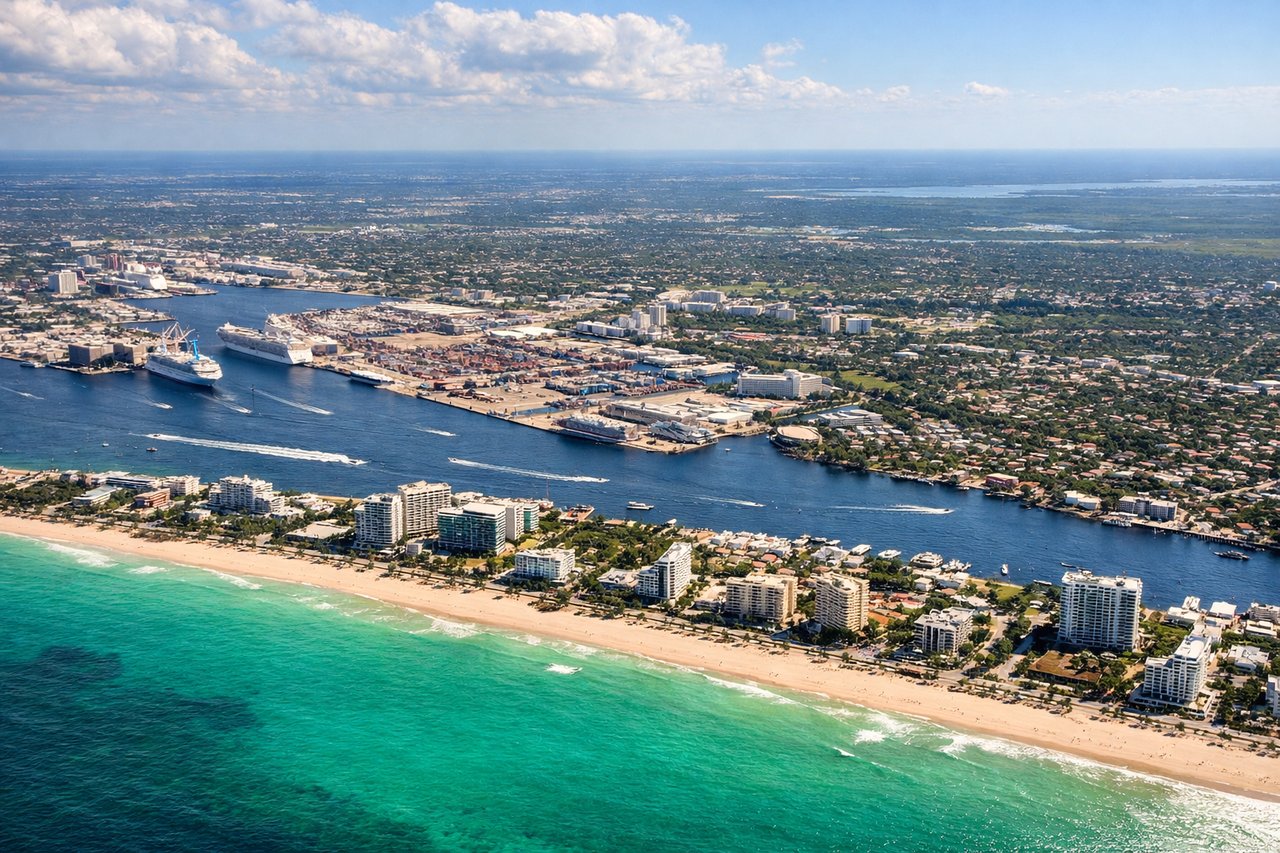
RIGHTFLL typically lands on runways 09L/R or 27L/R. Right seats during approach from the west offer views of the Atlantic Ocean, the Intracoastal Waterway, and the barrier islands that define South Florida's coastal geography. Left seats face inland toward the Everglades and developed areas with less visual distinction.
Will your flight be in sunlight?
Pick a date and time in the Sun Map to watch the sun move across your whole flight.
About This Route
Which side of the plane should I sit on flying from Sacramento International (SMF) to Fort Lauderdale Hollywood International (FLL)?
Sit on the Right side of the plane for the best views on flights from Sacramento to Fort Lauderdale. While left offers better takeoff views of the Sierra Nevada, right seats provide superior landing views of Florida's dramatic coastal geography—the Atlantic, Intracoastal, and barrier islands. The landing experience outweighs the takeoff advantage given the visual distinctiveness of South Florida's water features.
What can I see during takeoff from Sacramento International in Sacramento?
During takeoff from Sacramento International (SMF), sit on the Left side for the best views. SMF typically departs runways 16L/R or 34L/R depending on wind. Left seats offer views of the Sierra Nevada foothills and the American River valley to the east and northeast during initial climb. Right seats face west toward the flat Central Valley with fewer distinctive landmarks. Notable sights include: Sierra Nevada foothills (eastern horizon), American River drainage system (visible as linear vegetation patterns), Folsom Lake (if visible during northbound departures), Central Valley agricultural grid.
What can I see when landing at Fort Lauderdale Hollywood International in Fort Lauderdale?
When landing at Fort Lauderdale Hollywood International (FLL), sit on the Right side for the best views. FLL typically lands on runways 09L/R or 27L/R. Right seats during approach from the west offer views of the Atlantic Ocean, the Intracoastal Waterway, and the barrier islands that define South Florida's coastal geography. Left seats face inland toward the Everglades and developed areas with less visual distinction. Notable sights include: Atlantic Ocean (eastern edge of frame), Intracoastal Waterway (linear water body separating barrier islands from mainland), barrier islands with beachfront development, Port Everglades shipping channel.
How long is the flight from Sacramento to Fort Lauderdale?
The flight from Sacramento International (SMF) to Fort Lauderdale Hollywood International (FLL) takes about 5 hours. The shortest flight path between them is 2,545 miles (4,096 km); winds and air traffic control usually add a few percent.
What does the Sacramento to Fort Lauderdale flight path pass over?
The flight path crosses the Sierra Nevada crest (visible from altitude as a major ridge system), then traverses the Great Basin and Colorado Plateau regions. Over Arizona and New Mexico, the Colorado River and its canyon systems are occasionally visible. As the flight approaches the Gulf Coast, the Mississippi River delta and Louisiana wetlands appear before the final approach over the Gulf of Mexico and Florida's Atlantic coast. The Rockies and high desert terrain dominate the midpoint, with few dramatic landmarks visible from cruise altitude except major river valleys.