Sacramento to Chicago is 1,777 miles (2,860 km), a flight of about 3 hours 40 minutes.
The right side wins because the departure and early cruise phase deliver genuine mountain drama — the Sierra Nevada, Lake Tahoe, and later the Great Salt Lake and Wasatch Range — while the left side's main highlight, the Chicago skyline glimpse on landing, is brief and not guaranteed depending on runway assignment.
Flight Path
Great Salt Lake and the Wasatch Range in Utah, followed by the high plains of Wyoming and Nebraska as the route flattens out toward the Midwest
Great circle distance and headings ›

.jpg?width=600)


Phase by phase
Takeoff from SMF
RIGHTClimbing east-northeast out of Sacramento, the right side looks south across the Sierra Nevada foothills toward the Lake Tahoe basin and Carson Range, giving passengers a dramatic mountain backdrop shortly after takeoff. The left side only shows the flat Sacramento Valley and Sutter Buttes, a modest and short-lived feature.
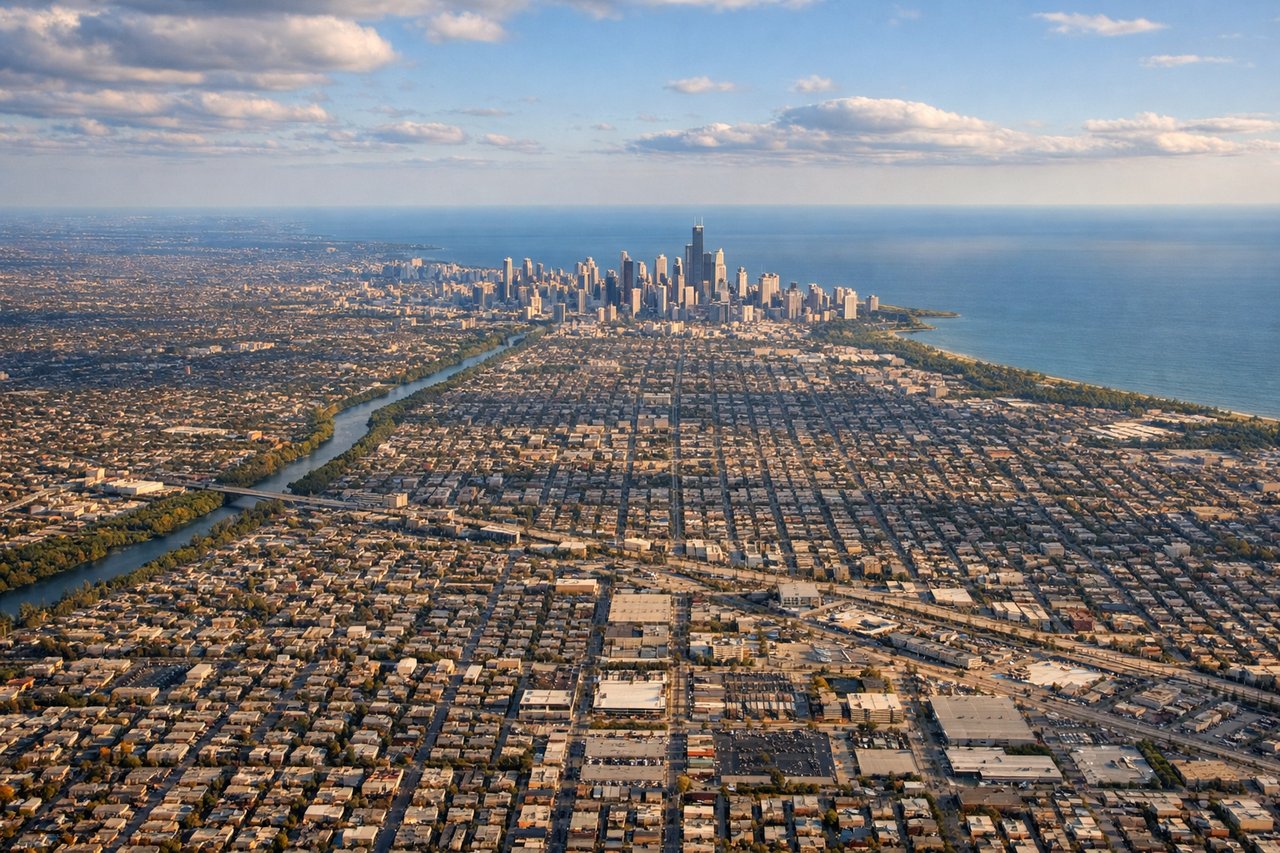
Landing at ORD
LEFTOn approach into O'Hare from the west, arriving aircraft often swing south of the city before turning onto final, putting downtown Chicago's skyline and the edge of Lake Michigan on the left side of the cabin. The right side during this phase mostly shows flat Illinois farmland and western suburbs.
Landmarks on this routeAll landmarks →
Will your flight be in sunlight?
Pick a date and time in the Sun Map to watch the sun move across your whole flight.
About This Route
Which side of the plane should I sit on flying from Sacramento International (SMF) to Chicago Ohare International (ORD)?
Sit on the Right side of the plane for the best views on flights from Sacramento to Chicago. The right side wins because the departure and early cruise phase deliver genuine mountain drama — the Sierra Nevada, Lake Tahoe, and later the Great Salt Lake and Wasatch Range — while the left side's main highlight, the Chicago skyline glimpse on landing, is brief and not guaranteed depending on runway assignment.
What can I see during takeoff from Sacramento International in Sacramento?
During takeoff from Sacramento International (SMF), sit on the Right side for the best views. Climbing east-northeast out of Sacramento, the right side looks south across the Sierra Nevada foothills toward the Lake Tahoe basin and Carson Range, giving passengers a dramatic mountain backdrop shortly after takeoff. The left side only shows the flat Sacramento Valley and Sutter Buttes, a modest and short-lived feature. Notable sights include: Sierra Nevada foothills, Lake Tahoe basin, Carson Range, Sacramento Valley farmland.
What can I see when landing at Chicago Ohare International in Chicago?
When landing at Chicago Ohare International (ORD), sit on the Left side for the best views. On approach into O'Hare from the west, arriving aircraft often swing south of the city before turning onto final, putting downtown Chicago's skyline and the edge of Lake Michigan on the left side of the cabin. The right side during this phase mostly shows flat Illinois farmland and western suburbs. Notable sights include: Chicago skyline, Lake Michigan shoreline, Willis Tower, western Chicago suburbs.
How long is the flight from Sacramento to Chicago?
The flight from Sacramento International (SMF) to Chicago Ohare International (ORD) takes about 3 hours 40 minutes. The shortest flight path between them is 1,777 miles (2,860 km); winds and air traffic control usually add a few percent.
What does the Sacramento to Chicago flight path pass over?
Great Salt Lake and the Wasatch Range in Utah, followed by the high plains of Wyoming and Nebraska as the route flattens out toward the Midwest