Sacramento to Kahului is 2,402 miles (3,866 km), a flight of about 5 hours 15 minutes.
While left seats offer the Sierra Nevada departure views, right seats provide the superior landing experience with Maui's dramatic volcanic landscape and Iao Valley. The landing view is more visually distinctive and memorable than the takeoff, making right the better overall choice for this route.
Flight Path
The flight crosses the Pacific Ocean for roughly 2,000 nautical miles. Midpoint occurs over open ocean approximately 1,000 nm west of California coast. No significant landmarks are visible during the oceanic cruise phase. Approaching Hawaii, the Big Island (Hawaii) becomes visible first on the horizon approximately 150 nm out, followed by Maui's silhouette. Trade-wind cloud patterns dominate the approach corridor to the Hawaiian Islands.
Great circle distance and headings ›
.jpg?width=600)
Phase by phase
Takeoff from SMF
LEFTSMF typically departs runways 16L/R or 34L/R depending on wind. Left seats capture the Sierra Nevada range rising to the east during climb-out, providing dramatic elevation gain and snow-capped peaks in winter. Right seats face the flat Central Valley with minimal visual interest.
Landing at OGG
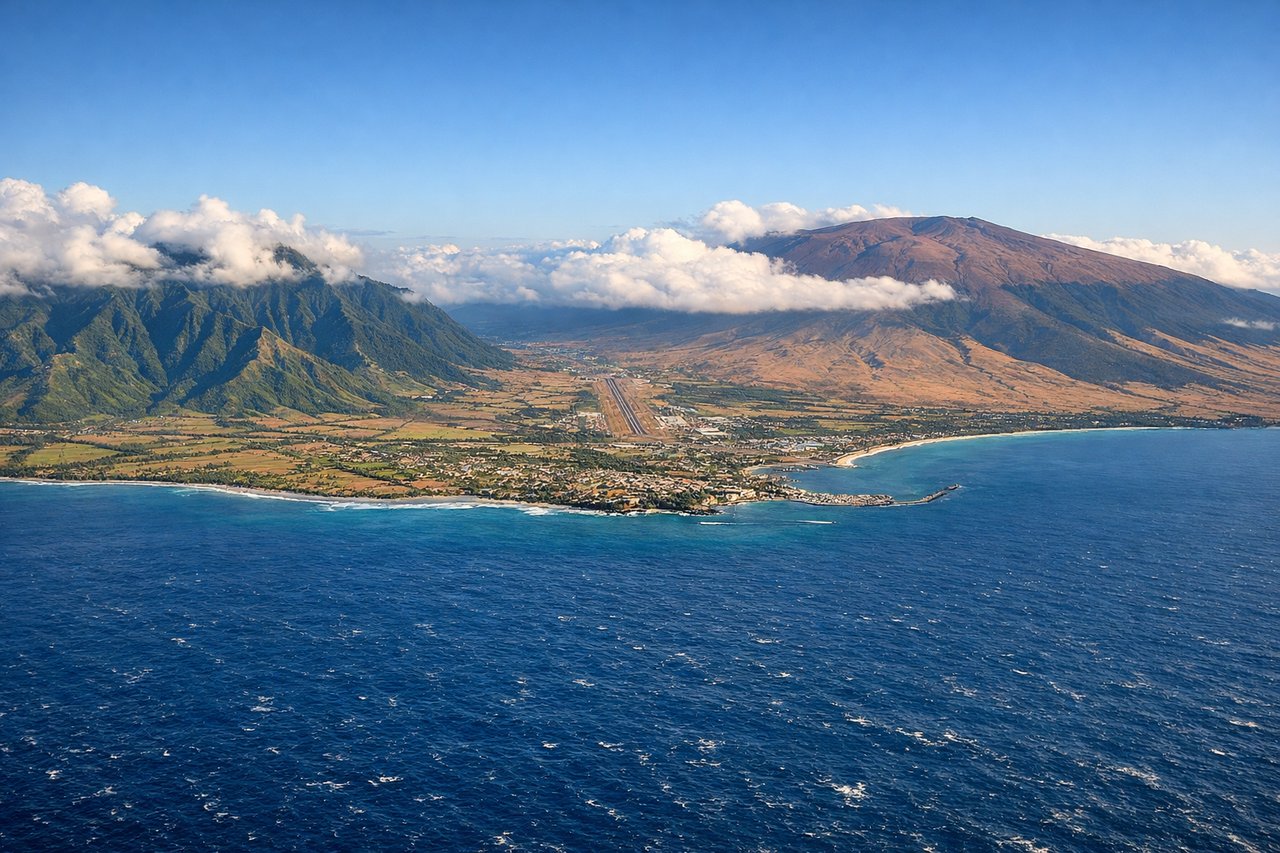
RIGHTKahului (OGG) uses runways 02/20. Right seats during approach on runway 02 (northbound) provide views of the West Maui volcanic slopes and the Iao Valley, the island's most visually striking feature. Left seats face the open Pacific and less distinctive terrain.
Landmarks on this routeAll landmarks →
Will your flight be in sunlight?
Pick a date and time in the Sun Map to watch the sun move across your whole flight.
About This Route
Which side of the plane should I sit on flying from Sacramento International (SMF) to Kahului (OGG)?
Sit on the Right side of the plane for the best views on flights from Sacramento to Kahului. While left seats offer the Sierra Nevada departure views, right seats provide the superior landing experience with Maui's dramatic volcanic landscape and Iao Valley. The landing view is more visually distinctive and memorable than the takeoff, making right the better overall choice for this route.
What can I see during takeoff from Sacramento International in Sacramento?
During takeoff from Sacramento International (SMF), sit on the Left side for the best views. SMF typically departs runways 16L/R or 34L/R depending on wind. Left seats capture the Sierra Nevada range rising to the east during climb-out, providing dramatic elevation gain and snow-capped peaks in winter. Right seats face the flat Central Valley with minimal visual interest. Notable sights include: Sierra Nevada mountain range (east), Sacramento Valley floor (south and west), Folsom Lake (southeast, visible as a reservoir), American River corridor (north-south through valley).
What can I see when landing at Kahului in Kahului?
When landing at Kahului (OGG), sit on the Right side for the best views. Kahului (OGG) uses runways 02/20. Right seats during approach on runway 02 (northbound) provide views of the West Maui volcanic slopes and the Iao Valley, the island's most visually striking feature. Left seats face the open Pacific and less distinctive terrain. Notable sights include: West Maui volcano (dominant landform), Iao Valley (steep-walled valley), Kahului Bay (arrival corridor), Pailolo Channel (between Maui and Molokai, visible on clear days).
How long is the flight from Sacramento to Kahului?
The flight from Sacramento International (SMF) to Kahului (OGG) takes about 5 hours 15 minutes. The shortest flight path between them is 2,402 miles (3,866 km); winds and air traffic control usually add a few percent.
What does the Sacramento to Kahului flight path pass over?
The flight crosses the Pacific Ocean for roughly 2,000 nautical miles. Midpoint occurs over open ocean approximately 1,000 nm west of California coast. No significant landmarks are visible during the oceanic cruise phase. Approaching Hawaii, the Big Island (Hawaii) becomes visible first on the horizon approximately 150 nm out, followed by Maui's silhouette. Trade-wind cloud patterns dominate the approach corridor to the Hawaiian Islands.